Creating Congregations
Members of the young Howard County Jewish community plunged into religious affairs the same way they plunged into everything else: with enthusiasm and an openness to experimentation. Together, they made an effort to develop an approach to Judaism that accommodated everyone despite their diverse religious origins. Along with seeing to their children’s Jewish education, they quickly began organizing holiday celebrations and biweekly religious services. But during their first high holiday services, they learned that creating a strong Jewish community didn’t necessarily mean achieving religious consensus—sometimes it’s best to agree to disagree. The controversial Yom Kippur service of 1969 became the founding event of Jewish congregational life.
“All the congregations were founded by the Electric Prunes.”
Rabbi Martin Siegel

Album cover, The Electric Prunes, “Release of an Oath: The Kol Nidre.”
Prehistory
As the county’s only Jewish group, the Jewish Council took the lead in organizing religious life. In fall 1968 its religious activities committee announced that rather than affiliate with a particular branch of Judaism, it would “examine the Jewish religious service and attempt to understand the significant parts with a view to evolving a service suitable for the majority of the residents.” It came up with a strategy that was eclectic to say the least. Biweekly religious gatherings ranged from traditional, Conservative Friday night services to “Experimental Services” that might include poetry readings, folk and protest music, even dance. “We have embarked upon a program we call “New Dimensions in Judaism,” the committee explained. “In it we are attempting to explore new avenues of religious expression and to gain a contemporary perspective on what it means to be a Jew.”

Before the interfaith centers were constructed, Jews gathered for services at a few different venues, most often at the Wilde Lake village center, Slayton House, shown here in 1967 shortly after it was built.
Photo by Jeanne S. Nicholson, Courtesy of Columbia MD Archives, Photograph Collection
Our active members have a wide range of approaches to Judaism, from the traditional to the strictly secular. One area in which most of us agree is the need to develop … a more personally meaningful Judaism that will help us cope with today’s changing complex world. We are trying to find out what “our own thing” really is.
This blend of innovation and tradition worked well at first. Those from strict religious backgrounds taught those with secular upbringings, who appreciated the opportunity to learn and participate in an informal and open-minded atmosphere. Aside from occasional guest rabbis and lecturers, community members developed and led the services themselves. The do-it-yourself spirit encouraged lively discussions and drew people together. From 1968 to 1970, volunteer leaders included Marty Chaitovitz, Ed Hankin, Dave Herman, Shep Jeffries, George Klein, Judy Neiman, Sigi Rowe, Mal Sherman, and Sue Waller.
“Two weekends a month, we were immersed in Judaism. It was really strange—a lot of people moved here to get away from all that. But it was fun. And it was nice because the services were always crowded.”
An Electric Origin Story
In the summer of 1969, the religious activities committee began planning the community’s first high holiday services, to be led by a former rabbinical student from the Reconstructionist seminary. As usual, plans called for a blend of tradition and innovation. A Howard County Times article published just before the holidays noted that “incidental music will be provided by harp and guitars, as well as recorded tape.” Apparently most attendees didn’t see the article, because what happened on Yom Kippur caused shock waves to ripple through the crowd. Though accustomed to unconventional bi-weekly services, many community members drew the line when it came to Judaism’s most sacred holiday. When the student rabbi played a recording of the Kol Nidre by a psychedelic rock band called The Electric Prunes, they inwardly fumed. At a follow-up meeting, they expressed outrage.

The L.A.-based Electric Prunes had a hit in 1966 with the song “I Had Too Much to Dream Last Night.” After the band’s 1968 Christian-themed album “Mass in F Minor” achieved some success, its producer decided to stay with the religious angle and record a Jewish-themed album. “Release of an Oath,” however, was a flop.

In addition to the Kol Nidre recording, attendees were surprised to find anti-Vietnam War banners similar to this one hanging in the worship space—placed there with the student rabbi’s approval, but without the committee’s knowledge. Whatever their stance on the war, many found the banners deeply inappropriate for the occasion.
Courtesy of Penn State University Special Collection
I think we just sat there with our mouths hanging open.
Many of us, in the spirit of innovation, thought, “Well, that didn’t work. Next time, we’ll try something else.”
It was very nicely done.
People were really in a huff. … It lacked total tradition.
I thought it sounded like a Jewish name, Electric Prunes. There was always prune juice in my grandmother’s fridge.
Within days, two groups formed to bring more conventional religious worship to Columbia. “I got a call the next morning from the late Ed Hankin, and he says, ‘Milt, we just can’t do this,’” recalled Milt Kline. With a couple others, they founded Beth Shalom. Similarly, Lynne Warshaw remembered, “It was so different from anything we had been accustomed to that we said, ‘No, no, no. We’re not gonna do this.’ That’s what compelled us” to start the congregation soon known as Temple Isaiah. “The rest of us were kind of left,” Shep Jeffreys explained. “I didn’t care for it, I didn’t think it was musical. But it wasn’t something to scream and curse about.” Those who, like Jeffreys, were unfazed by The Electric Prunes (whether they liked the service or not) created the independent Columbia Jewish Congregation.
The break would have happened anyway, since the spirit of accommodation and friendliness had obscured real differences in how people wanted to observe Judaism. As Sigi Rowe later put it, “The Electric Prunes was just an excuse. The time was ripe to split up.” The Jewish population had grown so quickly that it could already support multiple congregations catering to different worship needs. But the way it happened became embedded in the culture of Howard County’s Jewish community, as each congregation followed along the path it set for itself in the beginning, thanks to the Electric Prunes.
Each congregation has its own, I would say, culture. Its own ambience, its own way of doing things, its own outlook.
Early Congregational Life
The Jewish community remained close knit even after splitting into three congregations. Early residents, after all, continued to share “Columbia pioneer” values. They strove to build a strong community alongside new Jewish residents who arrived in the 1970s. Together, they expanded Jewish education, represented the Jewish point of view on interfaith matters, and more. They interacted regularly across congregational lines as they all occupied space at the interfaith centers (though not without some friction). The Jewish Council continued to host occasional community-wide holiday celebrations, and everyone came out for special events like CJC’s Israeli nights and its Fiddler on the Roof production. Some people even joined more than one congregation because they wanted them all to succeed.
Each congregation could claim landmark events in the community’s history: Beth Shalom incorporated first, hired the first rabbi, and built the first synagogue. CJC hosted the first bar mitzvah. Temple Isaiah was the first to reach 200 members. By century’s end, the original three had grown to at least five congregations. Here is a snapshot of the first few decades of HoCo congregational life.

Beth Shalom Torah dedication, 1979.
Courtesy of Beth Shalom
Beth Shalom: Those interested in Conservative worship wasted no time after the Electric Prunes service, incorporating in July 1970 as Temple Beth Shalom of Howard County. More than 100 people attended its inaugural Friday evening services, led by Orthodox rabbi Israel Drazin with Calvin Chizever as cantor. When Drazin signed a contract in August he became Howard County’s first permanent rabbi. Trouble ensued a few years later, however, when he objected to the equal participation of women in the services. He led a faction that split off to form the Ner Torah Congregation, which existed from 1974 to 1980. Beth Shalom languished for several years, kept alive by a core of committed families. It recovered by 1978 when it hired veteran rabbi Noah Golinkin. “He was progressive and moved things forward,” recalled congregant Etarae Weinstein. “He brought in counting women for the minyan, letting women have aliyot.” Beth Shalom reemerged as a thriving Conservative congregation.
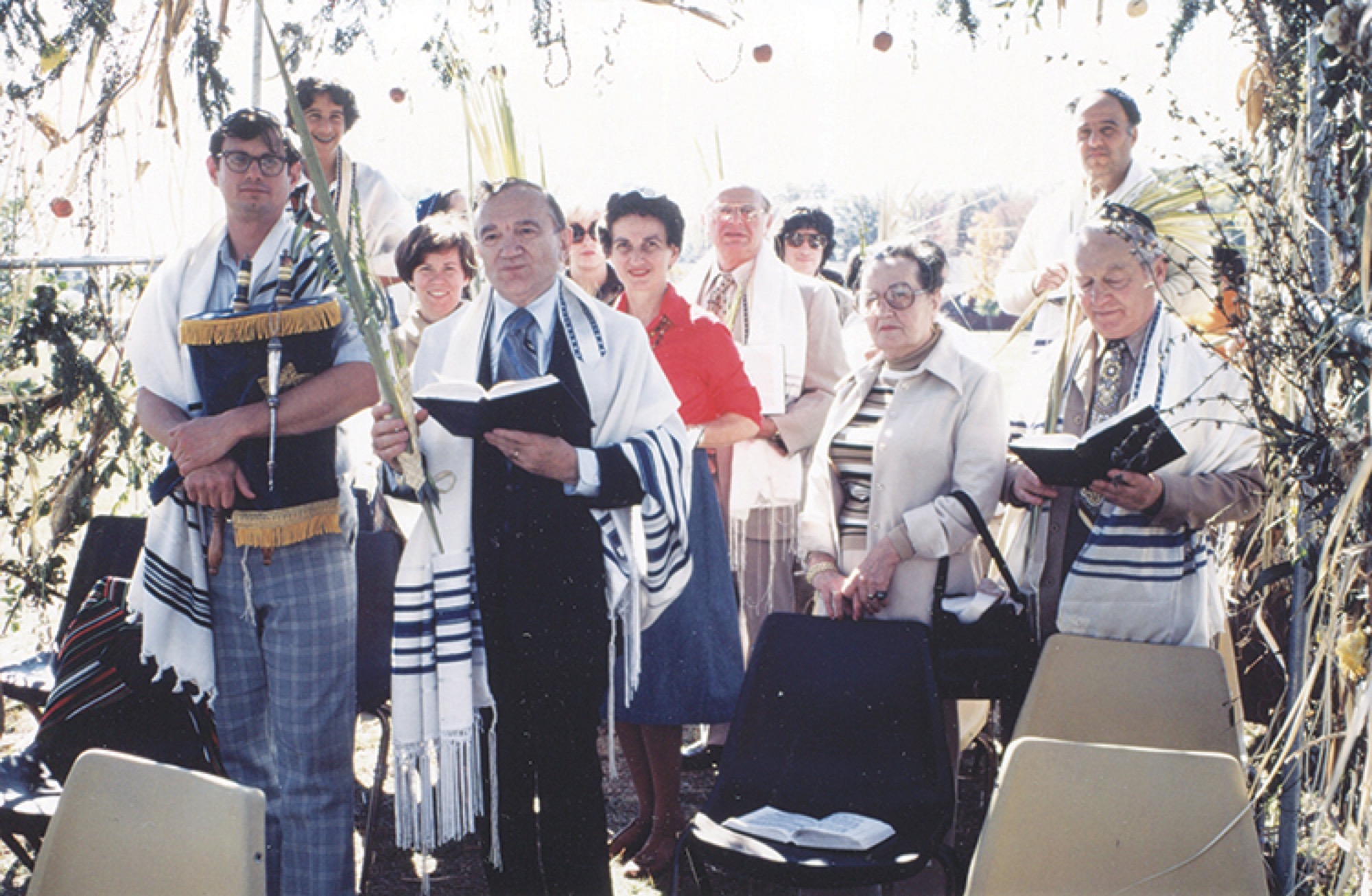
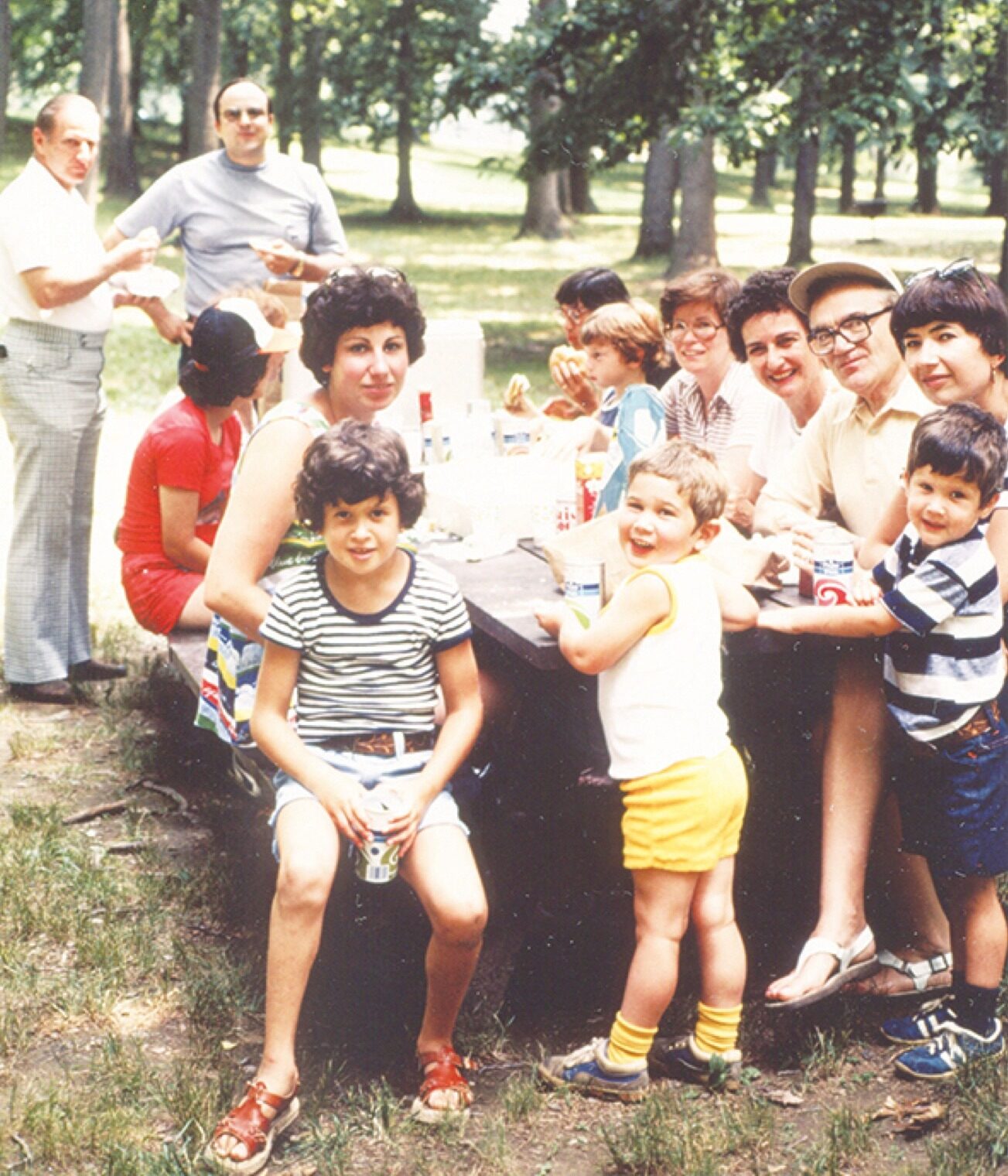
Beth Shalom on the upswing in 1978: Sukkot procession (left) and community picnic (above). Rabbi Golinkin and his wife Devorah are seated at the picnic table, second and third from the right.
Courtesy of Beth Shalom
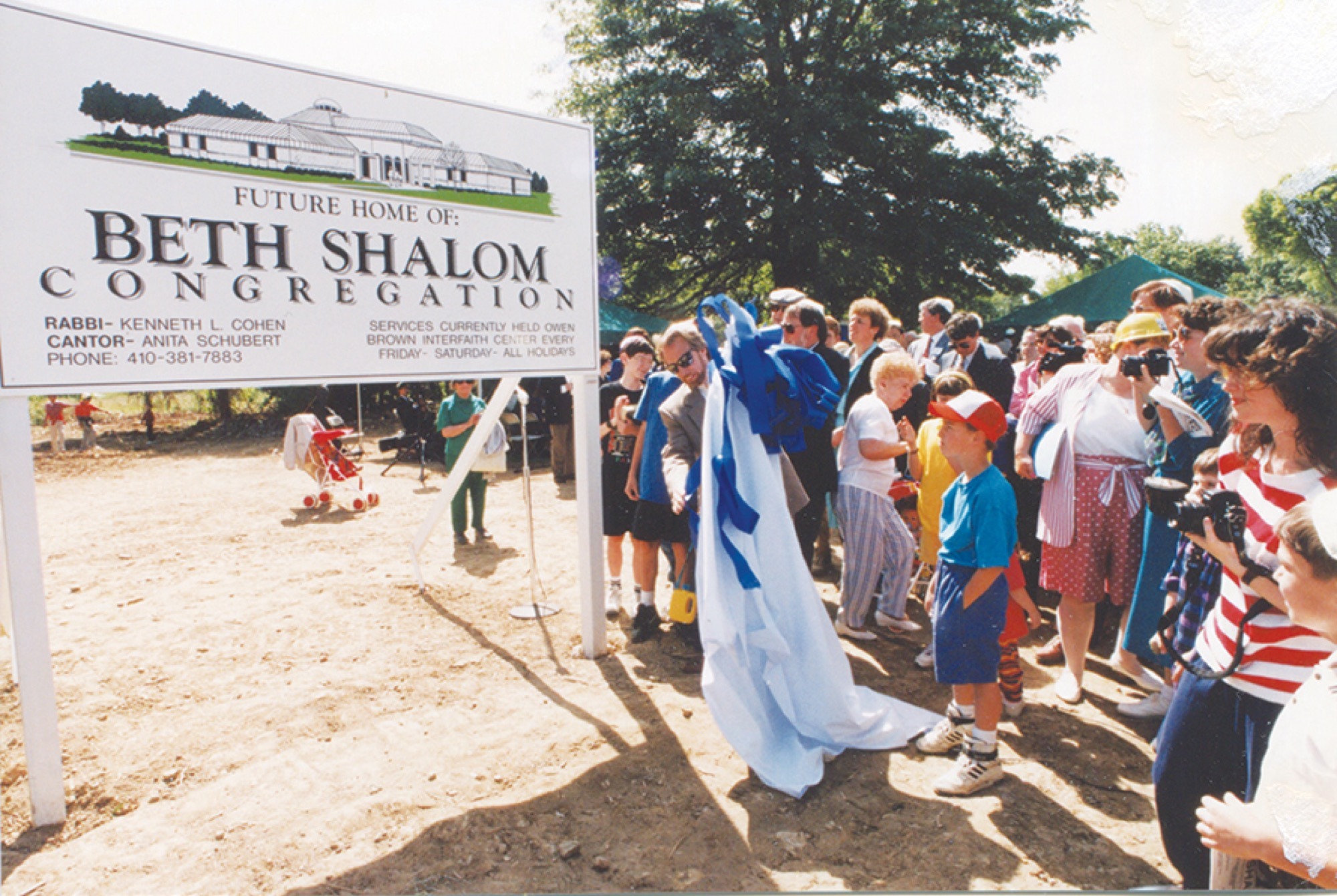
Beth Shalom had grown to around 150 member households by the mid-1980s. For reasons both practical and religious, they decided to leave the interfaith center milieu and establish their own home. Not only did they need more space, but they also wanted to create a more Jewish environment. As Rabbi Ken Cohen (Golinkin’s successor) put it, “We want to have a place of worship that has the ambience of a synagogue, not a social hall.” In 1995, Beth Shalom achieved yet another Jewish community milestone when it moved into the first synagogue built in Howard County.
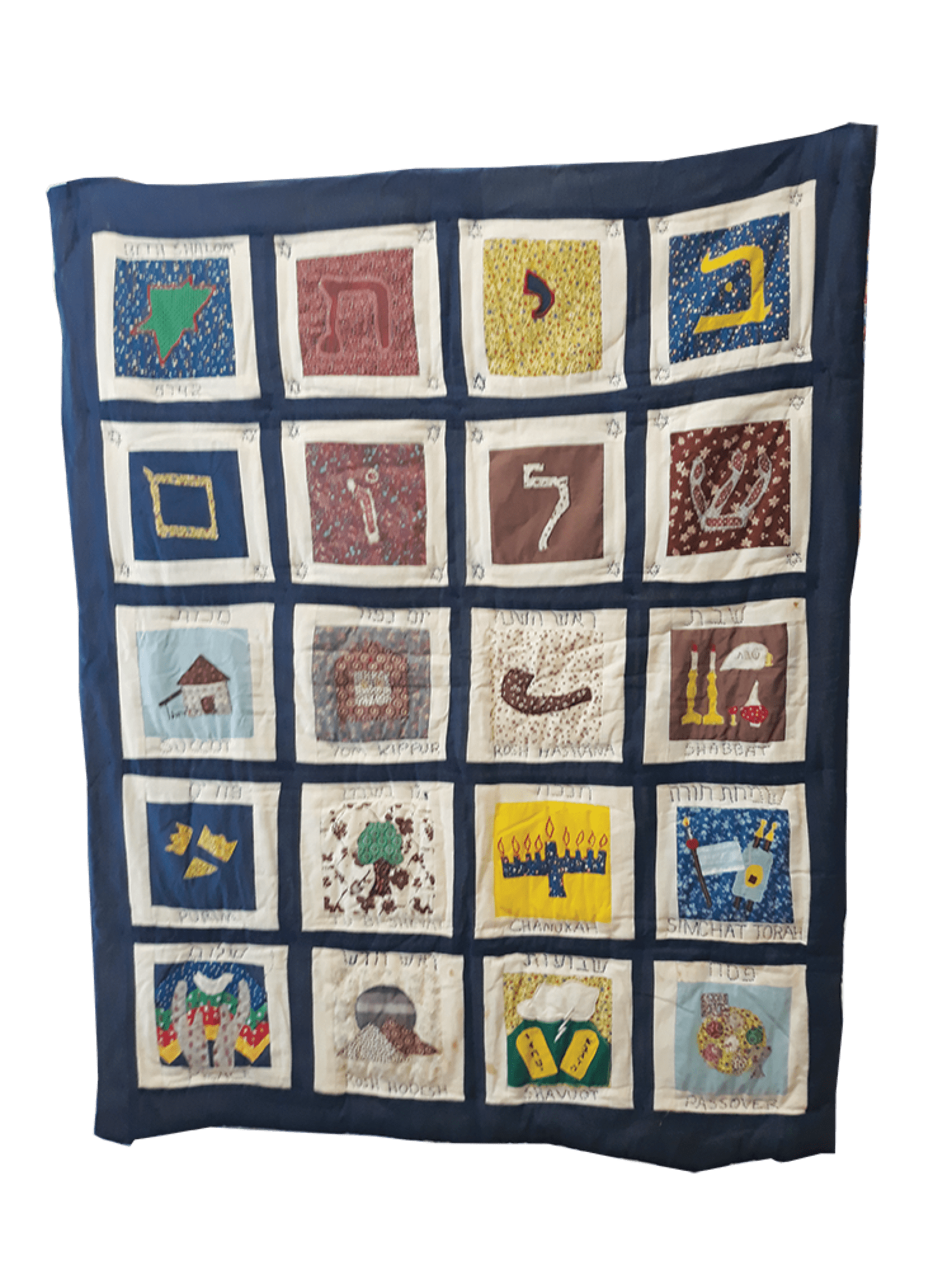
Quilt used by Beth Shalom to cover up Christian symbols occasionally left on the walls at Owen Brown Interfaith Center.
Courtesy of Beth Shalom
Beth Shalom was approaching 200 member households by the time of the 1993 groundbreaking ceremony for its new synagogue, which remains the congregation’s home today.
Courtesy of Beth Shalom
Columbia Jewish Congregation: While the Yom Kippur services of 1969 galvanized some Jewish Howard Countians into organizing Conservative and Reform congregations, plenty of Columbia’s Jewish residents remained devoted to the unconventional approach pioneered by the Jewish Council’s religious activities committee. By October 1970 they had formed the Columbia Jewish Congregation—with the emphasis on “Columbia” (as suggested by Shep Jeffreys) to signify their intention to practice Judaism in a way that reflected the Columbia spirit of innovation. With guidance from Sigi Rowe as lay rabbi and Jeffreys as lay cantor, congregants continued their free-form, do-it-yourself worship style. Dance, discussion, short plays, civil rights songs all figured into their Shabbat services, holidays, and life cycle celebrations.
Once we saw the Catholic church using guitars, we thought “Why can’t we do that?” So we took off from there, and we did what we wanted to do.
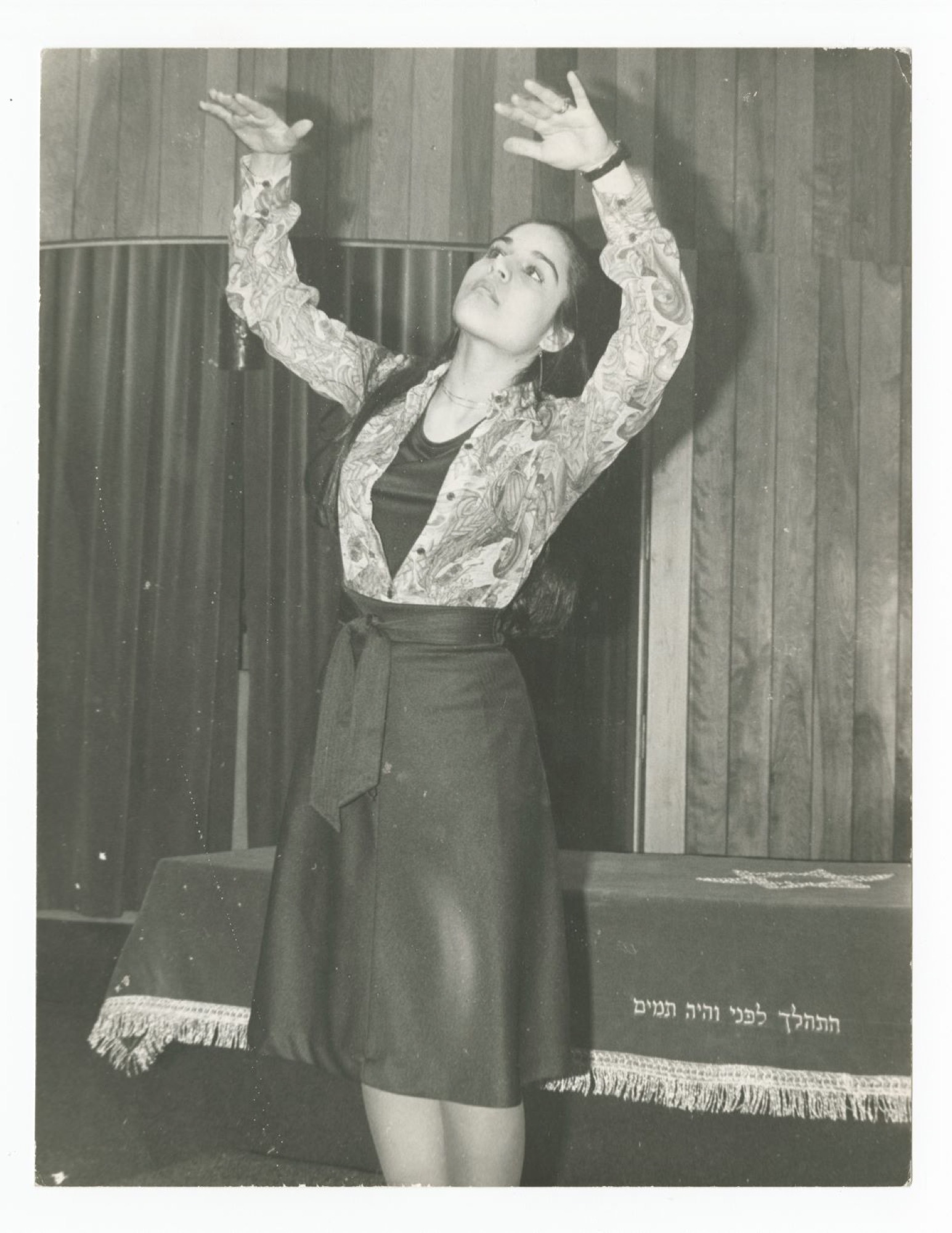
Debbie Jeffreys dancing at Rosh Hashanah services, 1976. Young people played a major role at CJC. “They were able to use whatever drama, musical abilities they had, woven into the services,” said her father, Shep.
Photo by Fern Eisner, courtesy of Columbia MD Archives, Photograph Collection
There was so much freedom and flexibility to make the tradition our own.
CJC sought to hire a rabbi by 1972 and found the perfect match. Rabbi Martin Siegel had just been fired from his Long Island synagogue after writing a book condemning the sterile nature of American Jewish congregations—including his own. When he and his wife arrived in Columbia, they thought they had entered “the promised land,” Siegel recalled. “It was a very exciting group, open-minded, kind. It was an immensely creative place.” With his enthusiastic support, CJC members continued to design their own worship experience. The congregation remained independent until Siegel retired in 1997. It joined the Reconstructionist movement shortly thereafter, and continues to affiliate with the movement today.
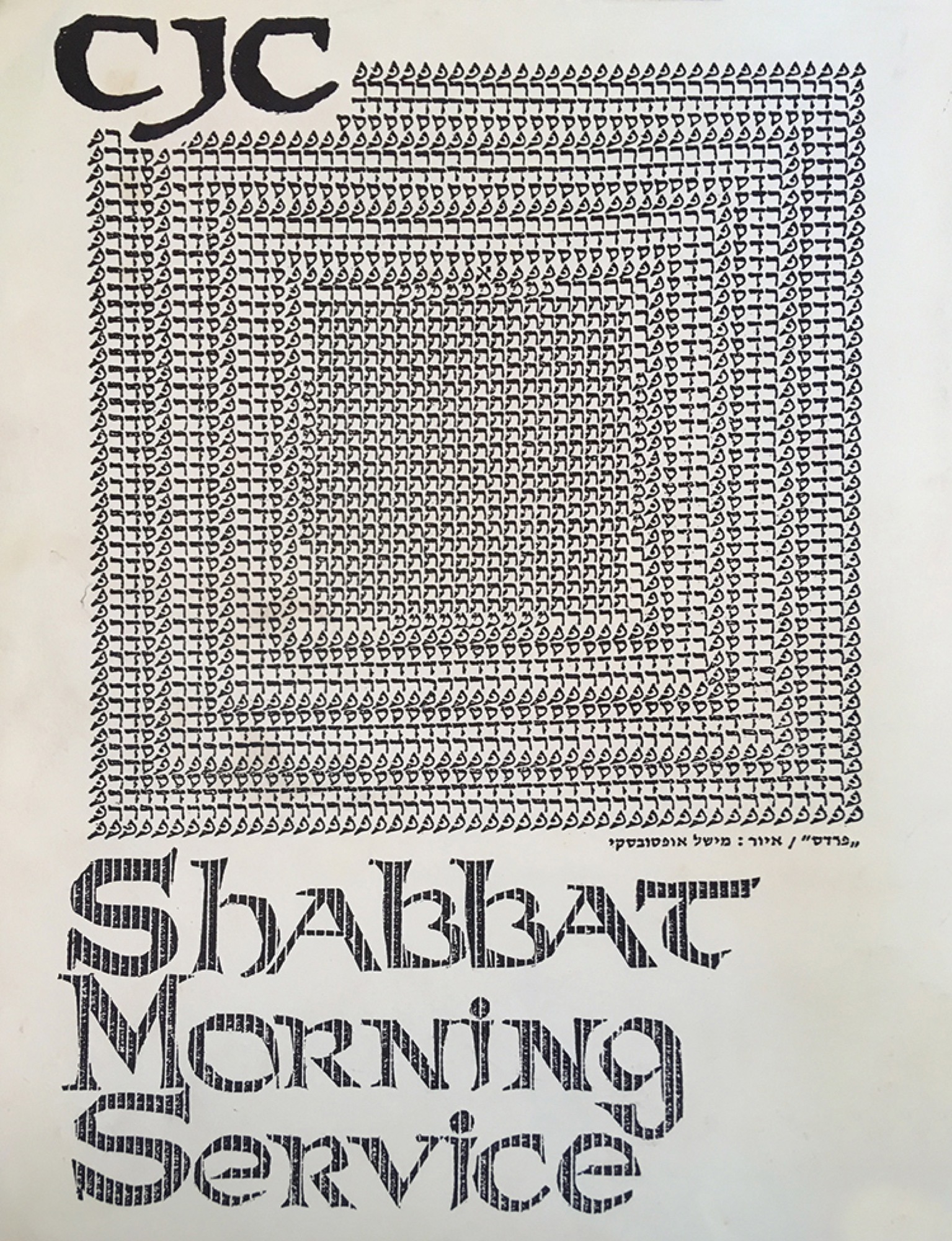
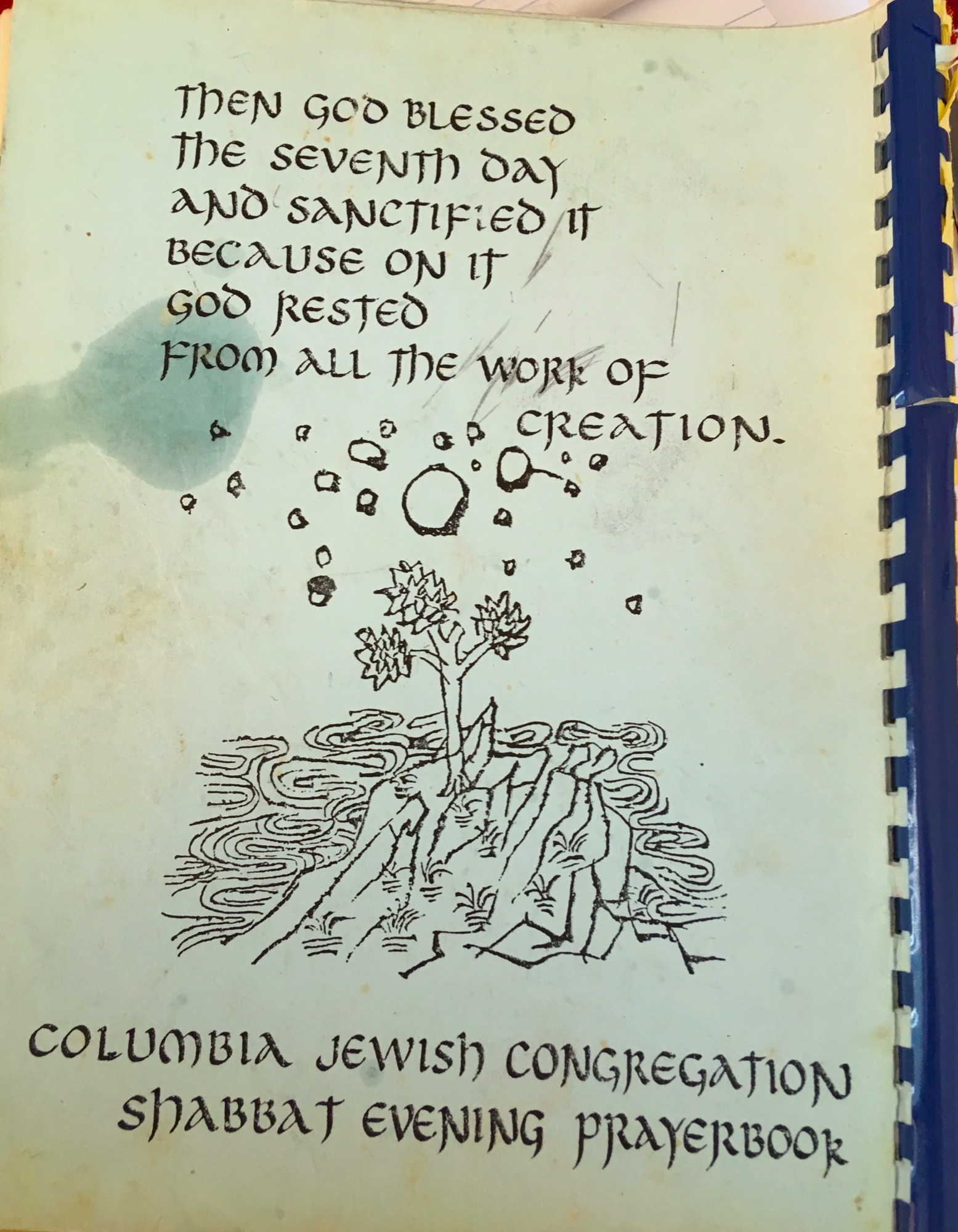
CJC homemade prayer books, 1971.
Courtesy of Jessica Rowe
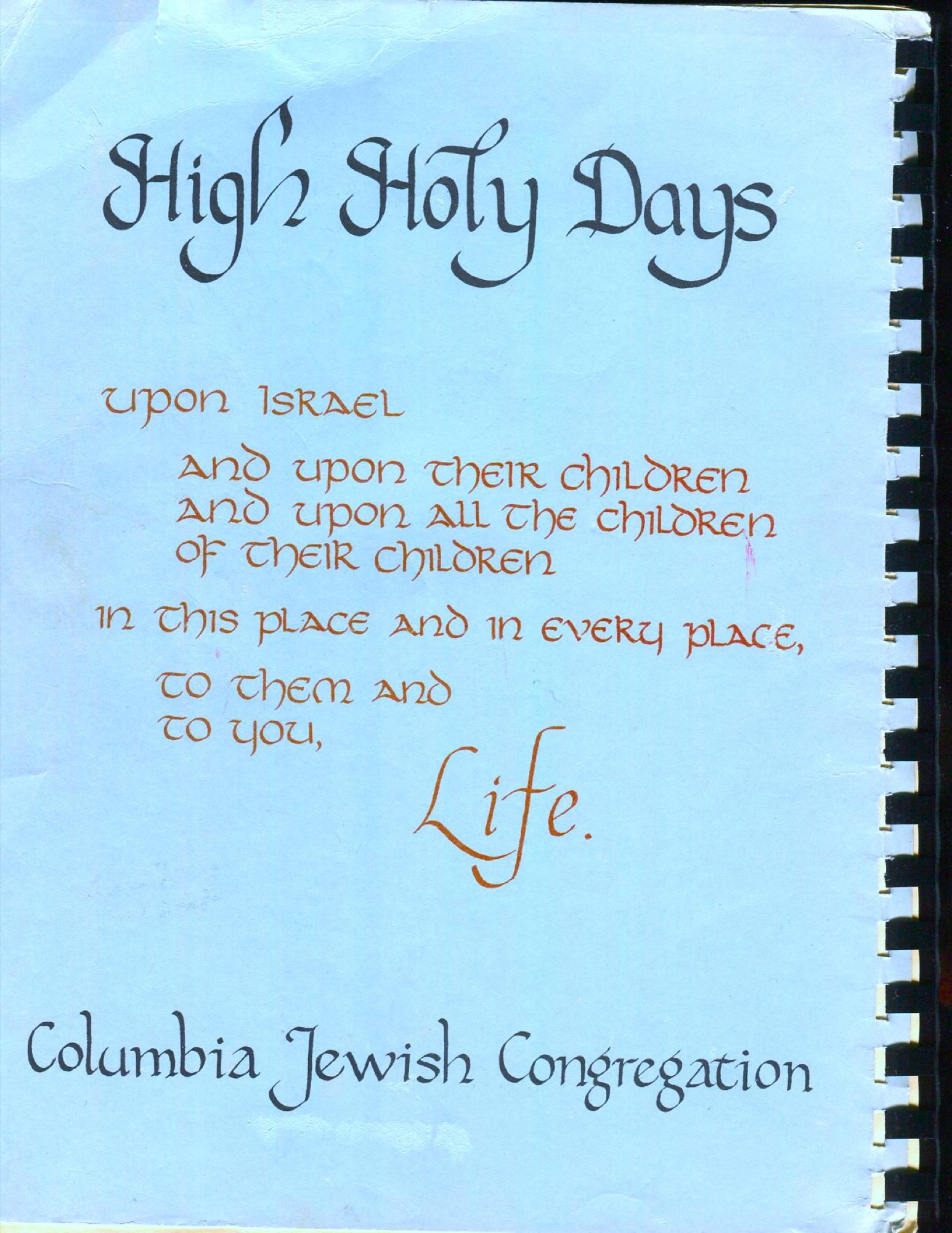
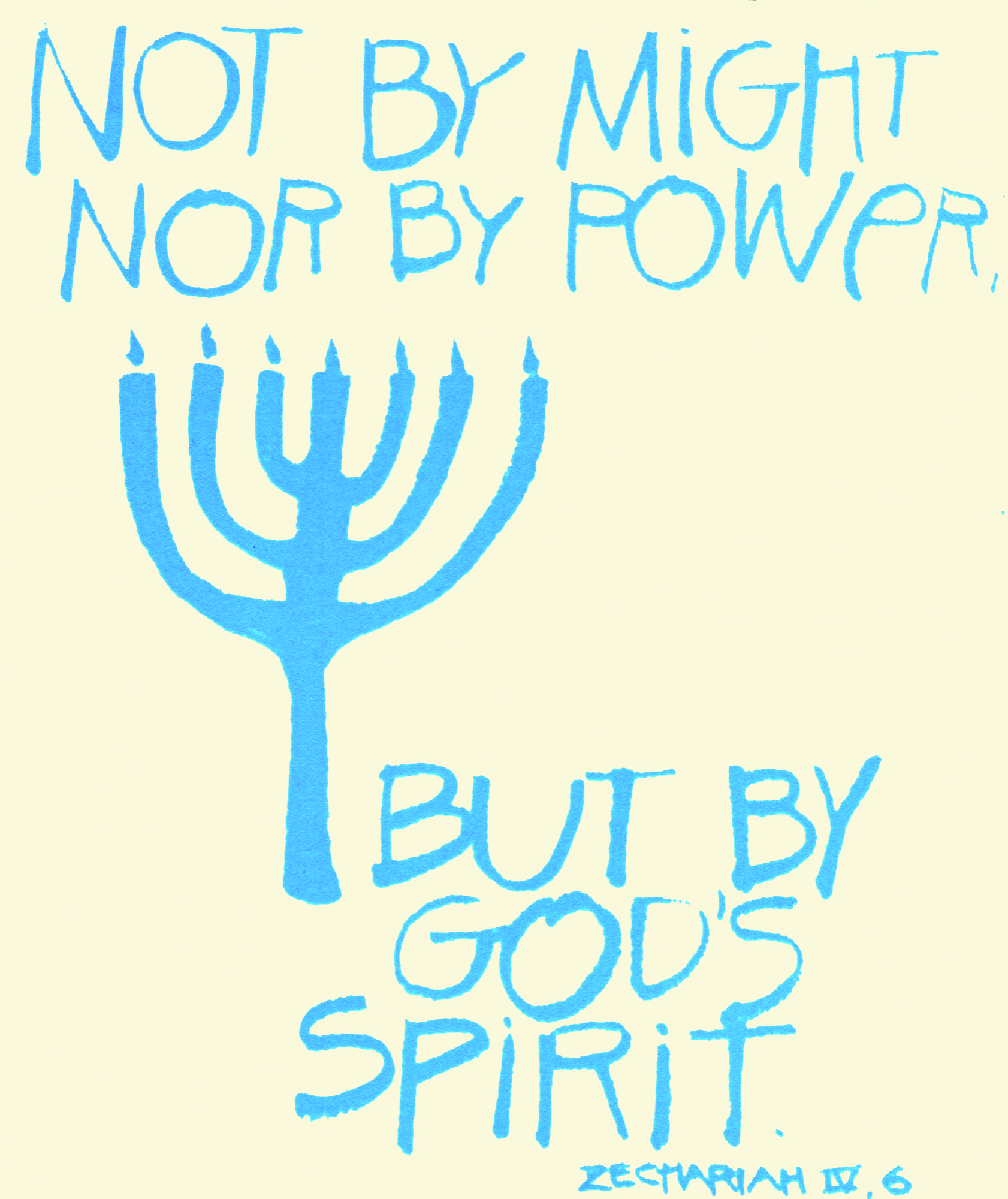
Bar mitzvah invitation of David Fagan, 1976. The first bar mitzvah in Howard County occurred on November 28, 1970, when the congregation celebrated with David Fensterheim, son of Mr. and Mrs. Norman Levine. CJC families developed their own b’nai mitzvah services, with homemade prayer books.
Courtesy of Bobbi Fagan


CJC Founding Members
Jacques and Ruth Pessin, Shep and Helane Jeffreys, Sigi and Edith Rowe, Helen and Martin Ruther, Norma and Hank Eigles, Marty and Bobbi Fagan, David and Janet Herman, Gerson and Chaya Kaplan, Jerry Block and his wife.
This program for Friday night services on March 5, 1971, exemplifies the CJC model. As described by Shep Jeffreys: “Very open, very reaching, very trying to be different. It was free form, but it was a form and there were the basics, so that people became aware of what’s in a service.”
Courtesy of the Jewish Federation of Howard County
Temple Isaiah was the last “Electric Prunes” congregation to organize, but it soon became the largest Jewish congregation in Howard County. The Reform group, still unnamed, held its first high holiday services in 1970 and started holding monthly Shabbat services in members’ homes. By 1972 it had a name, a constitution, and affiliation with the Reform movement’s Union of American Hebrew Congregations. Its first president, Barry Sklar, recalled in a 2010 speech, “The Temple was a radical departure from any Reform temple since everyone in Columbia was 29 years old, mortgage poor, and just starting their families. So, we borrowed a Torah, built an ark by hand, and brought both back and forth to services at the Wilde Lake Interfaith Center.” The congregation was also unusual in that many members came from Conservative backgrounds; its style was more traditional than the typical “classical Reform” temple.
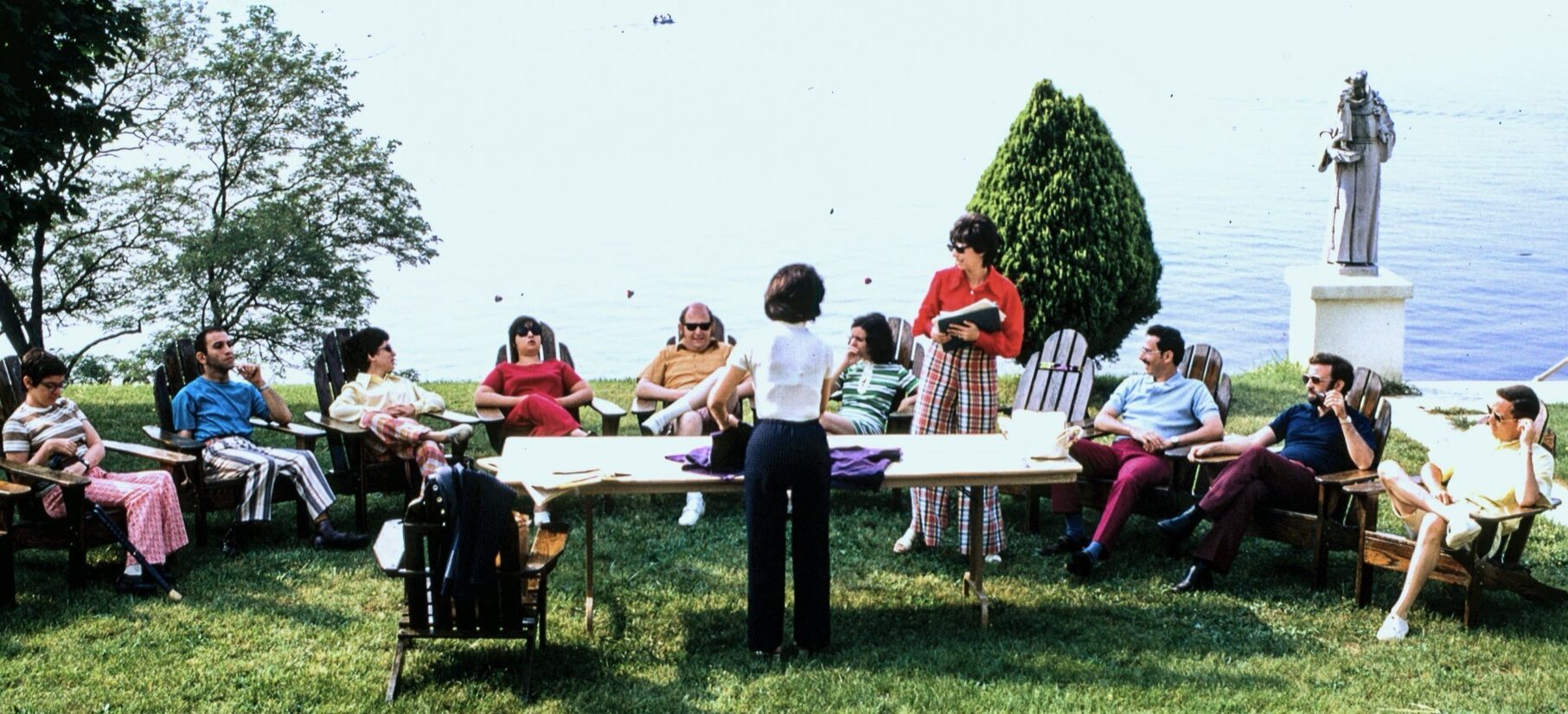
In 1973, the young leaders of Temple Isaiah gathered to plan their congregation’s future at Manresa-on-the-Severn, a Jesuit retreat center. From left: Barbara and Mike Brill, Diane Tobin, Evelyn and Mike Brunner, Carol Friedhoffer, Marilyn and Mike Levinson, Jordan Tobin, Barry Sklar. (Standing with her back to the camera is the hired facilitator.)
Photo by Jeff Friedhoffer

Temple Isaiah’s constitution declared its founders’ commitment to Reform Judaism, to social justice, and to the Howard County Jewish community and Jews worldwide.
Courtesy of Temple Isaiah

Charter members of the Temple Isaiah Sisterhood, formed in 1977.
Courtesy of Temple Isaiah
UAHC rabbi Richard Sternberger helped the congregation get off the ground until it could hire a permanent rabbi. Fortunately, like CJC, it found the perfect fit. In 1973, 27-year-old Stephen Fuchs arrived as a rabbinical intern. He stayed on as rabbi and grew up along with the congregation. That year, TI had 60 member families; only four years later its membership hit 200. Although it had moved from Wilde Lake to the more spacious Meeting House interfaith center, congregation leaders wrestled with the severe space shortage caused by such explosive growth. In 1978, a long-range planning committee came up with the idea to construct an annex at the Meeting House. Their solution worked, at least for a while: the annex housed Temple Isaiah until it built its own synagogue.
Temple Isaiah’s 1978 long-range planning report (right) reveals how its space shortage was exacerbated by having to share The Meeting House with fellow (also growing) Jewish congregations—and how the maturing of the Jewish population, with more children reaching bar/bat mitzvah age, added to the space crunch.


Courtesy of Temple Isaiah
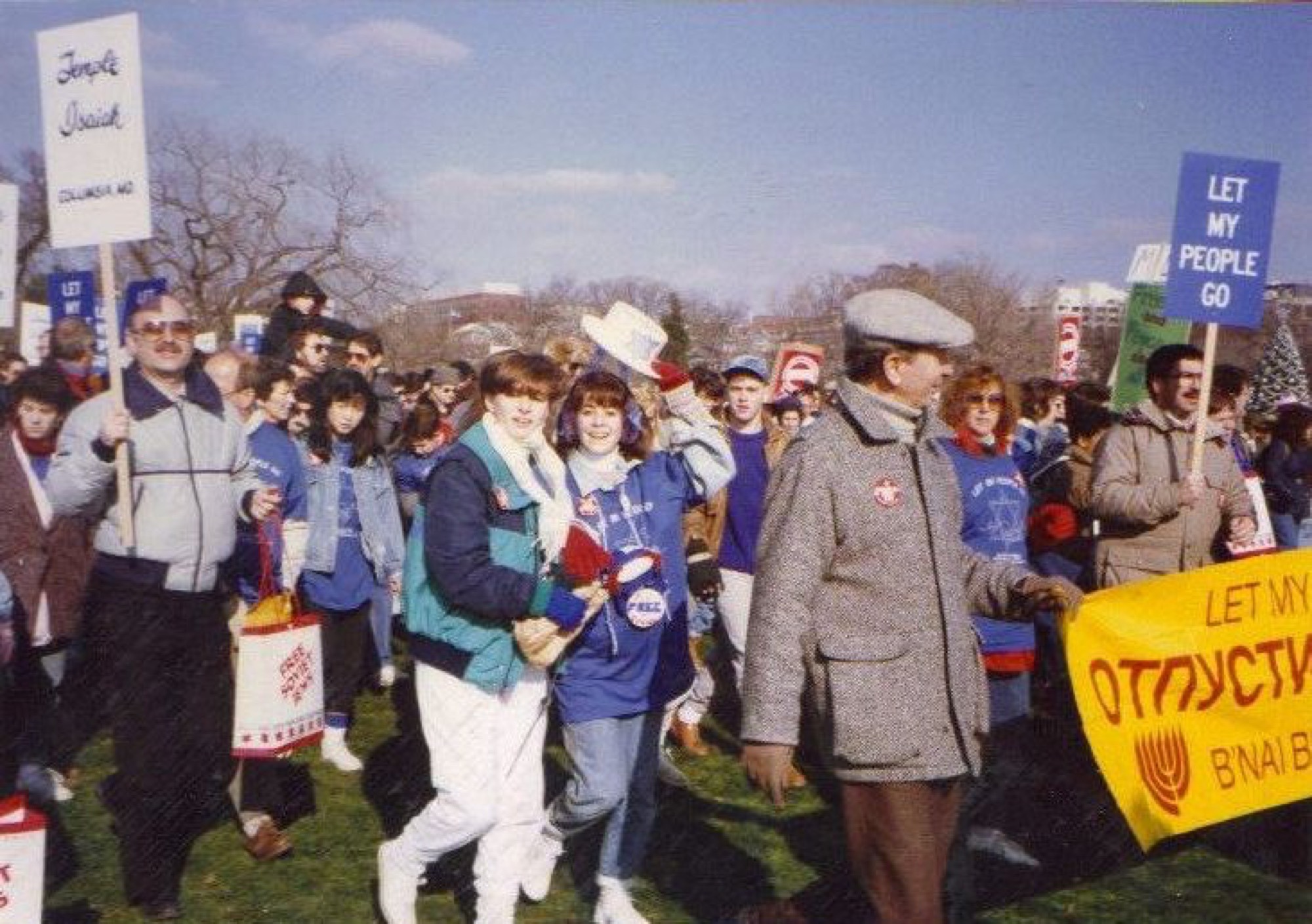
Temple Isaiah members express their Jewish solidarity at a rally for Soviet Jewry, 1987. Click here for more on how Howard Countians joined the worldwide movement to “Free Soviet Jews.”
Courtesy of Temple Isaiah
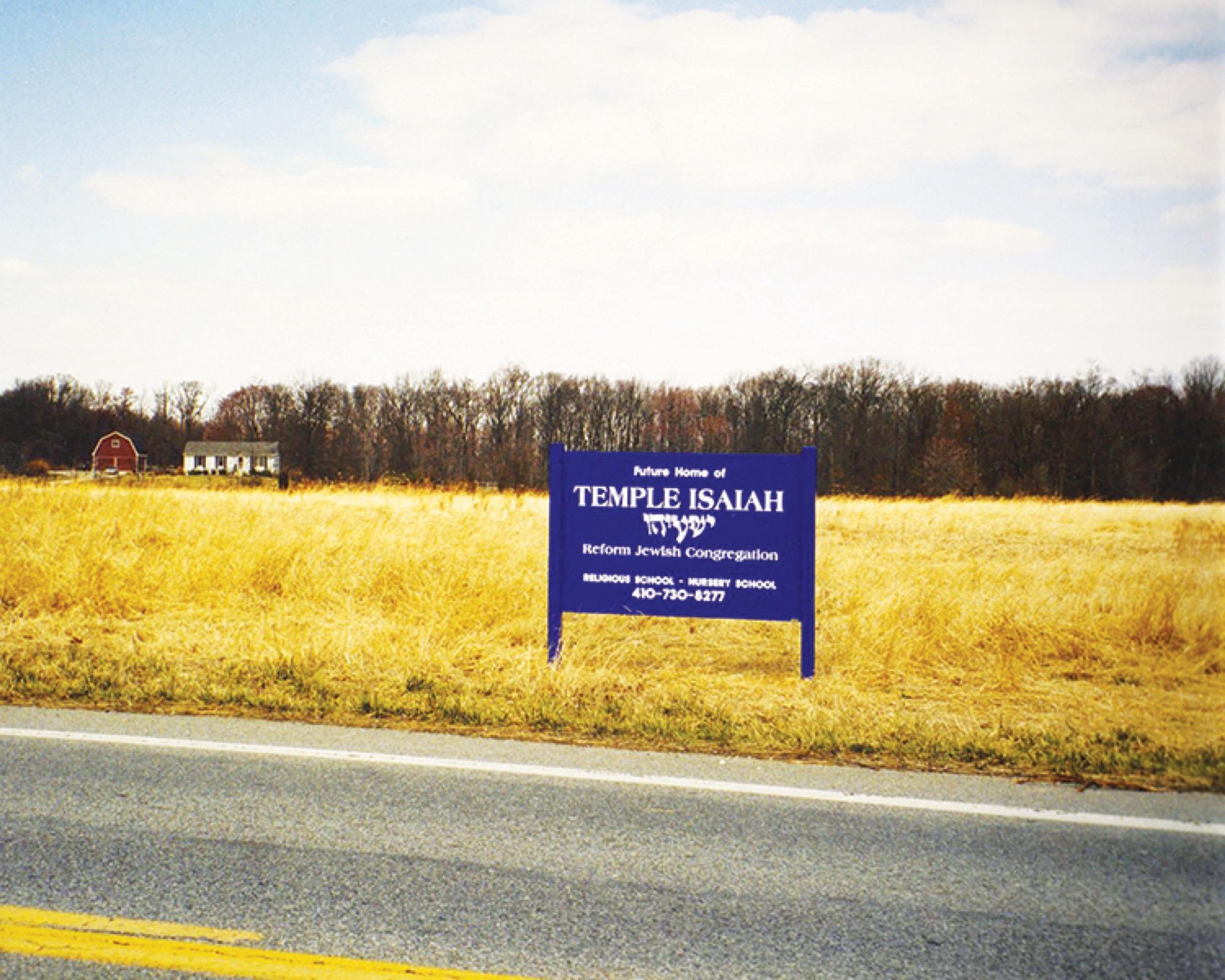
Temple Isaiah had around 450 families in 1997, when its members voted to build a synagogue. They departed the Meeting House for their new home in Fulton in 2004.
Courtesy of Temple Isaiah
And Then There Were Five: A handful of small congregations came and went during the Jewish community’s early decades. By century’s end, two congregations with staying power had joined the original three. Chabad arrived in the mid-1980s, giving Howard County an Orthodox alternative. The Columbia Jewish Congregation provided the impetus, according to CJC rabbi Martin Siegel. “About five or six CJC members would go into Baltimore every week and study with a Lubavitch rabbi there. And he decided, well, why don’t we try to have a synagogue in Columbia?” Rabbi Hillel Baron and his wife Chanie settled in and soon launched the Columbia Torah Minyan. They found support from CJC and others in the Jewish community, and cooperated with them on projects to increase opportunities for engagement with Judaism.
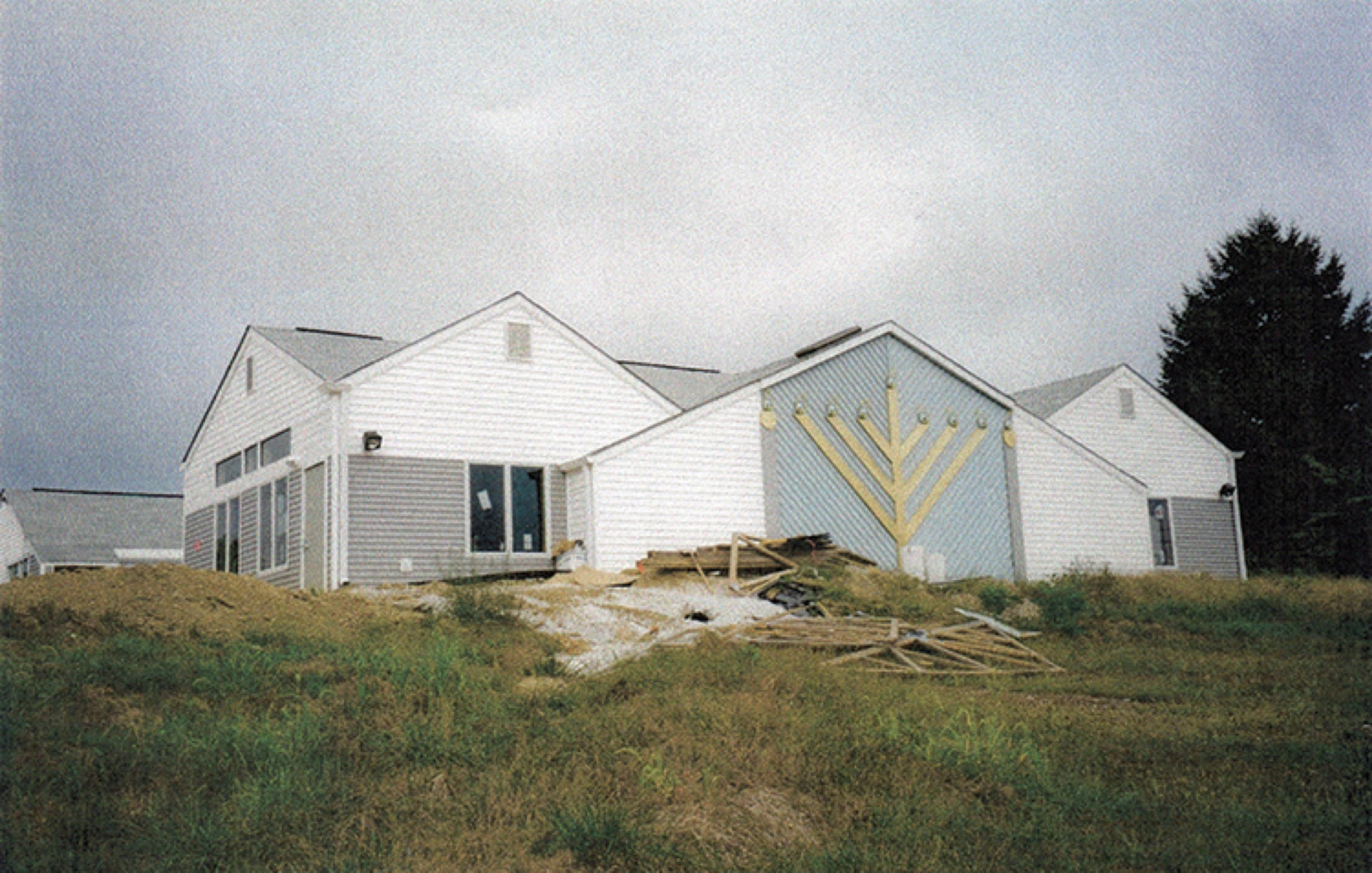
In 1989 Chabad converted a farmhouse into the Chabad-Lubavitch Center, Howard County’s first free-standing synagogue, with Columbia chief architect-planner Bob Tennenbaum as pro-bono architect.
Photo by Bob Tennenbaum
Temple Isaiah’s decision in 1997 to leave the Meeting House and build its own synagogue led to the formation of another new congregation. Some Isaiah members, who remained committed to the interfaith center concept and also sought to create a more intimate and adult-centered synagogue community, began meeting in private homes for worship and study. By summer 1998 they had evolved into a full-fledged congregation, which they named Bet Aviv. That year, they engaged D.C.-based rabbi (and noted historian of American Jewry) Marc Lee Raphael as rabbi. After a period of wandering, they were able to move permanently into the Meeting House in 2004, having grown to some 125 member households.

Jewish Council newsletter, 1986.
Courtesy of Columbia MD Archives, vertical files
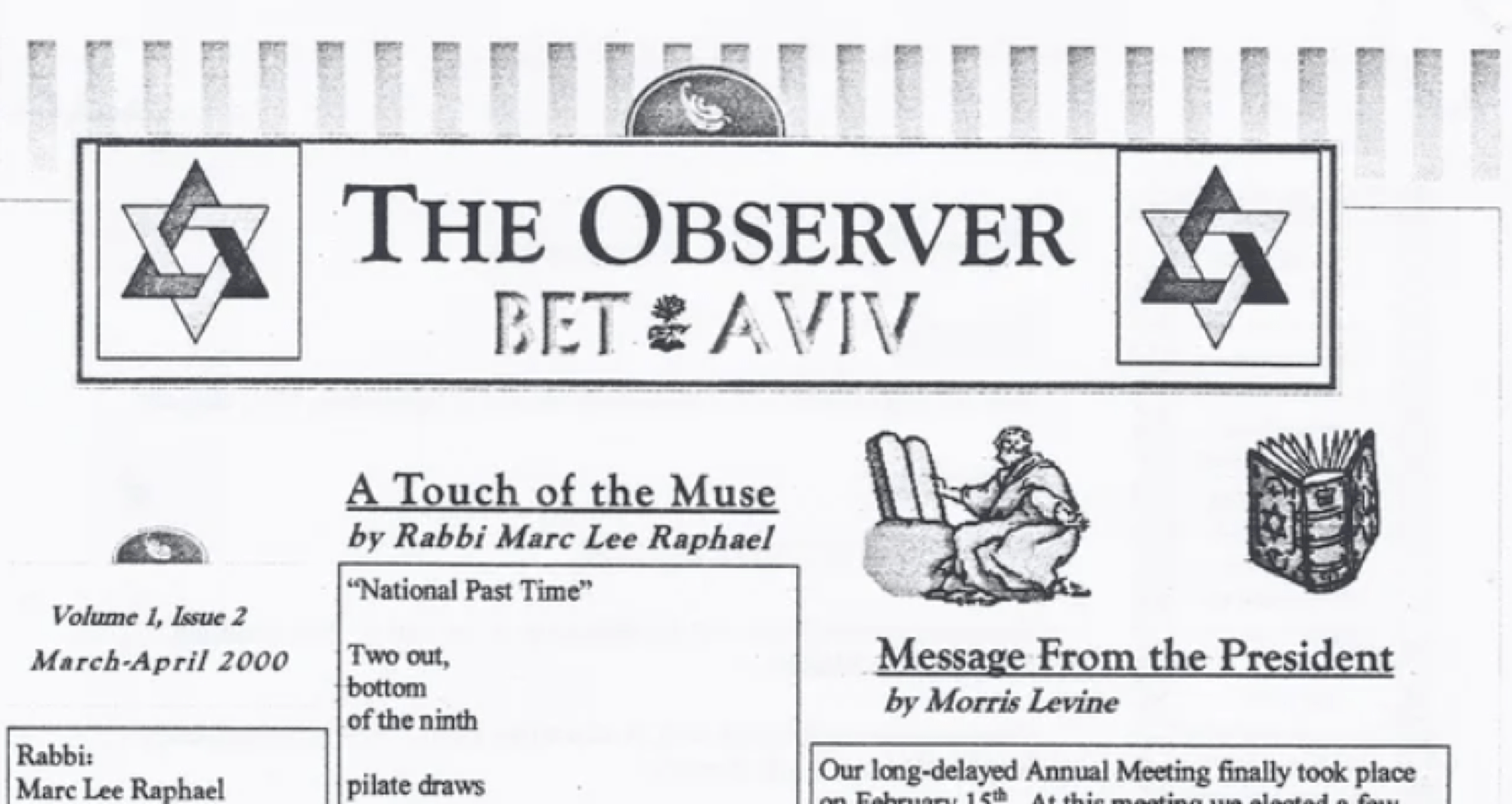
Courtesy of Bet Aviv