Jewish Spaces, Jewish Values
The Howard County Jewish community was forged in the late 1960s and early 1970s, a time when young Jewish adults across America had begun to reject the assimilationist (not to mention conformist) goals of the previous Jewish generation. As they built their community, the Jews of Howard County proudly asserted and publicly celebrated their Jewish identity. In other ways, though, they followed in the footsteps of past generations in upholding Jewish cultural values. The four stories below show some of the ways that Howard County Jews expressed their Jewish commitments and claimed their space as a distinct community even as they embraced the Columbia ideals of diversity and interfaith cooperation.
In the last year, I have found that my attitudes, as well as those of many other young Jews, have changed significantly. There seems to be reaffirmation of Jewish identity, much the same as in the Black community, that includes the rejection of old stereotyped images of the acquiescent Jew as well as a growing impatience with insensitivity by others.
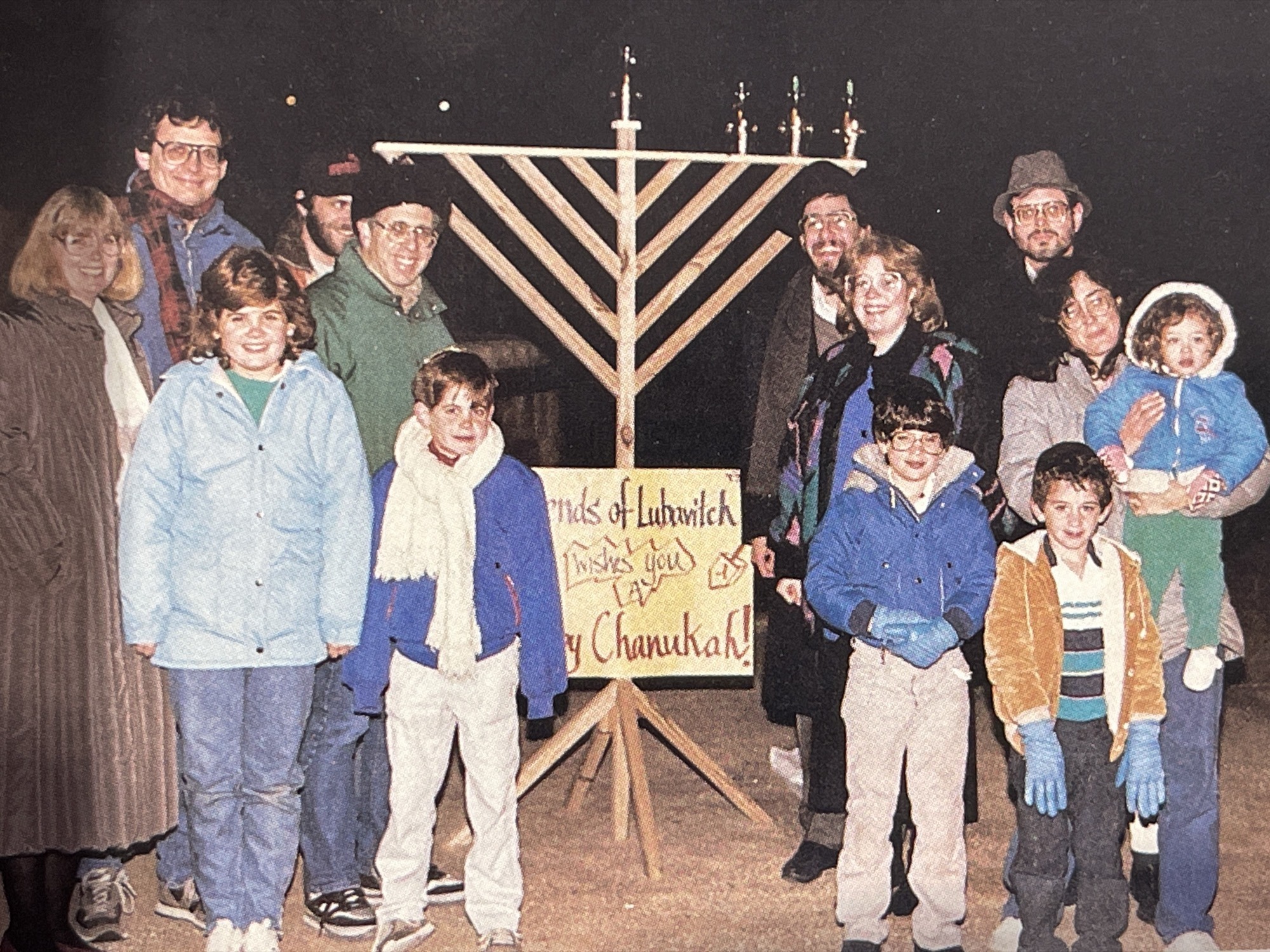
A public menorah lighting in downtown Columbia, c. 1987, sponsored by Chabad. The Chabad movement, though advocating a return to traditional Judaism, was completely in sync with still-relatively new ideas about the assertion of Jewish pride and identity. `
Courtesy of Columbia Jewish Congregation
Deck the Halls?
When the Columbia Mall opened in 1971, the Rouse Company—builder of shopping malls across America—did what it usually did: decorated for Christmas. But this was Columbia, so when Howard County’s lone rabbi, Israel Drazin of Beth Shalom Congregation, pointed out that the decorations “showed an insensitivity to people of other faiths,” his clerical counterparts at the Wilde Lake Interfaith Center agreed. Together they pressured the Rouse Company to find another way to mark the season, and company officials negotiated to replace nativity scenes and Santas with poinsettias. In 1972, when the mall debuted a 30-foot tree formed of poinsettia plants, Rabbi Drazin wryly observed that they had missed the point. Still, the sensitivity of Columbia’s clergy was remarkable, and the mall became a less overtly Christian space.

The poinsettia tree in 1972. The tree became a beloved holiday tradition, garnering fierce protests each time mall managers tried to remove it.
Photo by R. Scott Kramer, courtesy of Columbia MD Archives, Photograph Collection
Sholom Aleichem!
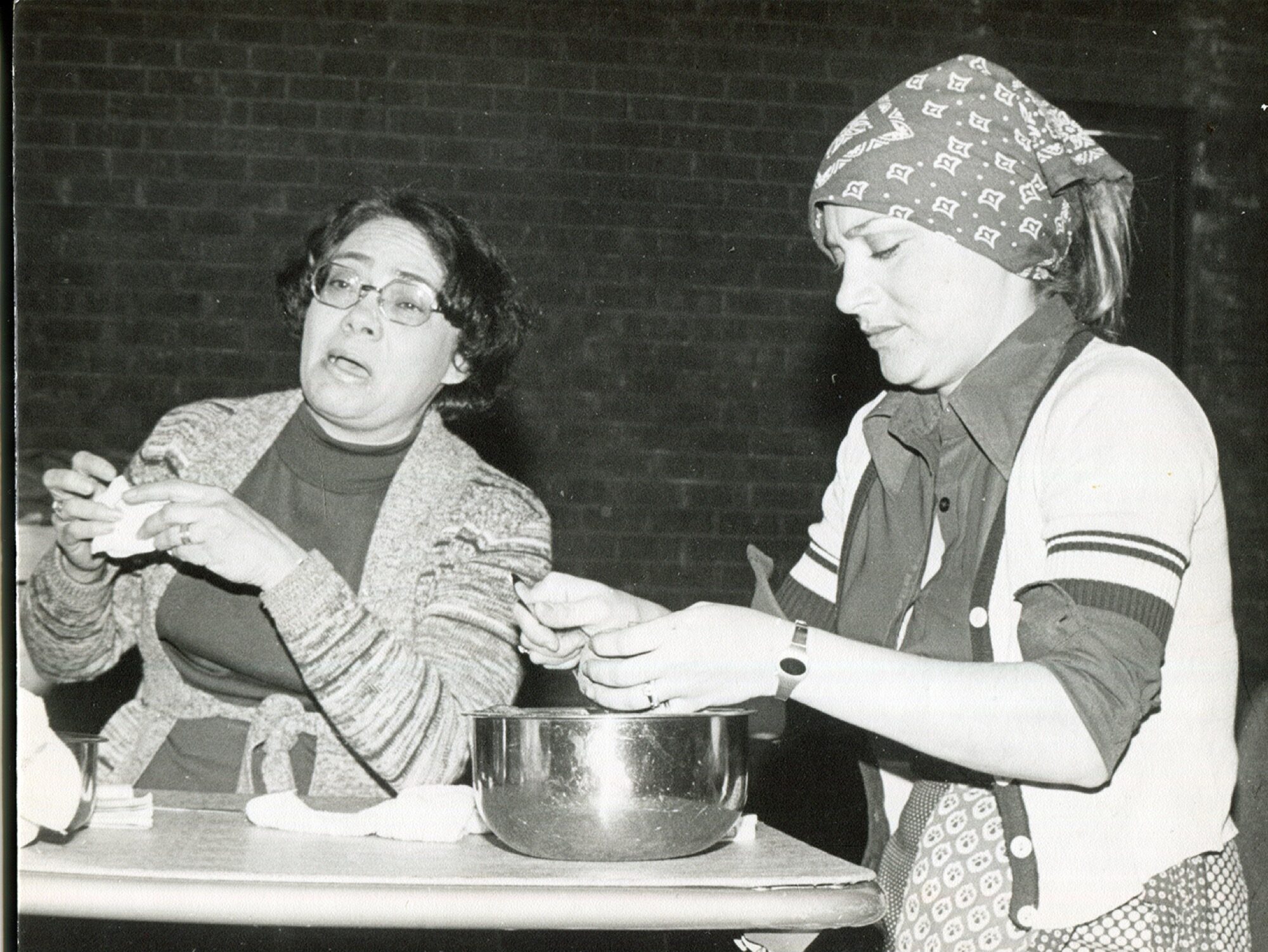
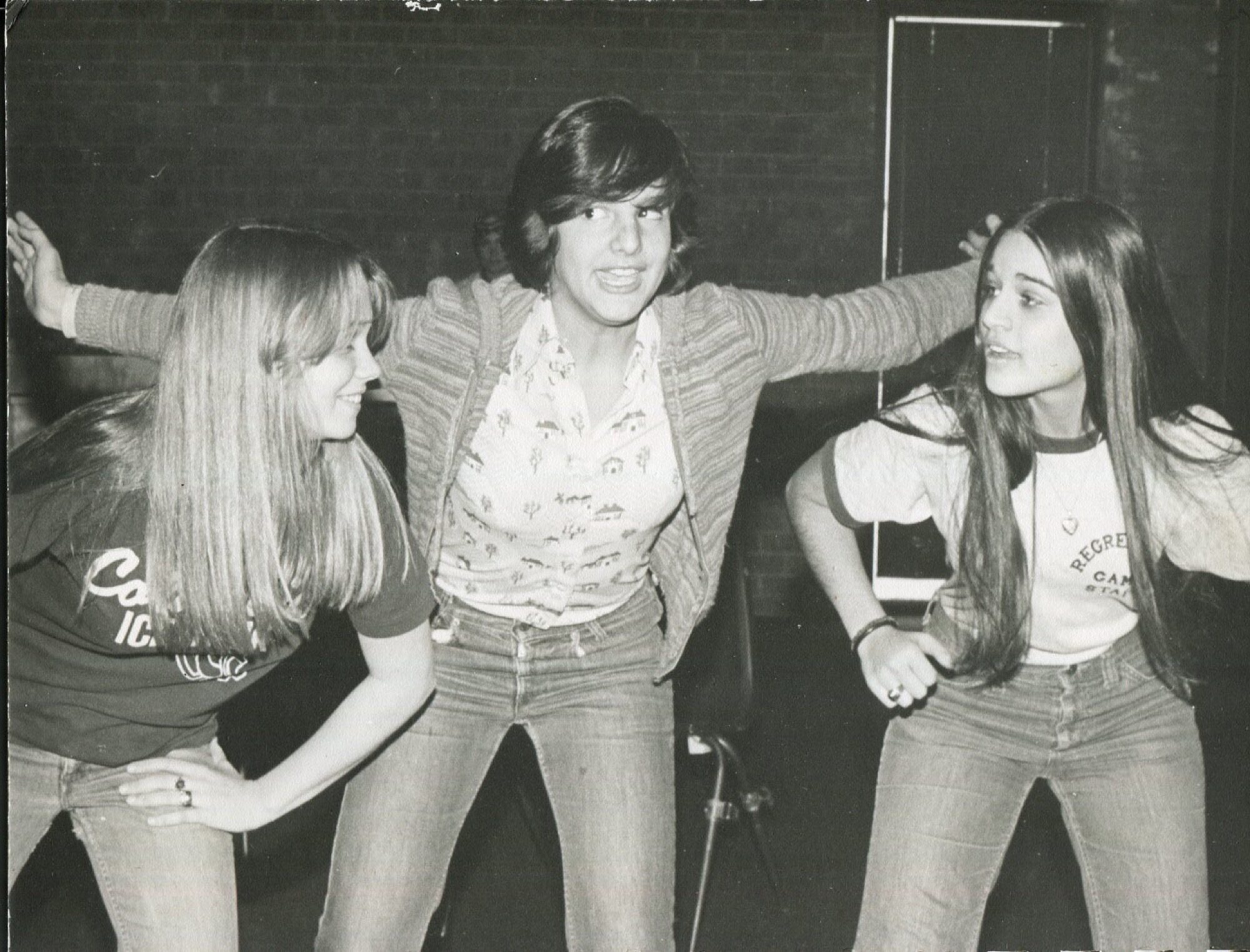
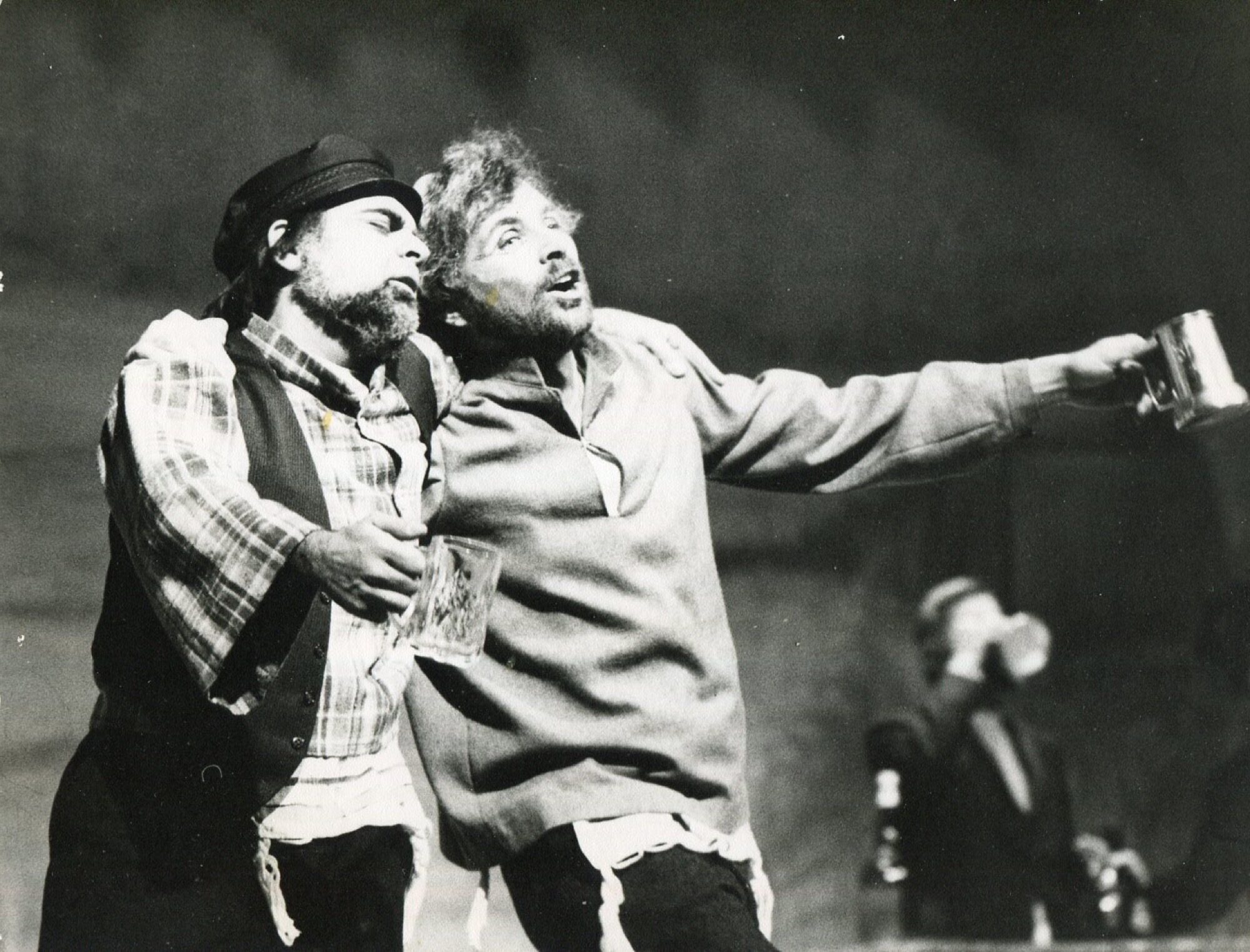
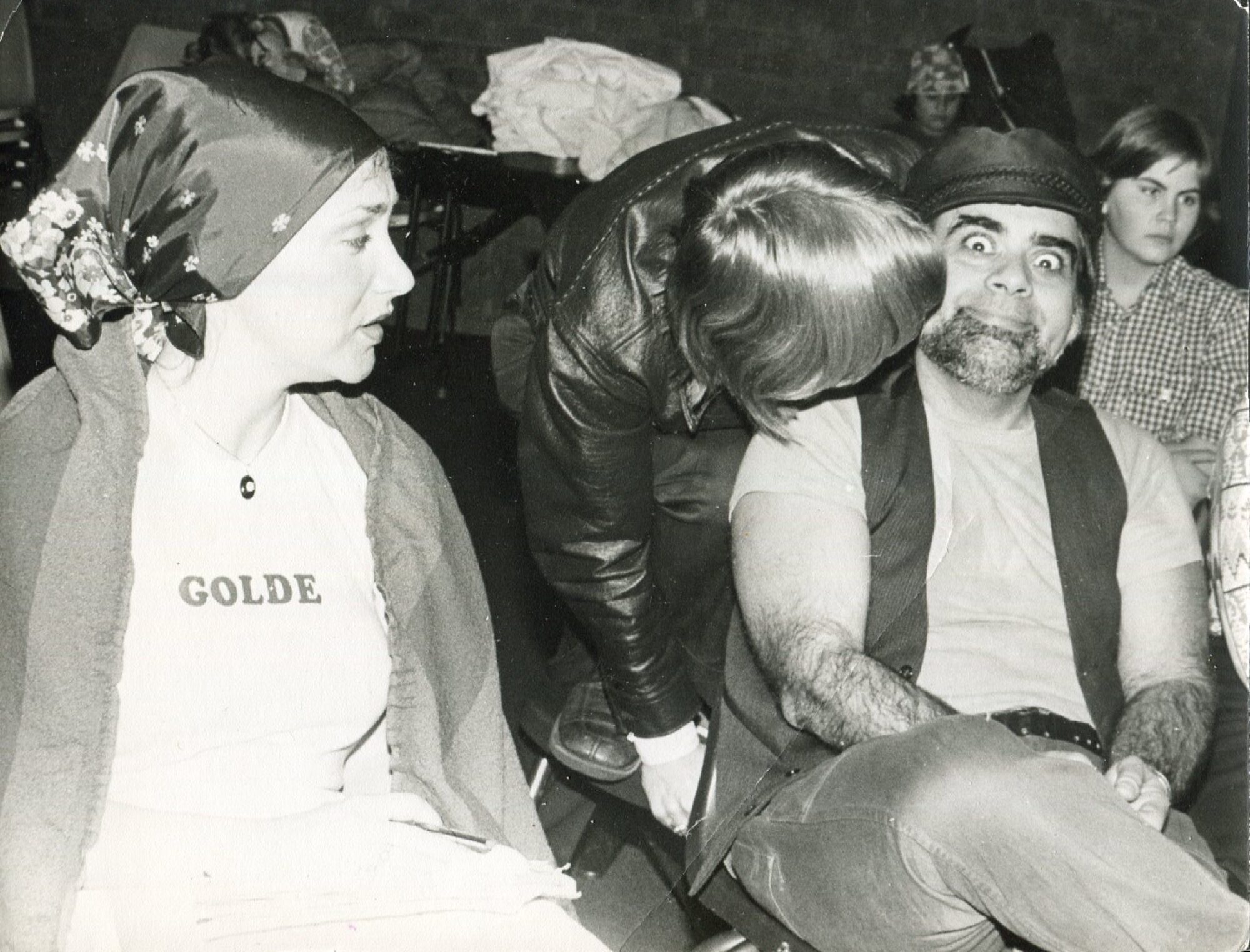
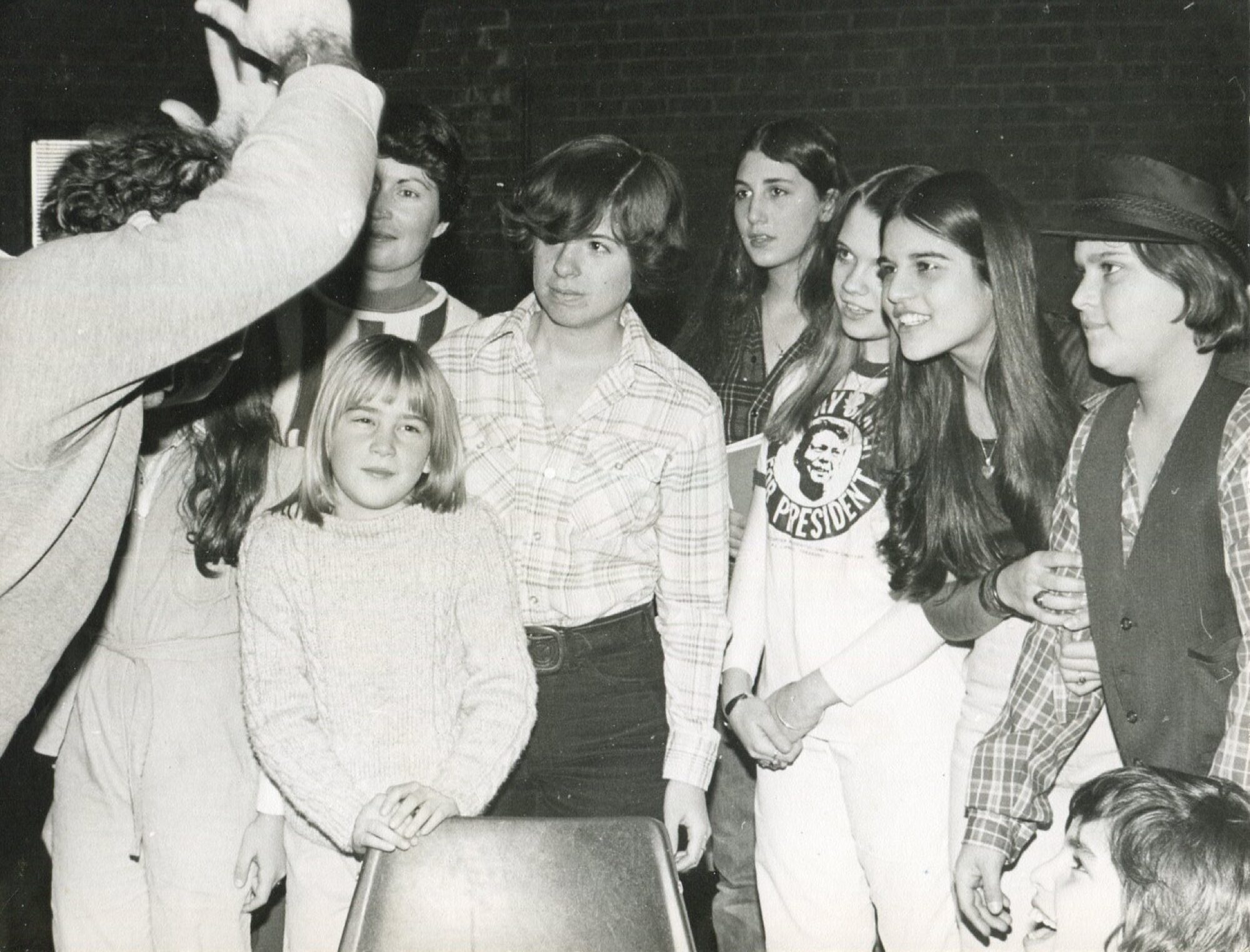
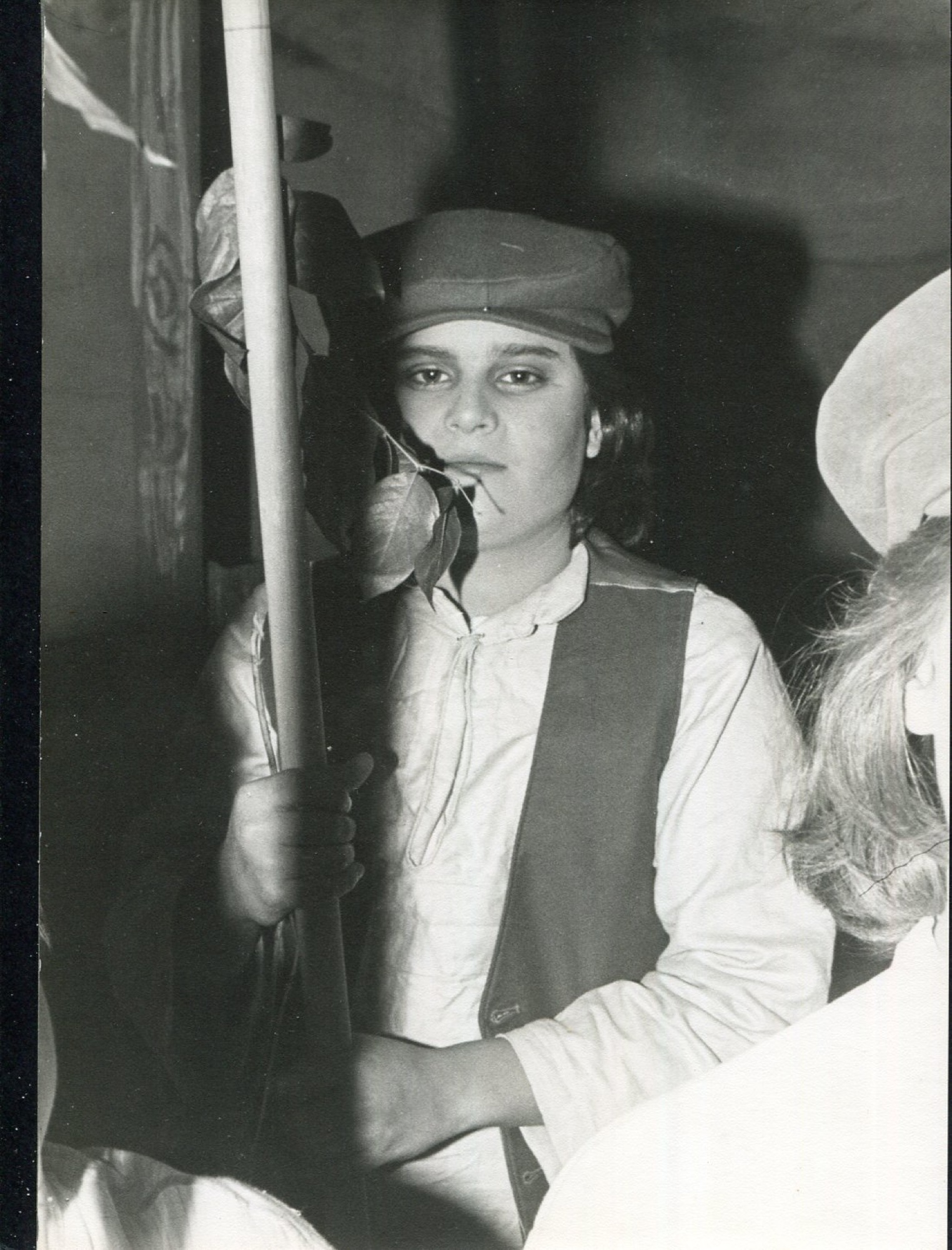
The Jewish kids coming of age in Columbia’s first decade had grown up listening to the soundtrack of the beloved, award-winning Broadway musical (1964) and movie (1971) Fiddler on the Roof. It was their idea to produce an amateur performance of the show in the mid-seventies, and with Jewish talent abundant in Howard County, their parents enthusiastically jumped in. In spite of misgivings—this musical was absurdly ambitious, requiring a cast of 52, plus directors, choreographers, musicians, and teams of people to produce sets, make costumes, sell tickets, and more—Columbia Jewish Congregation agreed to sponsor the production. For a small Jewish community, it was a gutsy undertaking.
Fiddler’s depiction of shtetl life had already become a touchstone of American Jewish identity. But CJC’s production of the show was more than a celebration of Jewish culture. The triumphant 1977 performance brought together the entire Jewish community while affirming a Jewish presence in the public life of Howard County.
Fiddler was a wonderful, wonderful experience.
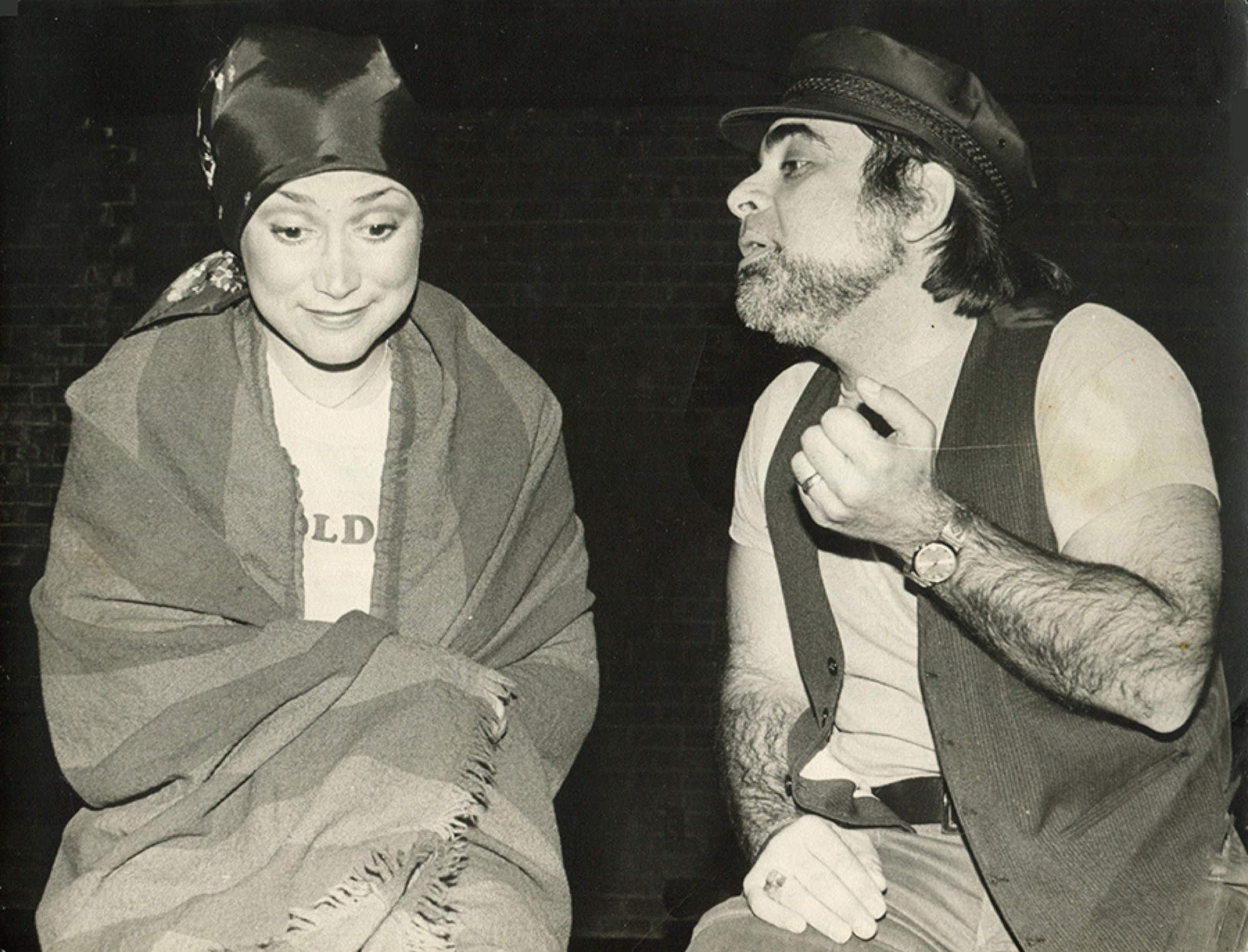
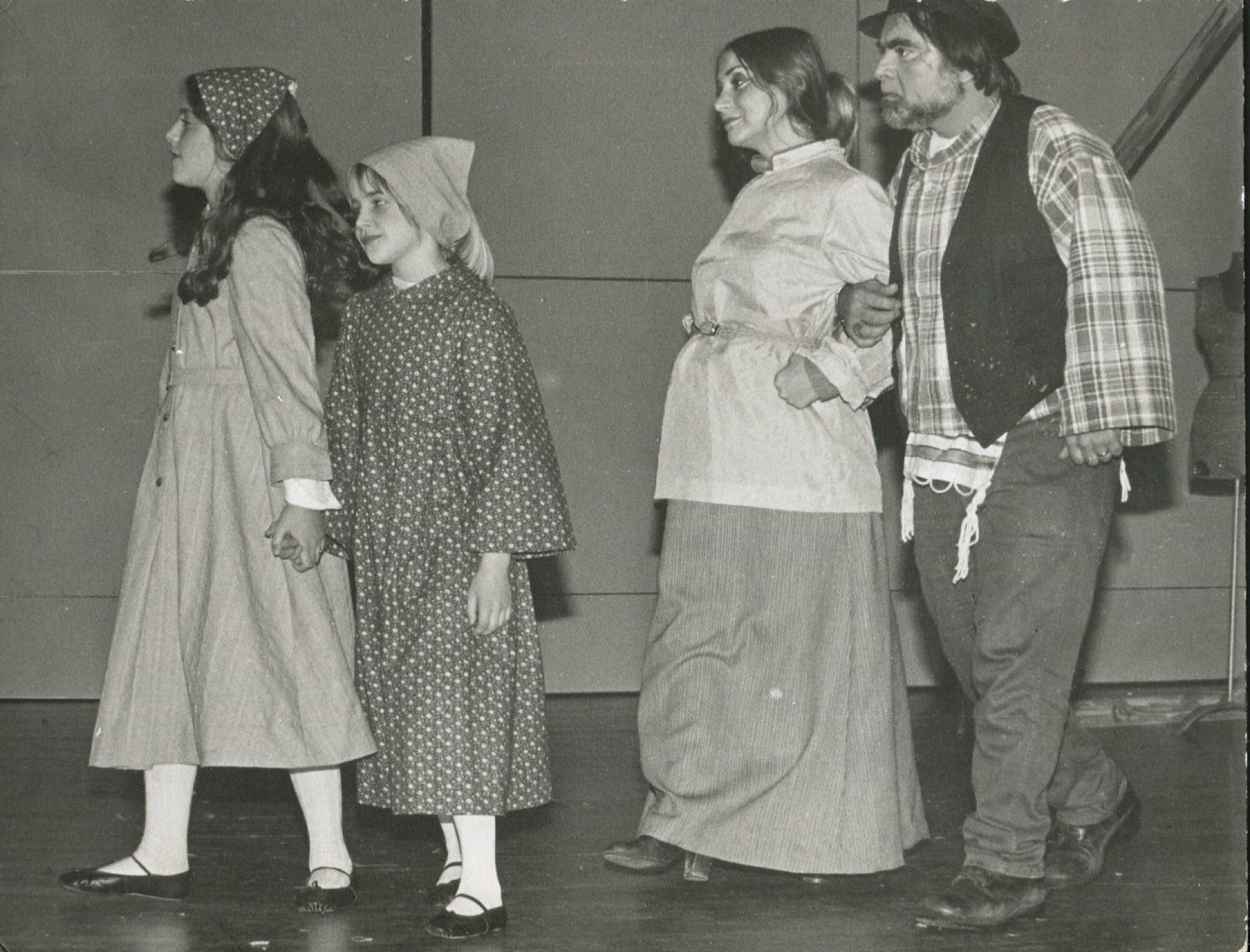
Judi Porecki as Golde and Shep Jeffreys as Tevye rehearse “Do You Love Me?” from Fiddler on the Roof, 1977.
Photo by Fern Eisner, courtesy of Shep and Helane Jeffreys
I was Yente, the matchmaker. They told me I was typecast.
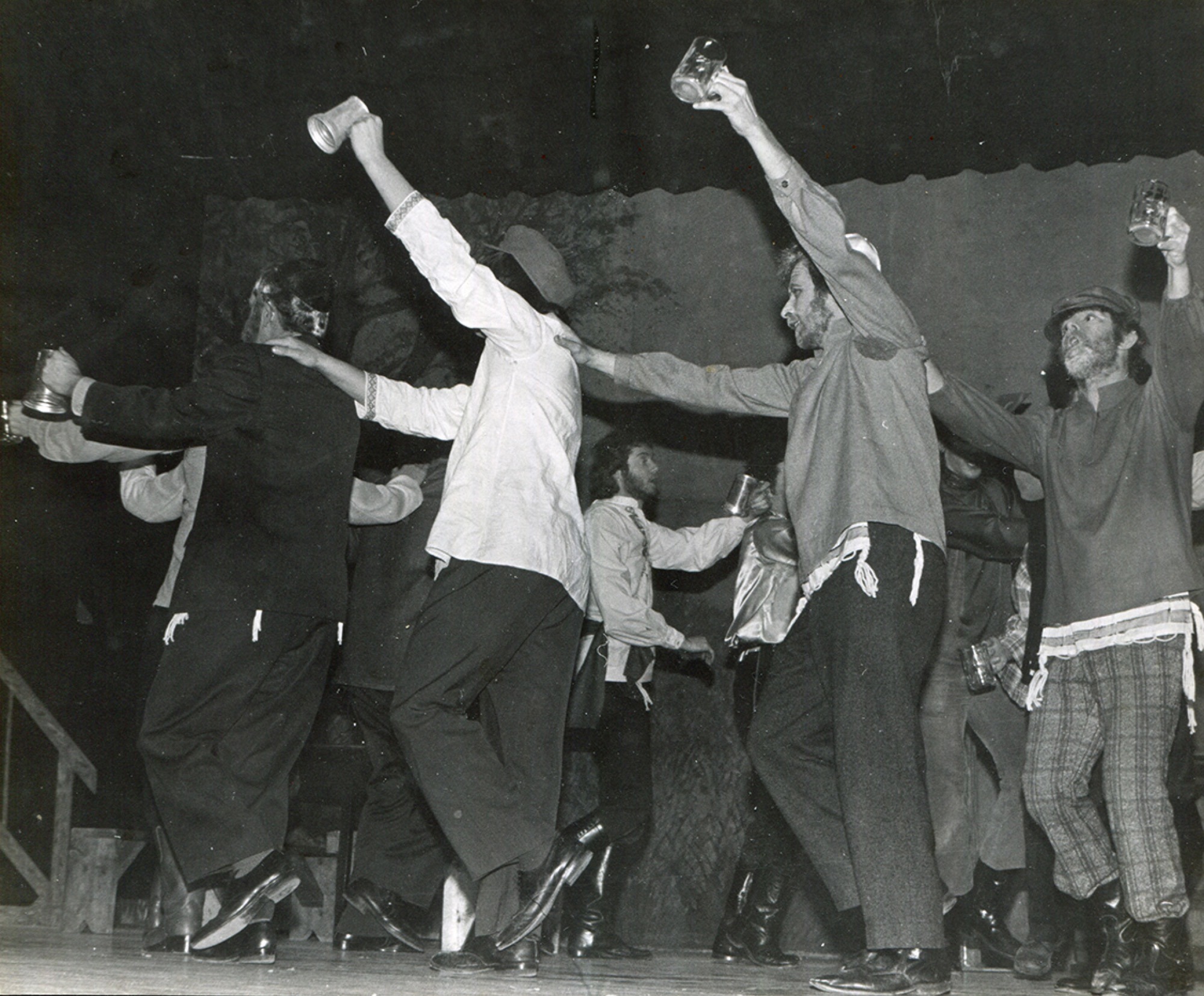
Jewish villagers dance in the tavern.
Photo by Fern Eisner, courtesy of Shep and Helane Jeffreys
Click to see more photos of Columbia’s 1977 production of Fiddler on the Roof!


The program for the performance of Fiddler on the Roof, lovingly preserved in the Columbia Jewish Congregation office, includes the names of all those involved in making it happen.
Courtesy of Columbia Jewish Congregation
“Israel Is a Part of Us”
Interest in Zionism had grown steadily among American Jews throughout the 20th century, especially since Israel’s declaration of independence in 1948. With the 1967 Six-Day War—which occurred just before the first Jewish families moved to Columbia—support for Israel surged and became a pillar of American Jewish identity. In 1970, Robert Waller wrote in Columbia’s interfaith newsletter that his generation’s recent assertion of Jewish identity “can be attributed [in part] to the developmental and military success of Jews in Israel.”
Jewish Howard Countians celebrated Israel Independence Day each spring. “We used to have big Israeli nights—big, big crowds of people would come,” remembers Pearl Laufer. They also supported Israel in other ways: traveling there in locally organized groups; donating money, especially when the state was militarily or economically threatened; and political activism.

Beth Shalom sponsored Howard County’s first organized trip to Israel in December 1975. Travelers young and old made the journey despite a year of repeated terror attacks that had targeted tourists. This photo taken at Ben Gurion Airport suggests the country’s gratitude towards their arriving visitors.
Courtesy of Beth Shalom

The fledgling community celebrates Israel Independence Day (today, Yom Ha’atzmaut), 1970. In 1980, the annual celebration drew a whopping 750 attendees.
Courtesy of Jessica Rowe

The Jewish Council announces plans for Israel’s 40th birthday.
Courtesy of the Jewish Federation of Howard County
“Wherever you walk in Israel, you are surrounded by thousands of years of your own history.”


Camel rides (that’s Rabbi Steve Fuchs in the saddle), wading at Ein Gedi, a Dead Sea swim, exploring an archaeological site in Caesarea, and prayers at the Western Wall: iconic scenes of Israel during a Temple Isaiah trip in 1984,
Photos by Jeff Friedhoffer, courtesy of Temple Isaiah
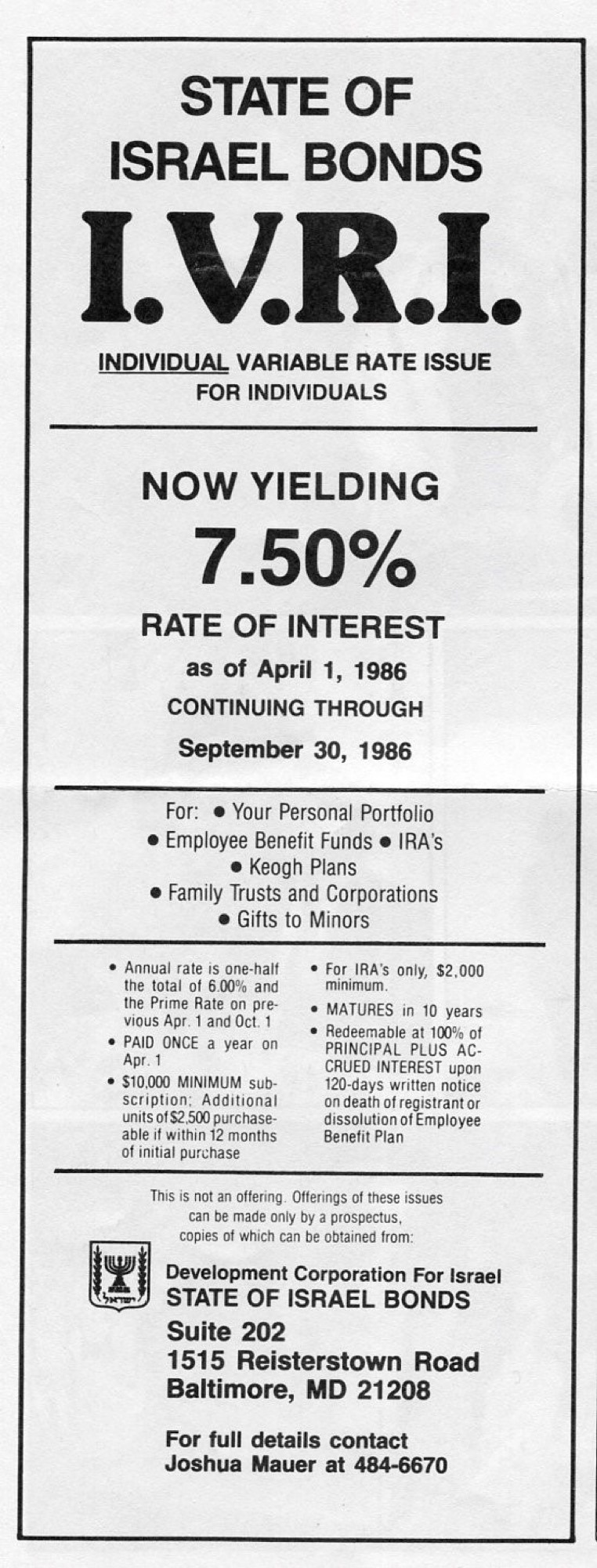
Jewish Howard Countians have generously supported Israel, especially in times of trouble. In 1967, when the Jewish Council had only 35 member families, they donated $835 to support Israel during the Six-Day War (approximately $8,000 in today’s dollars). At the time of 1973’s Yom Kippur War, 600 member families raised $70,000 ($484,000 today) in Israel Bonds and cash gifts.
Sales drives for Israel Bonds are a ubiquitous feature of American Jewish communities. This ad is from the Jewish Council of Howard County’s May-June newsletter, 1986.
Courtesy of the Jewish Federation of Howard County
Members of the Howard County Jewish community have never been shy about raising their voices in protest when they felt Israel was being treated unfairly and letting their elected leaders know where they stand.
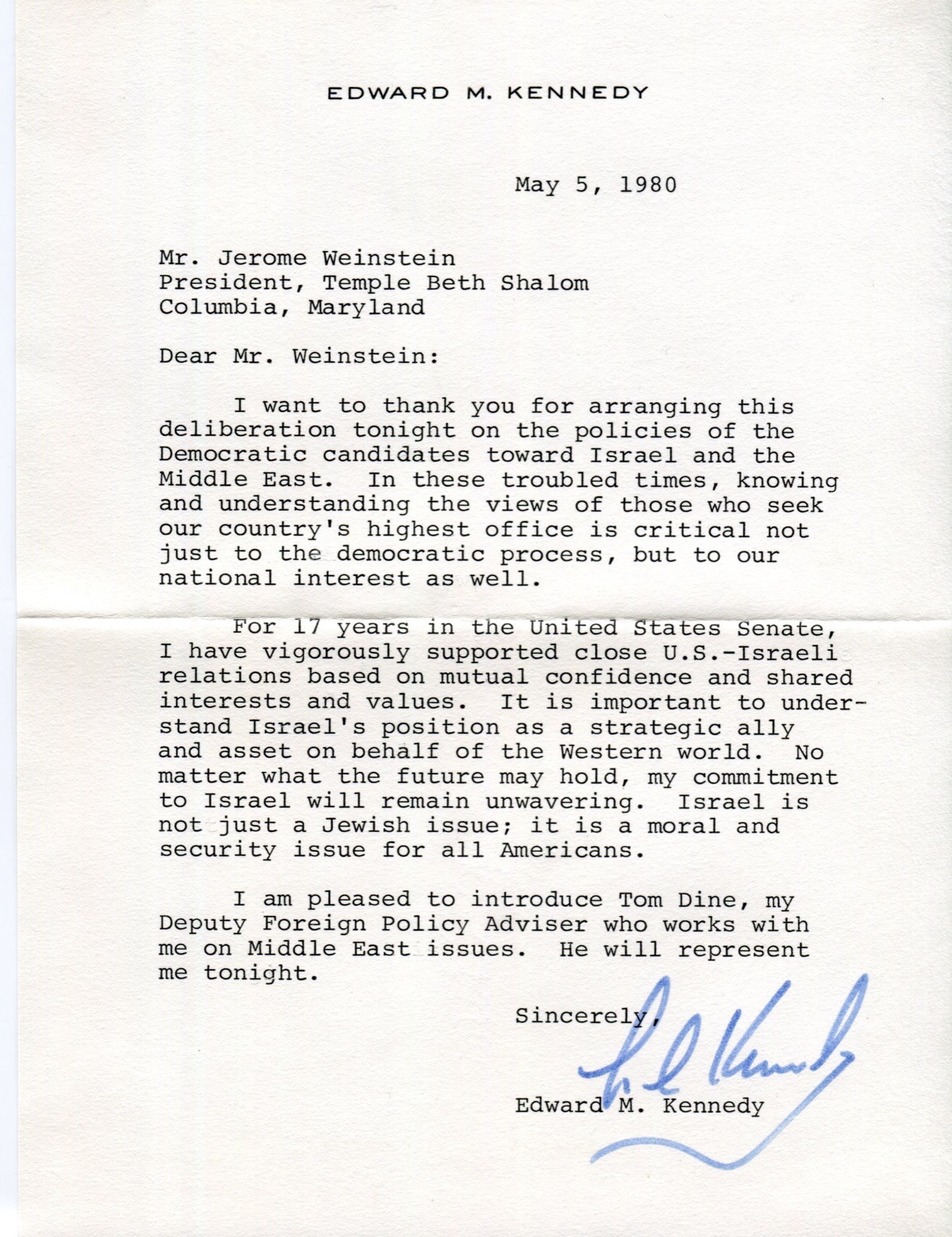
In 1980, Temple Beth Shalom invited Democratic primary presidential candidate Senator Edward Kennedy to a forum examining United States policies on Israel.
Courtesy of Jerry Weinstein
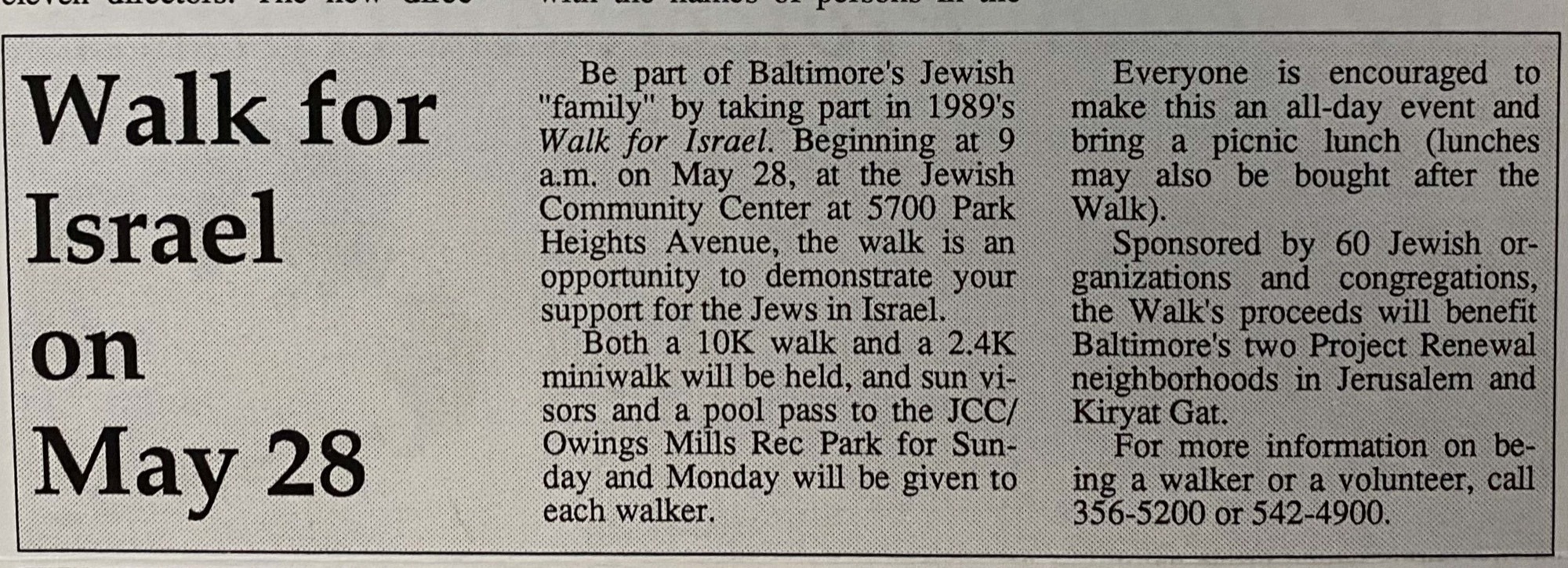
In 1989, the Council urged the community to join Baltimore’s Walk for Israel.
Courtesy of the Jewish Federation of Howard County
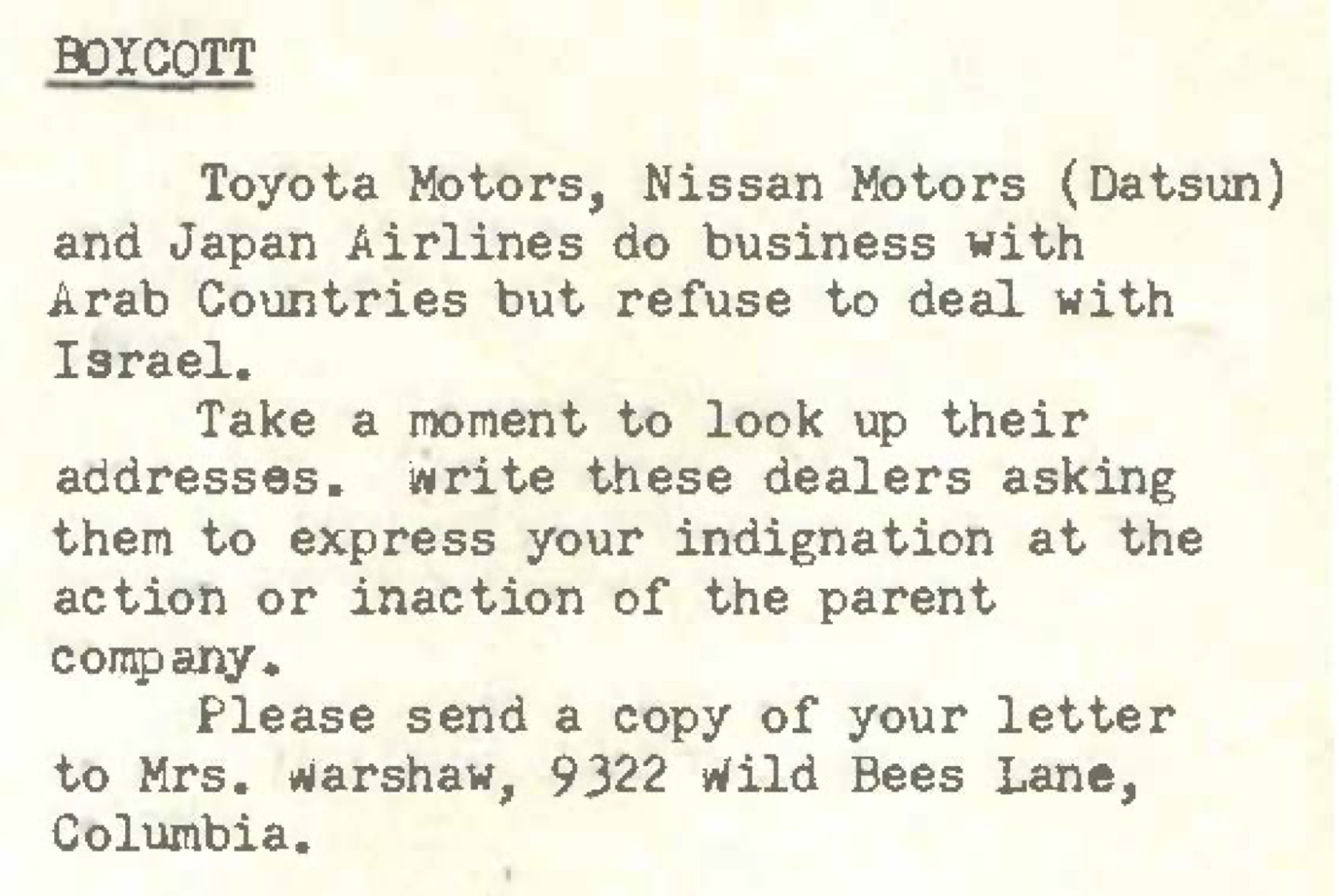
The Jewish Council’s October 1970 newsletter urged the community to write letters of protest and join the boycott against companies that refused to do business with Israeli firms.
Courtesy of the Jewish Federation of Howard County
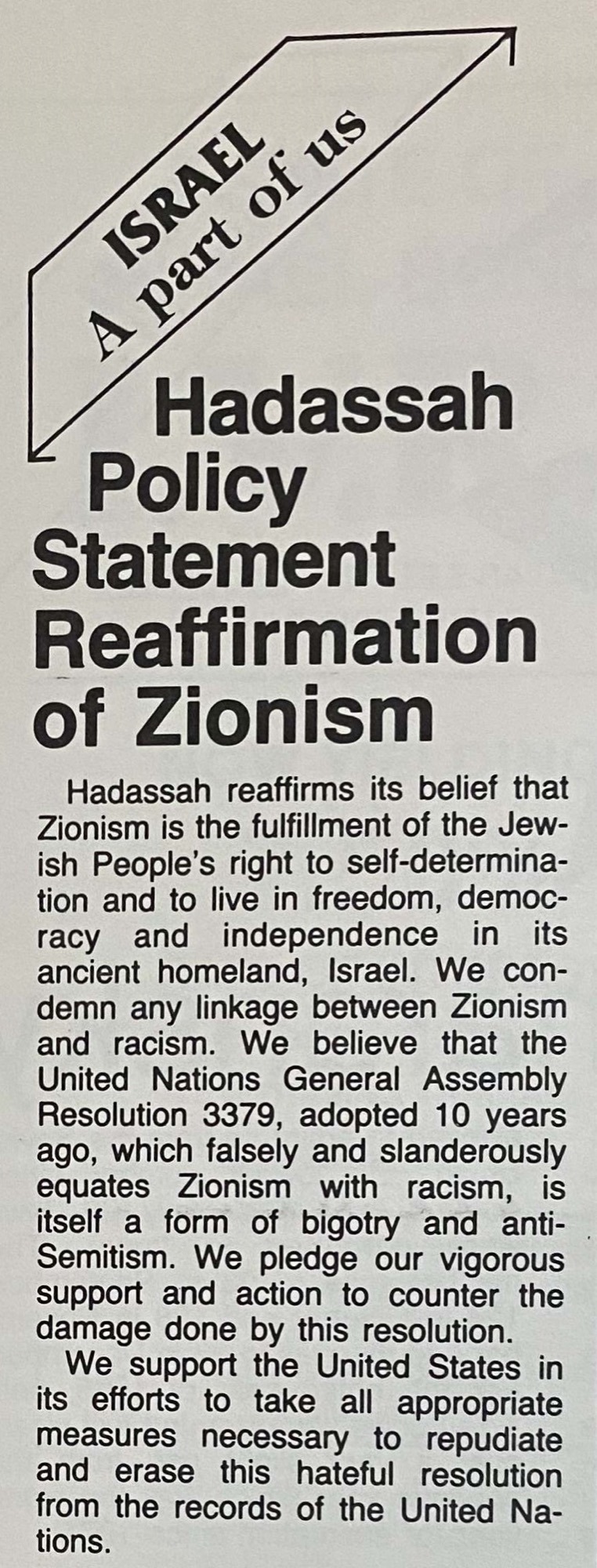
As reported in a 1986 Jewish Council newsletter, Hadassah mobilized its membership to support ongoing efforts to overturn United Nations Resolution 3379 equating Zionism and racism. “Israel [is] a part of us,” the article’s banner declared.
Courtesy of the Jewish Federation of Howard County
Let My People Go!
Activism to combat Jewish repression in the Soviet Union built slowly throughout the 1960s to become the most influential American Jewish social justice movement of the 20th century. Naturally, the Jews of Howard County played their part. In 1974, a crowd gathered at a Jewish Council event to hear two movement activists, recently returned from the Soviet Union, describe the antisemitic harassment faced by refuseniks (Jews who were refused permission to emigrate). The community was galvanized into action that included protest marches and resettlement efforts lasting more than 20 years.
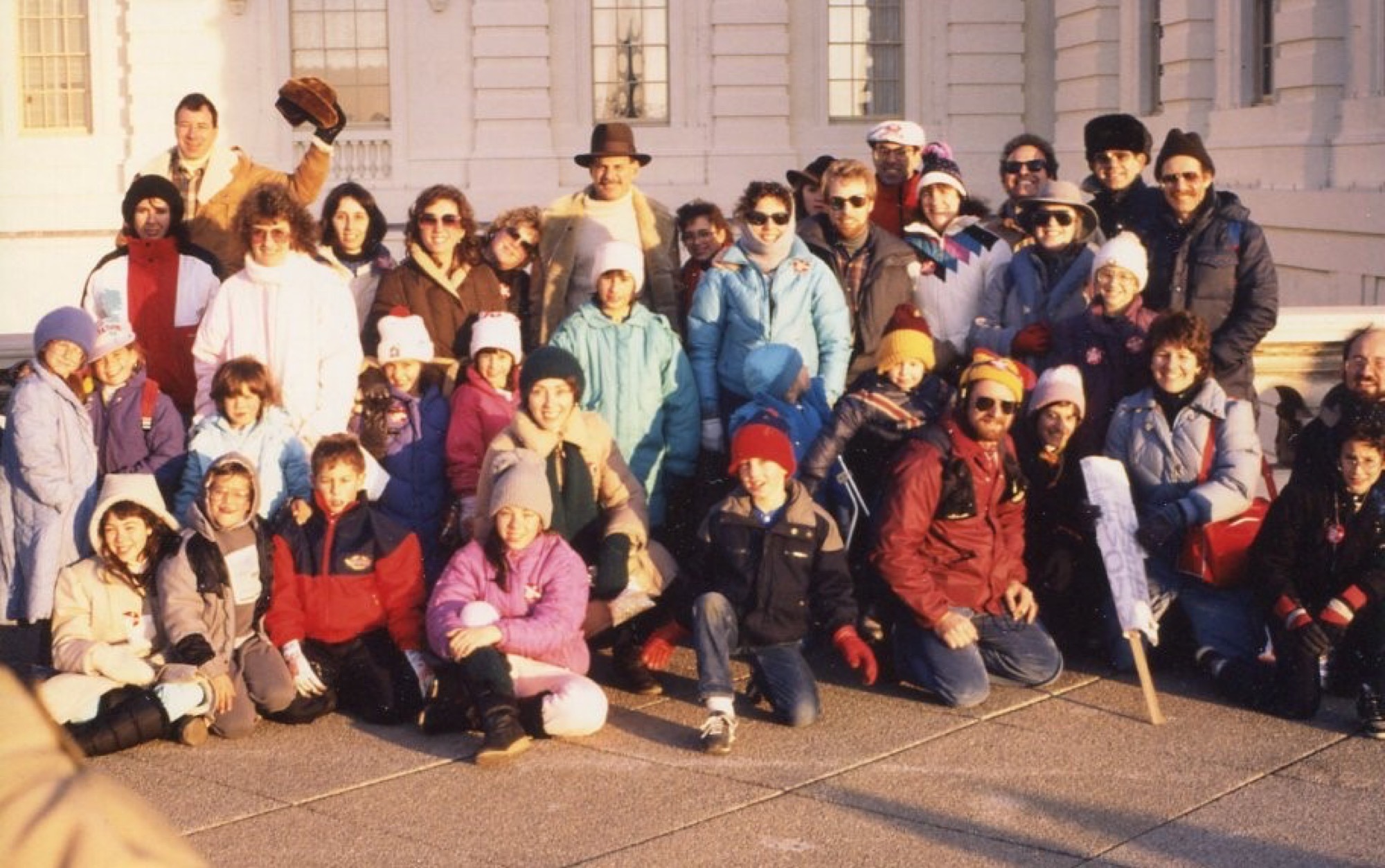

Nearly 1000 Howard County Jews traveled to D.C. to join the 1987 national rally to aid Soviet Jews. At the time, it was the largest march ever held in the U.S. for a Jewish issue. Top, the Temple Isaiah delegation. Left, a group from Beth Shalom Congregation upon arrival in Washington, DC.
Courtesy of Temple Isaiah and Beth Shalom Congregation
Do you have photos or memorabilia of Soviet Jewry activism in Howard County? Share them with us!

Along with many other Jewish kids turning 13 in the mid-1980s, Debbie Filtzer included a “twinning ceremony” with a girl from a refusenik family as a part of her bat mitzvah.
Courtesy of Janet Epstein Brady

Hoping to make a personal connection between the Russian and American 13-year-olds, Soviet Jewry advocates provided background information about refuseniks, including a home address. When the American teens wrote letters to their Russian “twins” and spoke about them during their b’nai mitzvah ceremonies, they were empowered as activists and increased awareness of the issue.
Courtesy of Janet Epstein Brady
Throughout the 1970s, Western agitation on behalf of refuseniks pressured the Soviet Union into allowing thousands to leave. Most emigres went to Israel, but large numbers also came to the United States. The American Jewish community took responsibility for welcoming the newcomers and helping them settle into their new homes.
By 1976, the number of Russian Jews arriving in Baltimore had swelled, and the Associated Jewish Charities turned to the young community in Howard County. “They said, ‘we’re getting kind of full. We’d love to have more places to relocate Soviet Jews. If you’re willing to take that on in Columbia, we will get you started on the right path,” recalls Jerry Weinstein, who was Jewish Council president at the time. “And the community did rally around providing all kinds of help. Everything from providing furniture for an apartment, to taking [newcomers] to the grocery store, that kind of thing.”
Resettlement efforts that began in the 1970s lasted into the 1990s, as a large wave of immigrants arrived after the breakup of the Soviet Union.

Members of the Soviet Jewry Committee met with then-Representative Ben Cardin in 1992.
Courtesy of the Jewish Federation of Howard County

Left: The Jewish Council (after 1992, the Jewish Federation of Howard County) established a Soviet Jewry Committee that provided resettlement services and also served as a source of expertise, volunteer recruitment, and fundraising for the resettlement efforts undertaken by local congregations.
Right: Resettlement was a big job. The Soviet Jewry Committee advertised in the Federation’s January 1993 newsletter for volunteers to fill a number of important roles.
Courtesy of the Jewish Federation of Howard County


Group of Russian emigres, 1996. This group represents a fraction of the several hundred who were assisted in their immigration journey by Howard Countians through the decades.
Courtesy of the Jewish Federation of Howard County
Are you part of a Russian emigre family that settled in Howard County? Share your story with us!