
Joining the Next America
Like other Columbia pioneers, early Jewish residents plunged enthusiastically into the civic, cultural, educational, and recreational activities that immediately started up. From the beginning, they participated in town-building initiatives both as individuals and as an organized Jewish group.
“Everything was new and it was very exciting to see the plans and to be a part of the planning process. Very rewarding.”
Lynne Warshaw

Jean Toomer and Jewish community member Mimi Sherman look over plans in the Columbia Association office, 1971. Jean would become first director of the Howard County Office of Human Rights. Mimi was the CA’s community relations director.
Courtesy of Columbia MD Archives, Photograph Collection
Joiners
“You could go out to meetings every night of the week. If you were a big joiner, you joined.”
Helen Ruther
Martin Warshaw was the first Columbia Council representative from Oakland Mills; he and his wife Lynne both served on the village board. Bobbi and Marty Fagan were active in Scouting, the PTA (he served as treasurer), and more. Other Jews also volunteered in local governing bodies and children’s activities. They founded arts programs and service clubs. They played leadership roles in United Way and the Chamber of Commerce. They joined chess clubs and bridge clubs. “Columbia offers so many activities and such a friendly feeling that we haven’t had time to miss our old life,” wrote Helen Ruther to old friends in December 1967.


Helen Ruther offers a vivid glimpse of early life in Columbia in this letter to friends back in Albany. She describes her local village center, the (as yet unbuilt) downtown, and her children’s school. Between participating in the Jewish Council, the local League of Women Voters, and other activities, “the trouble here is finding the time to do all the things available.”
Courtesy of Helen Ruther

Photo by Jerry Wachter, courtesy of Columbia MD Archives, Women’s Center Records
“Many of us in Columbia ‘grew up’ through participation in the Women’s Center.”
The women of Columbia began to meet almost immediately. They were the catalyst for many early initiatives, including the first nursery school and the welcoming committee. In 1970 they created the Women’s Center, a feminist organization that included consciousness raising and advocacy. Many Jewish women participated through the years. At this 1978 Women’s Center event, Suzanne Waller is at far left. Others from left are: Ellen Goodman (featured speaker), Sherry Karsk, Pam Tyminski, and Ellen Lauridsen.
“I didn’t know how much I was going to be involved in creating a new city. I was 100% involved, and I loved it. It was like, ‘Holy mackerel, how many times in anybody’s life do you get to be part of planning a city and getting things done?’

Courtesy of Suzanne Waller
Suzanne and Robert Waller with children (L-R) Elliot, Pam, and Andrew, 1977. The Wallers arrived in 1969 and immediately immersed themselves in town-building activities. In addition to participating in the Women’s Center, Suzanne created “Lively Arts for Little Ones” and other children’s programs as program director for Oakland Mills. She later went on to serve on the Columbia Association board, among other activities.


Courtesy of Jessica Rowe
described how the Jewish community was taking shape.
In his 1970 letter to the Jewish community, Jewish Council president Siegfried Rowe highlighted the dual nature of Jewish involvement in Columbia:
“As individuals our members are in the forefront of almost all groups and causes, from grape boycott to peace, pollution to friendship exchange… to political parties and many more. Our members have been elected to the boards in Columbia on all levels… As Jews, we have participated under the Council or as individuals to lay a foundation in a new concept of city planning and environmental planning, for all the thousands of Jewish people yet to come here.”


A Jewish Presence
Columbia’s emphasis on interfaith cooperation encouraged religious groups to participate in civic life rather than keep to their own separate sphere. Also, even though Columbia welcomed them, Jews needed to look after their interests as a religious minority. In fact, Howard County Jews had organized before Columbia even opened in order to oppose a proposal that linked the public schools to religious education and to have input into the plans for interfaith centers.
The Jewish Council was the vehicle that represented Jews as a group. Not only did it protect Jewish interests, it also participated in initiatives such as the Interfaith Housing Committee, which promoted the development of low-income housing. In his letter to the Jewish community, Siegfried Rowe emphasized the importance of keeping together under the Council’s umbrella “to present a united appearance to the outside world.”
“Our status as a Jewish voice will cease to exist unless we can compromise among ourselves, so we can contribute and partake as equal partners in the development of the area.”
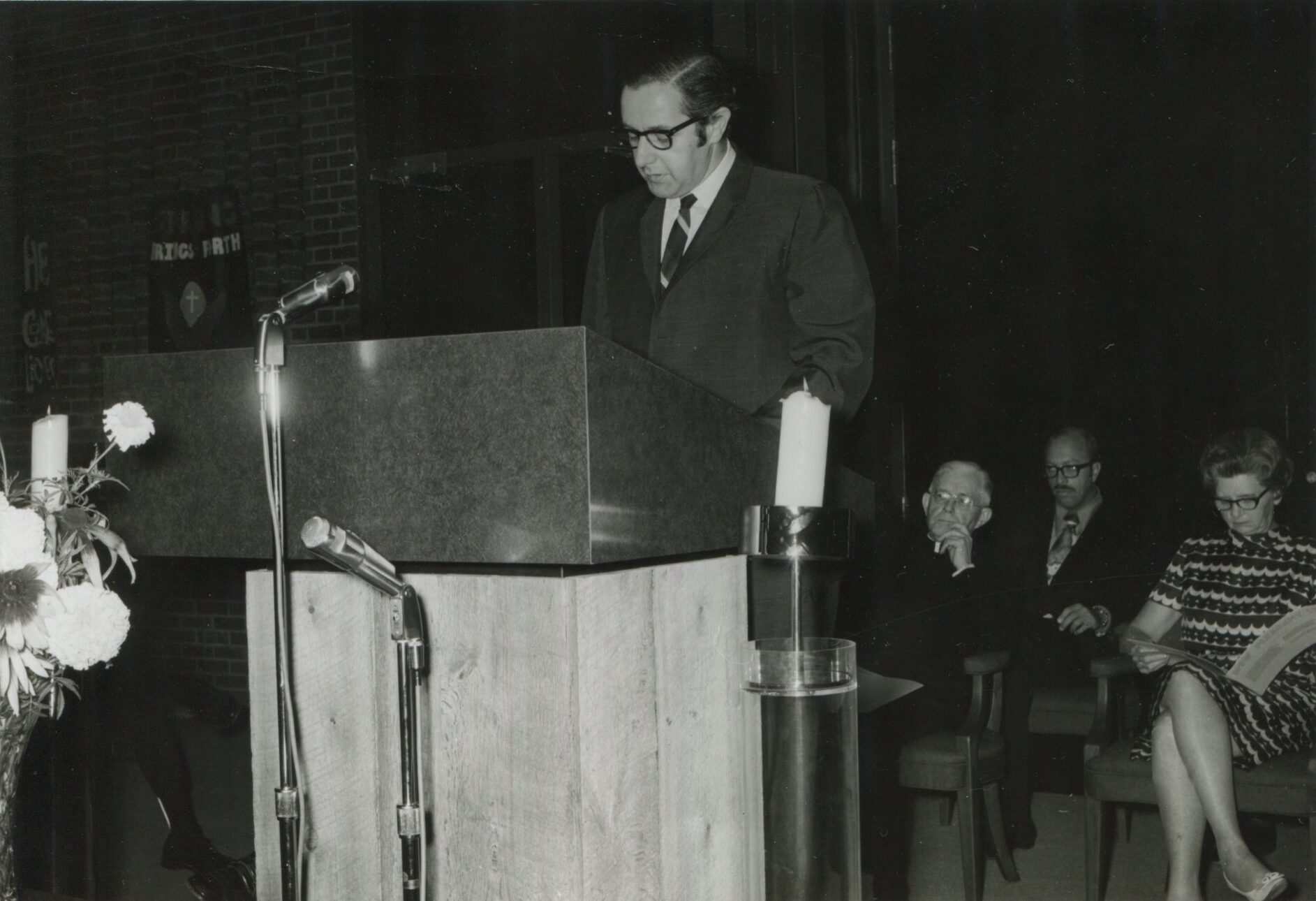
Siegfried Rowe speaking at the opening of the Wilde Lake Interfaith Center, 1970. Rowe played a crucial leadership role in the Jewish community, both in representing Jews to the broader society and in building Jewish communal life.
Courtesy of Jessica Rowe
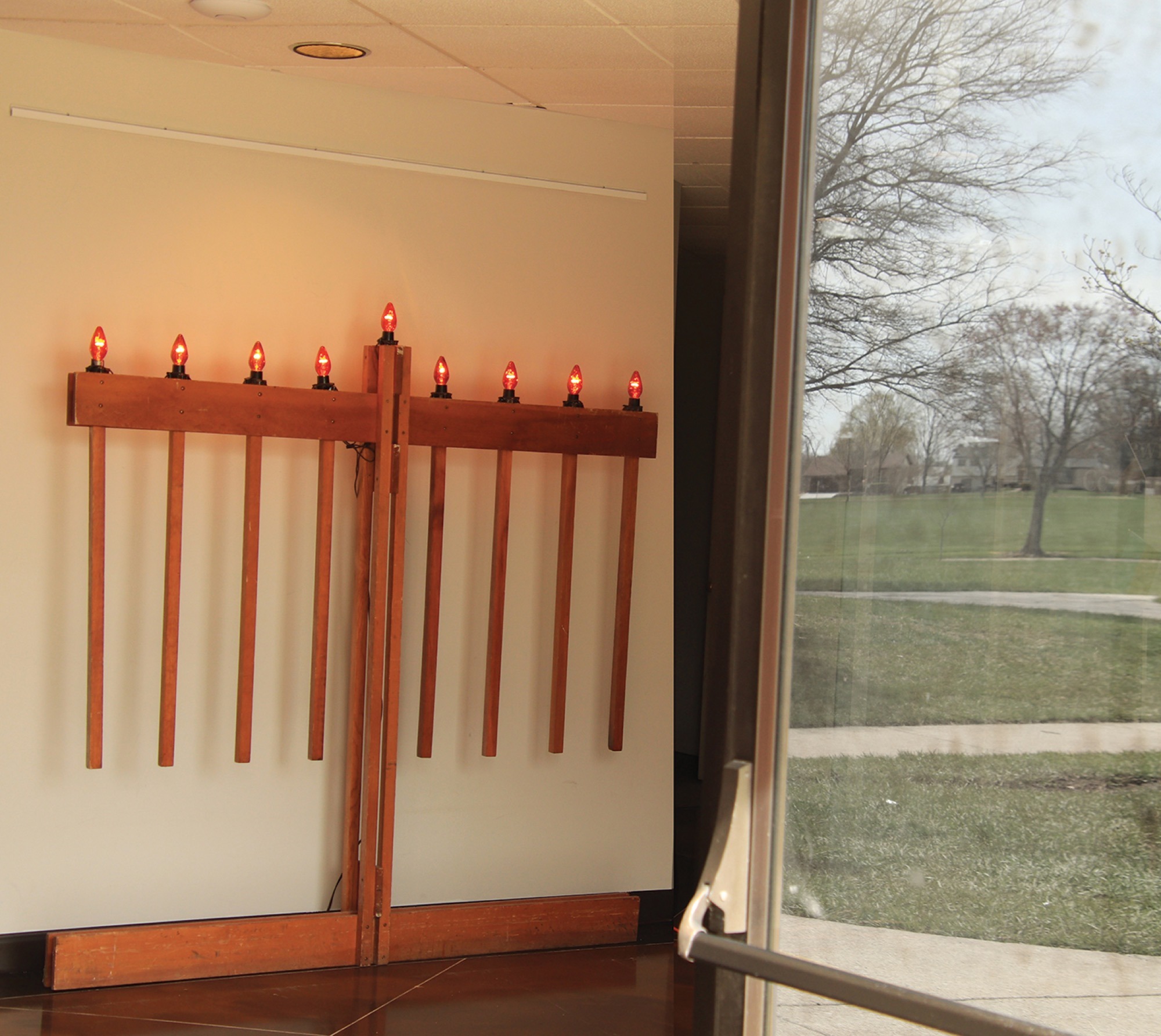
In an overwhelmingly Christian environment, Jews sometimes needed to assert their own identity. During Columbia’s first holiday season, a large Christmas tree was placed in the front window of Slayton House, Wilde Lake’s village center. In response, Jewish residents built this equally large menorah (designed by Robert Tennenbaum) and asked that it be installed in the other front window. Slayton House readily obliged.
Photo by Ken Falk

