
The Interfaith Ideal
When the Wilde Lake Interfaith Center opened in 1970, it was declared “the first building of its kind in America.” The novel interfaith center concept, like many Rouse initiatives, blended idealism with practicality. Housing many religious groups under one roof, planners thought, would encourage cooperation and understanding among people of different faiths. Congregations would save money by not having to finance their own buildings. And the Rouse Company would save land it could sell more profitably for other purposes.
The interfaith center project launched in 1966 when the Rouse Company optioned land to the newly created Columbia Religious Facilities Corporation. Formed by representatives of Protestant denominations, the CRFC strove to gain the participation of Jews and Catholics in building a shared facility.

Father George Zorn and Rabbi Martin Siegel at interfaith Sukkot gathering, c. 1973.
Courtesy of Rabbi Martin Siegel
The Jewish Response
Because Columbia didn’t actually exist yet, it fell to Howard County’s tiny preexisting Jewish population to respond to the interfaith center proposal. Local Jews were all for religious harmony, but sharing worship space with Christians seemed highly problematic. Would crosses hang in the sanctuary? How would conflicts be resolved? And one conflict emerged almost immediately: the plan called for public schools to set aside class time for students to receive religious instruction at the interfaith center. This idea violated a key American Jewish value—the strict separation of religion and the public schools—and seriously alarmed local Jews.
In December 1966, Howard County Jews met at the home of Seymour Barondes to figure out what to do, joined by Baltimore Jewish leaders whom they had turned to for advice. They decided to create the Jewish Council of Howard County (incorporated in March 1967) to act as the voice of the Jewish community, both to oppose the school “release time” idea and to explore how to participate in the interfaith project. After negotiations, the CRFC dropped the school proposal. In March 1968, the Jewish Council announced it would join the planned interfaith center. Calling it “a major innovation in interfaith relations,” Jack Pessin, the first Jewish Council president, noted that the proposal’s sponsors “bent over backwards to invite us in.”

This Baltimore Evening Sun article from January 1967 shows Jewish opposition to the plan to give students “release time” from school in order to attend religious classes.
Courtesy of Jewish Federation of Howard County
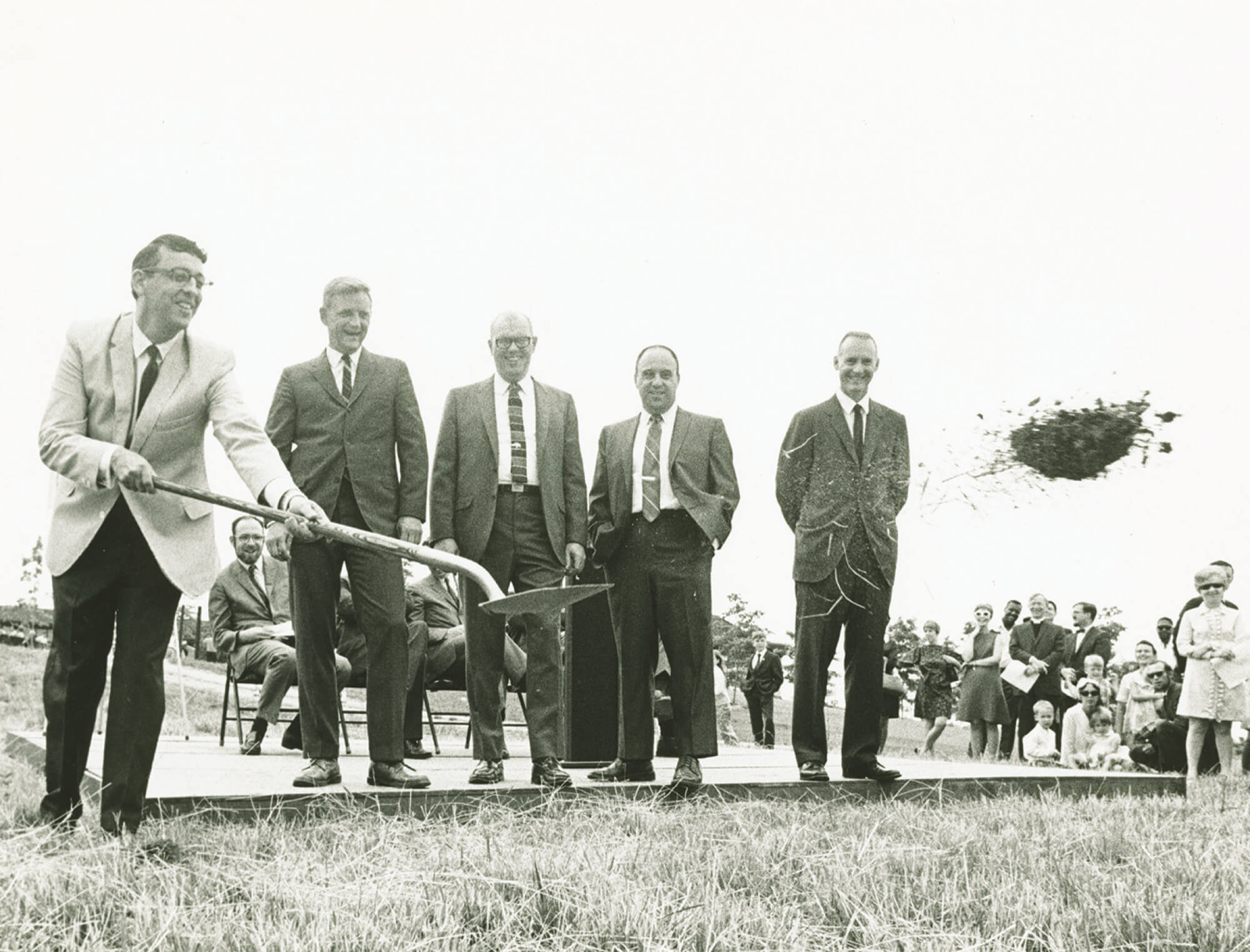
Groundbreaking for Wilde Lake Interfaith Center, June 1969, with Jewish Council representative Marty Chaitovitz second from right. Four other interfaith centers would be built in the coming decades.
Photo by Morton Tadder, courtesy of Columbia MD Archives, Photograph Collection
Through the Jewish Council, the Jews of Howard County became full participants in interfaith planning, first for the Wilde Lake Interfaith Center and then for the second center at Oakland Mills. Although created as a vehicle for Jews to have input into Columbia policies, the Council also started organizing Jewish religious and cultural events. When Columbia’s first Jewish residents arrived in late 1967, they immediately joined in Council activities.
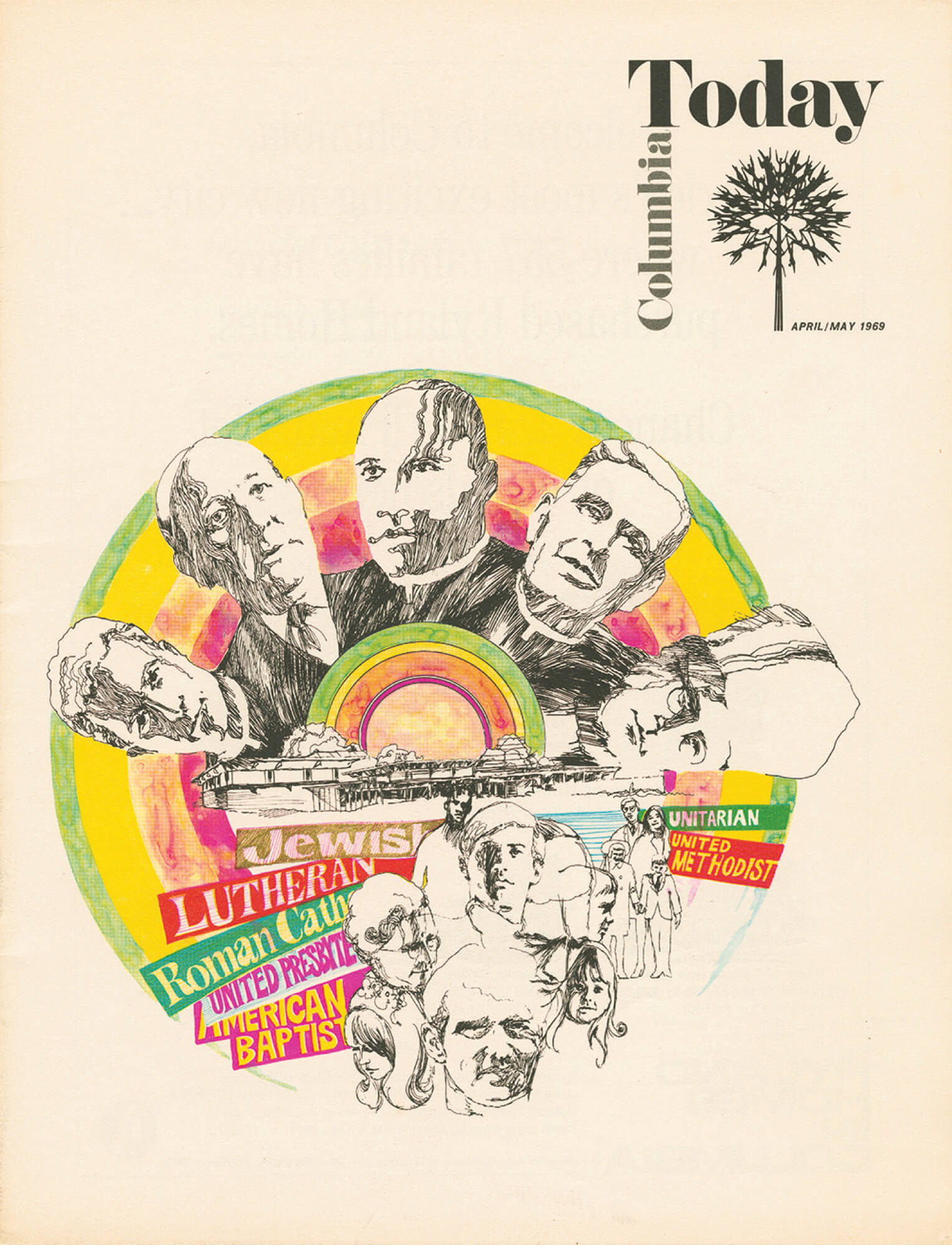
In celebrating religious diversity, the cover of the April 1969 Columbia Today magazine reveals the era’s narrow view of what that meant. Eventually other faith traditions would participate in the centers.
Illustration by Jerry Dadds, courtesy of Columbia MD Archives

A crowd gathers at Wilde Lake Interfaith Center’s opening celebration, August 1970. Each religious group made its own banner, and they paraded together to the building. (The Jewish Council’s “Shalom” banner is at center left.) All three of Columbia’s original Jewish congregations started out at the Wilde Lake center.
Photo by Donald Reichle, courtesy of Columbia MD Archives, Photograph Collection
Never before has one structure been built anywhere specifically for worship by members of all three faiths.

The Jewish Council newsletter of July 1970 described plans for the Wilde Lake opening celebration, noting that Iris (Chaya) Kaplan was creating the “Shalom” banner.
Courtesy of the Jewish Federation of Howard County
During the planning process for the Oakland Mills Interfaith Center, Jewish participants insisted that “the center be planned for any religious group to rent space on a temporary basis or permanently, without being offended by visual signs of the main tenants.” After the facility opened in 1975, the three Jewish congregations, all growing rapidly, moved there to take advantage of its more spacious quarters.
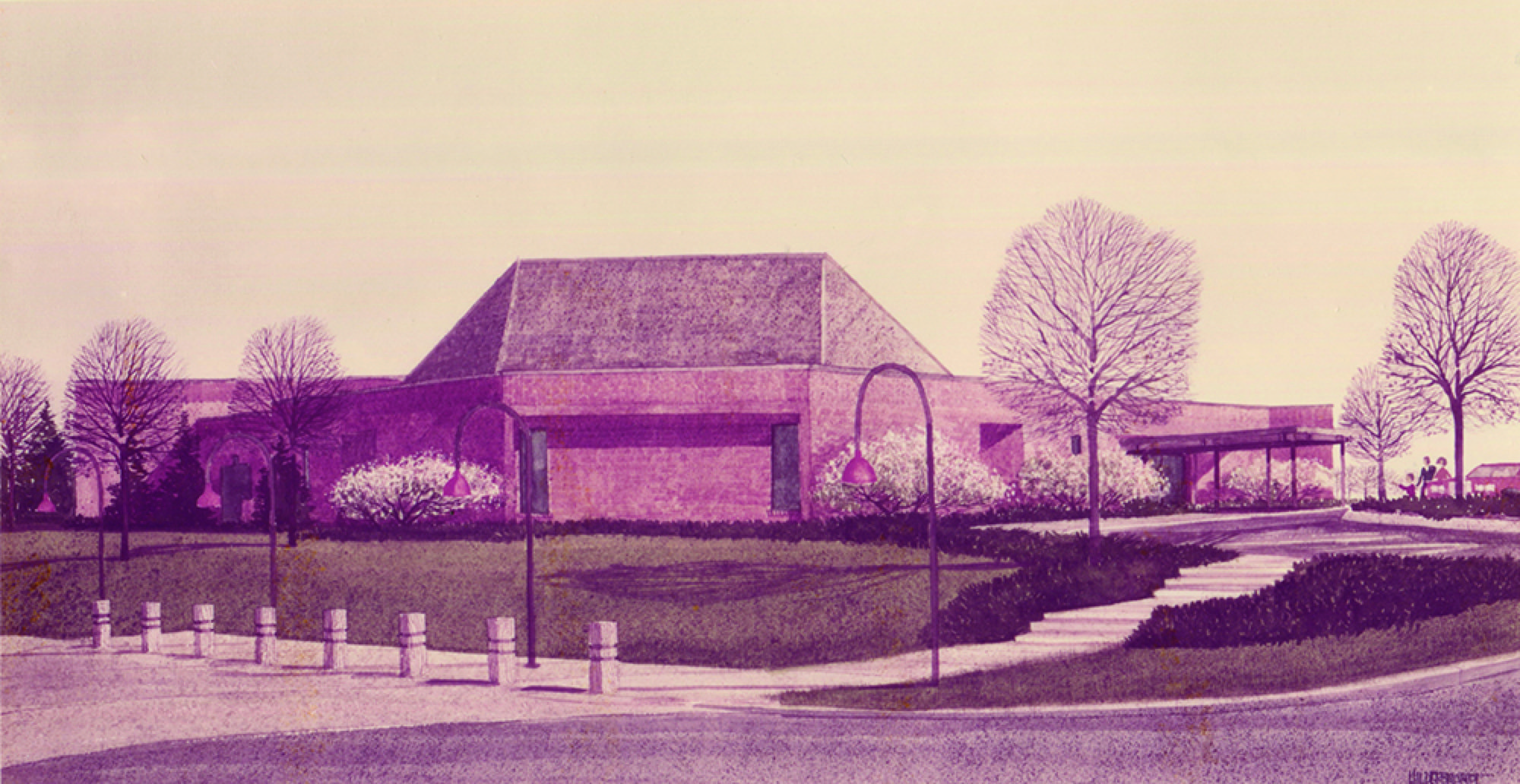
Artist’s rendering of the Oakland Mills Interfaith Center, aka The Meeting House.
Courtesy of Jessica Rowe
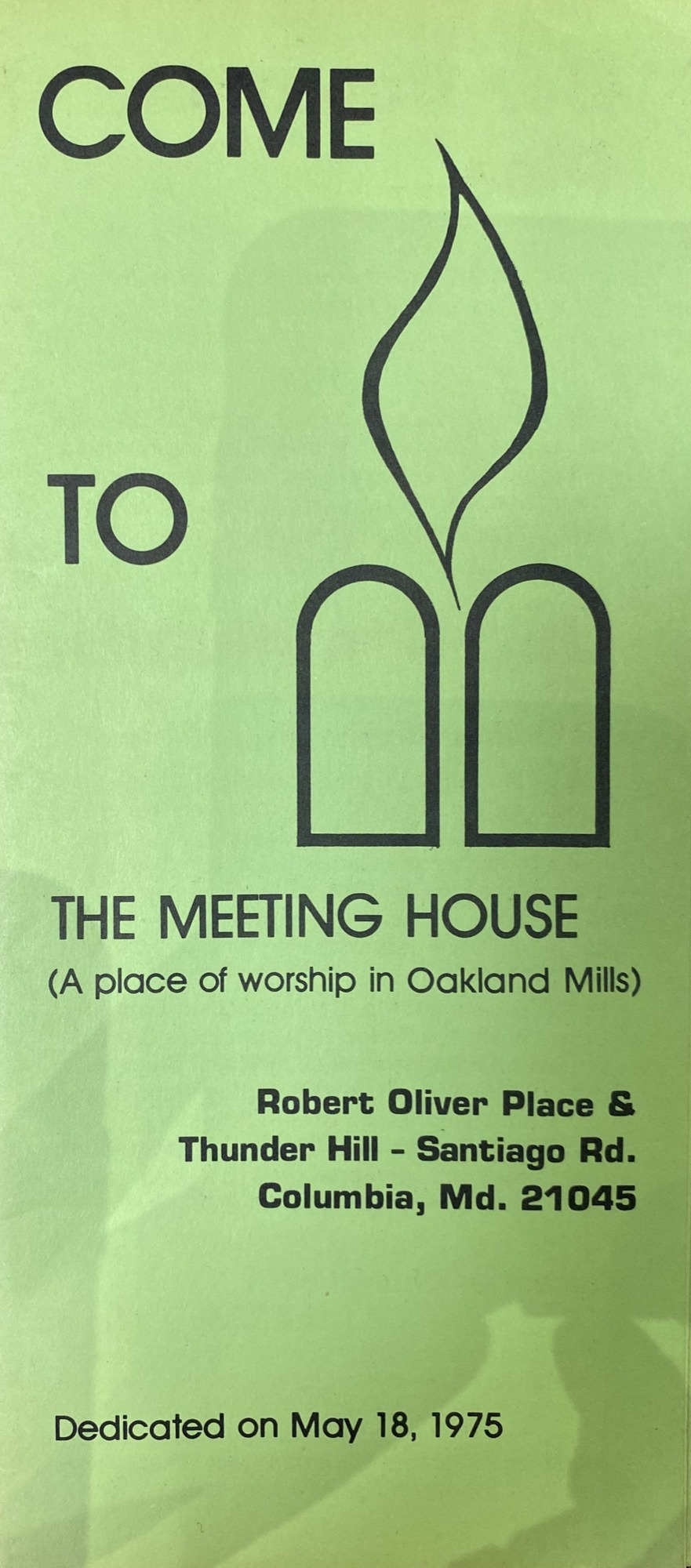
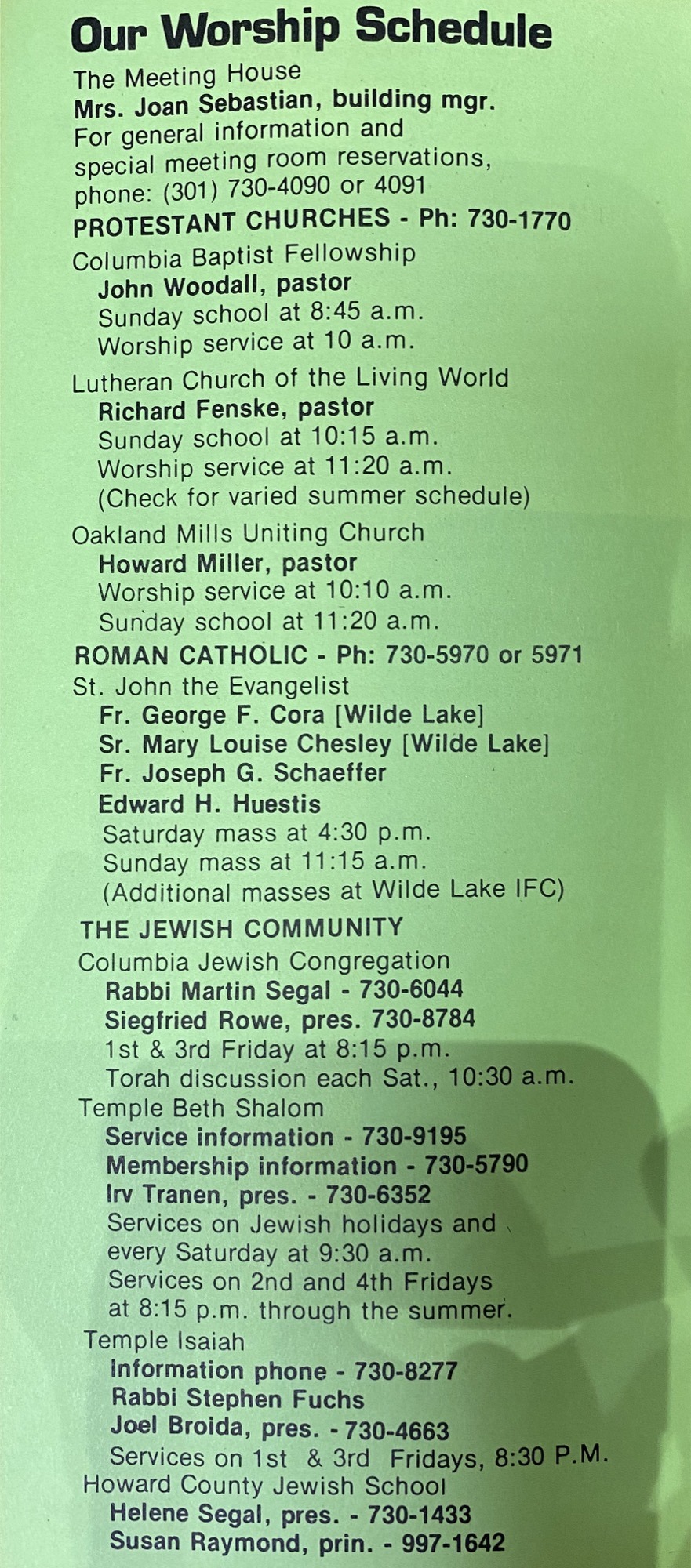
The Meeting House name and its symbol, two tablets with a flame above, both have Jewish roots. Sigi Rowe, as Jewish representative to the Oakland Mills planning committee, was asked what the building might be called in Hebrew. He replied, “Bet Knesset,” meaning house of assembly, which translates as “Meeting House.”
Meeting House dedication pamphlet, 1975.
Courtesy of The Meeting House
At the Interfaith Centers
In the beginning, it was all experimental. On the practical side, diverse congregations had to negotiate over scheduling, space, building maintenance, and other issues. “Everybody accommodated everybody else,” said Jewish community member Lynne Warshaw, who served on the board of The Meeting House. “We wanted it to work and we made it work.” On the idealistic side, the interfaith centers offered a chance to increase understanding of others’ religious beliefs through both formal programs and informal interaction.
“One minute it was a church; the next minute it was a synagogue. We thought it was kind of neat.”
“We are getting used to seeing nuns with their habits walking around and greeting you and Protestants saying hello to you down the hall.”
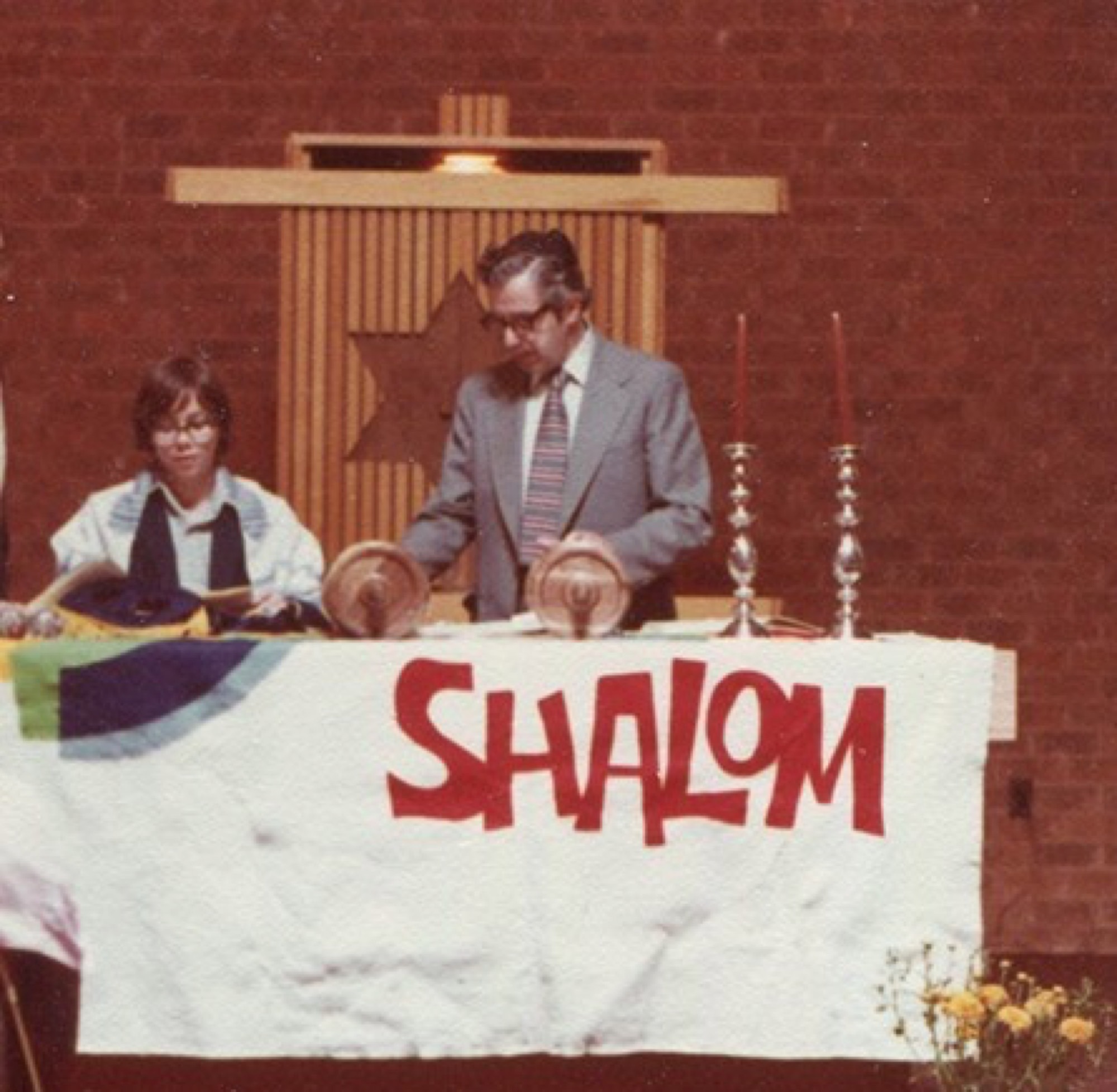
Bar mitzvah of Jonathan Wenocur, presided over by Sigi Rowe, at The Meeting House, 1978. Behind them is the Columbia Jewish Congregation’s movable ark. Because the interfaith centers housed many congregations, all religious accessories had to be portable. Click here for the story of CJC’s ark. The “shalom” design of the table covering is based on the banner created for the Wilde Lake interfaith center opening celebration.
Courtesy of Jessica Rowe
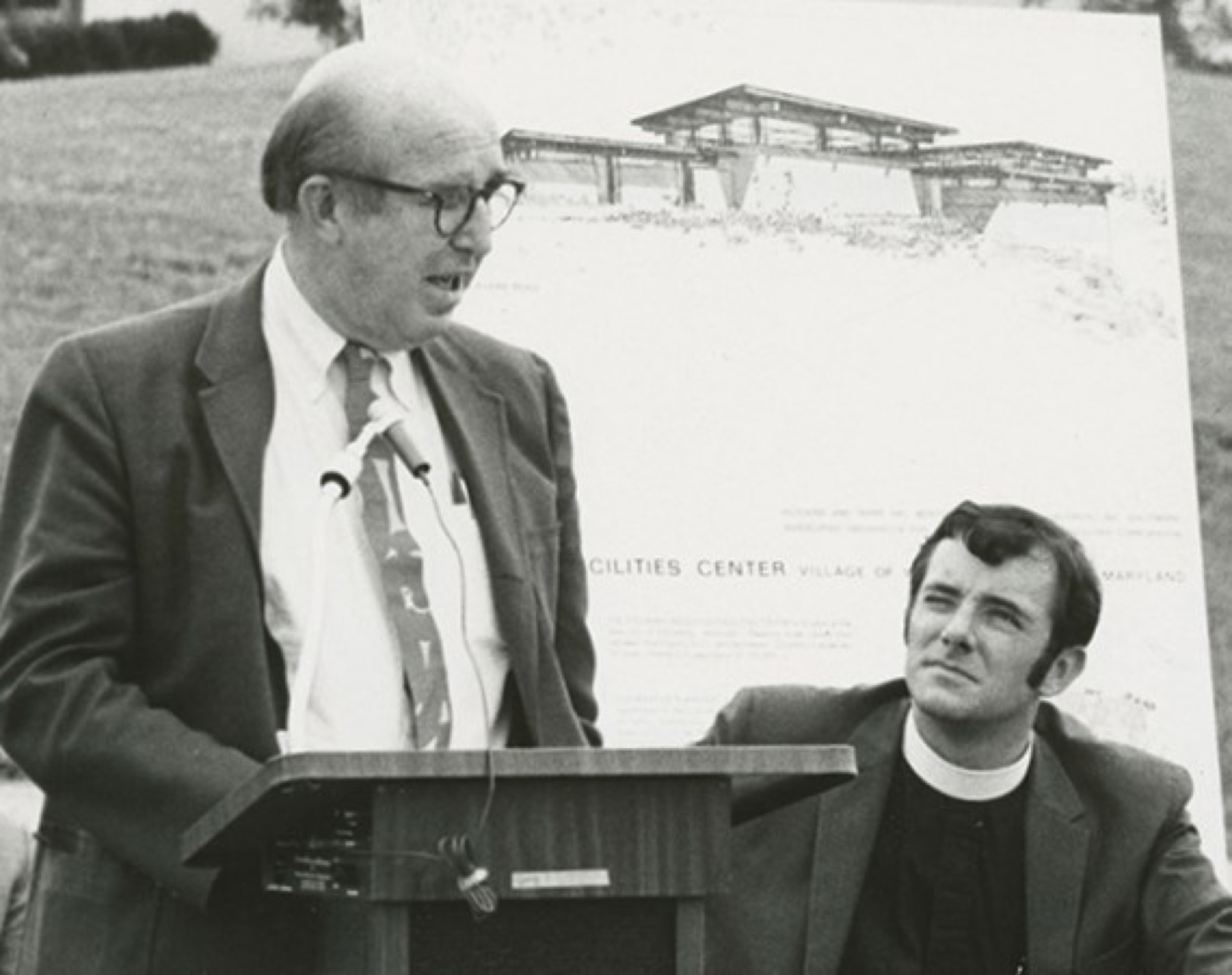
Rev. Barclay Brown, a dedicated proponent of interfaith cooperation, listening to Jim Rouse’s speech at the Wilde Lake groundbreaking, 1969. Brown pastored St. John’s United, a joint Methodist/Presbyterian congregation. He played guitar regularly at Columbia Jewish Congregation’s Friday night services and delivered a sermon at Beth Shalom during Brotherhood Week in 1971.
Courtesy of Columbia MD Archives, Photograph Collection
Columbia Jewish Congregation and the Columbia Islamic Community joined together in a prayer service at The Meeting House in September 1978, shortly before the signing of the Camp David Accords by Israel and Egypt. “We hope to inspire leaders at Camp David,” said the Islamic group’s leader, Akil Rahim. “Peace will not come without striving.”
Courtesy of Carl and Helene Segal


Not all of the interaction between religious groups was conflict-free. In the 1970s, Jewish leaders expressed dismay when Lutherans at the Wilde Lake Interfaith Center sponsored Jews for Jesus programs. In 1984, controversy erupted when the Columbia Orthodox Presbyterian Church announced its intent to evangelize all people, including Jews, to save them from eternal damnation. Meeting House leaders, led by the Catholics, rallied around the Jewish congregations and the church was forced to leave the Meeting House.
In true interfaith spirit, a Jewish delegation met with the Columbia Orthodox Presbyterians to explain why proselytizing was deeply offensive to Jews. Click to read about their remarkable conversation.
Leaving and Staying Put
But religious conflict at the interfaith centers was rare. More common were logistical problems created by sharing space, especially since many of the congregations were growing. And as they matured, their priorities changed along with their needs. For some Jews, that meant building their own synagogues. As Temple Isaiah’s rabbi, Mark Panoff, put it, “Do we want to continue to be in a situation where the distinguishing feature is interfaith? Or do we want more emphasis on our Jewish identity?” In the 1990s, two of Howard County’s three original Jewish congregations began making plans to leave—though new Jewish congregations would soon move in, finding that the interfaith centers fit them well.
Click to learn more about Howard County’s Jewish congregations through the years and today.
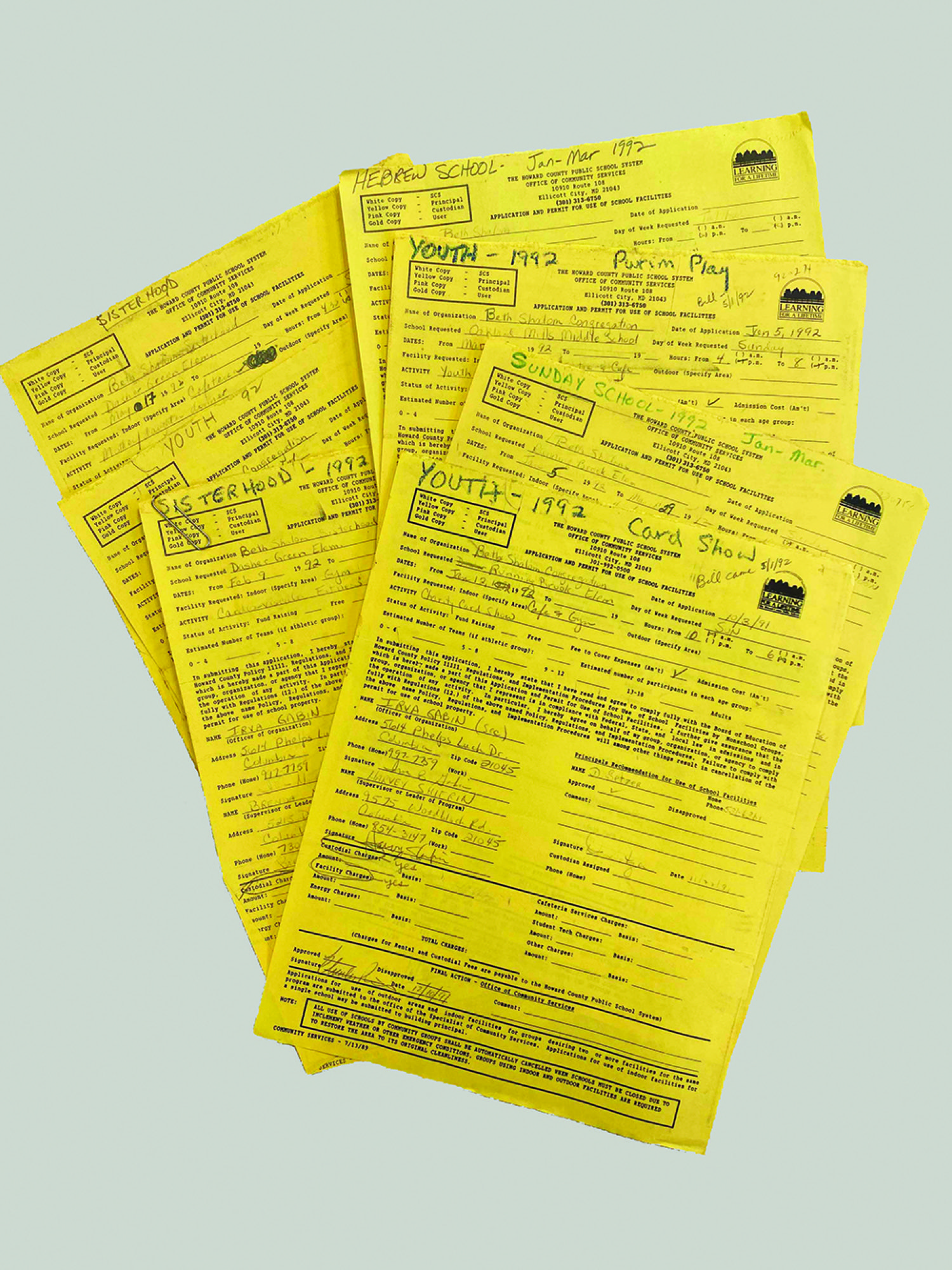
Before building its own synagogue, Beth Shalom had to rent public school facilities for classes and events that the interfaith center could not accommodate—filling out these forms each time.
Courtesy of Beth Shalom
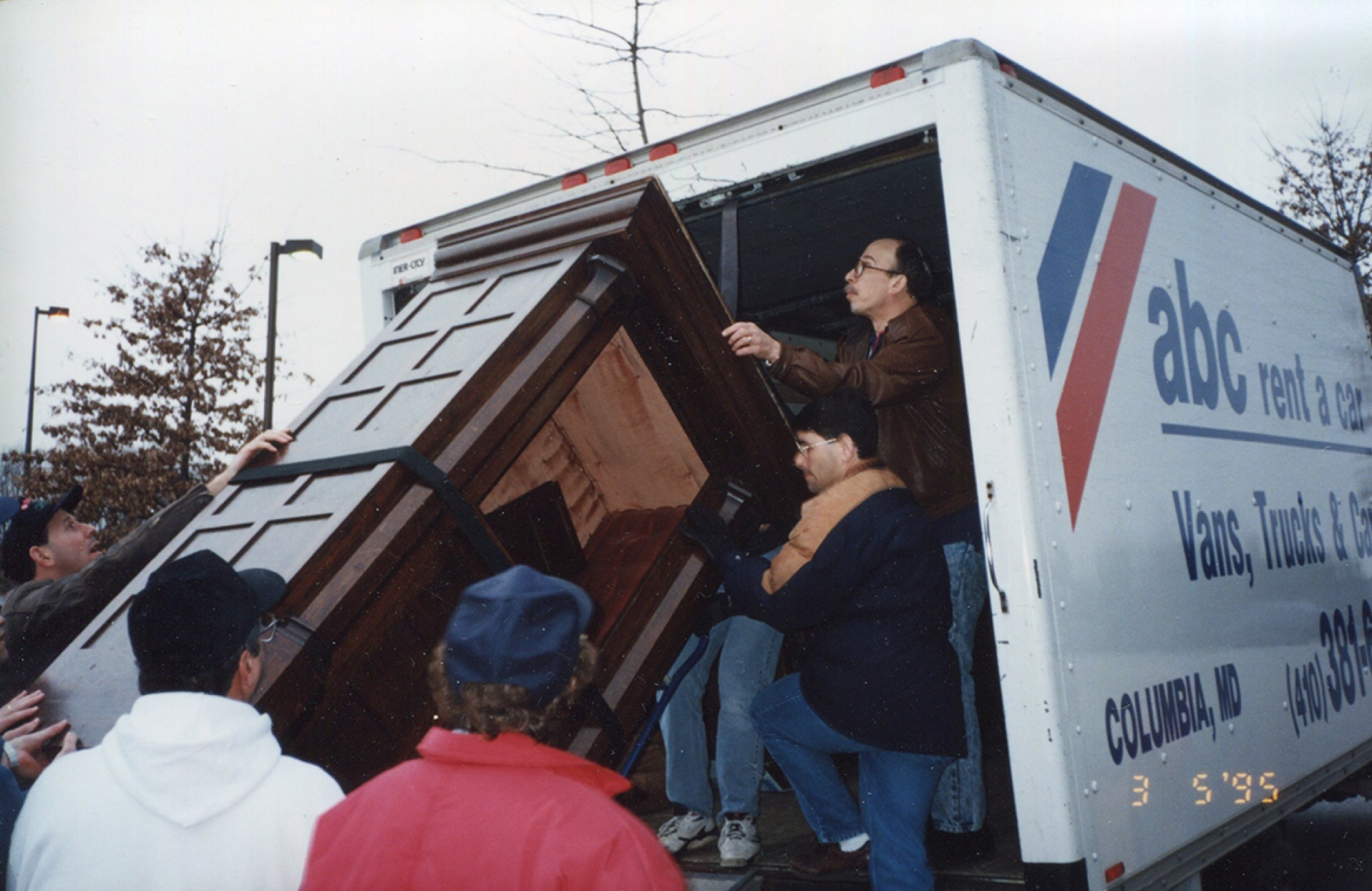
One last move: Beth Shalom members place their portable ark on a moving truck to take it to their new synagogue, 1995.
Courtesy of Beth Shalom
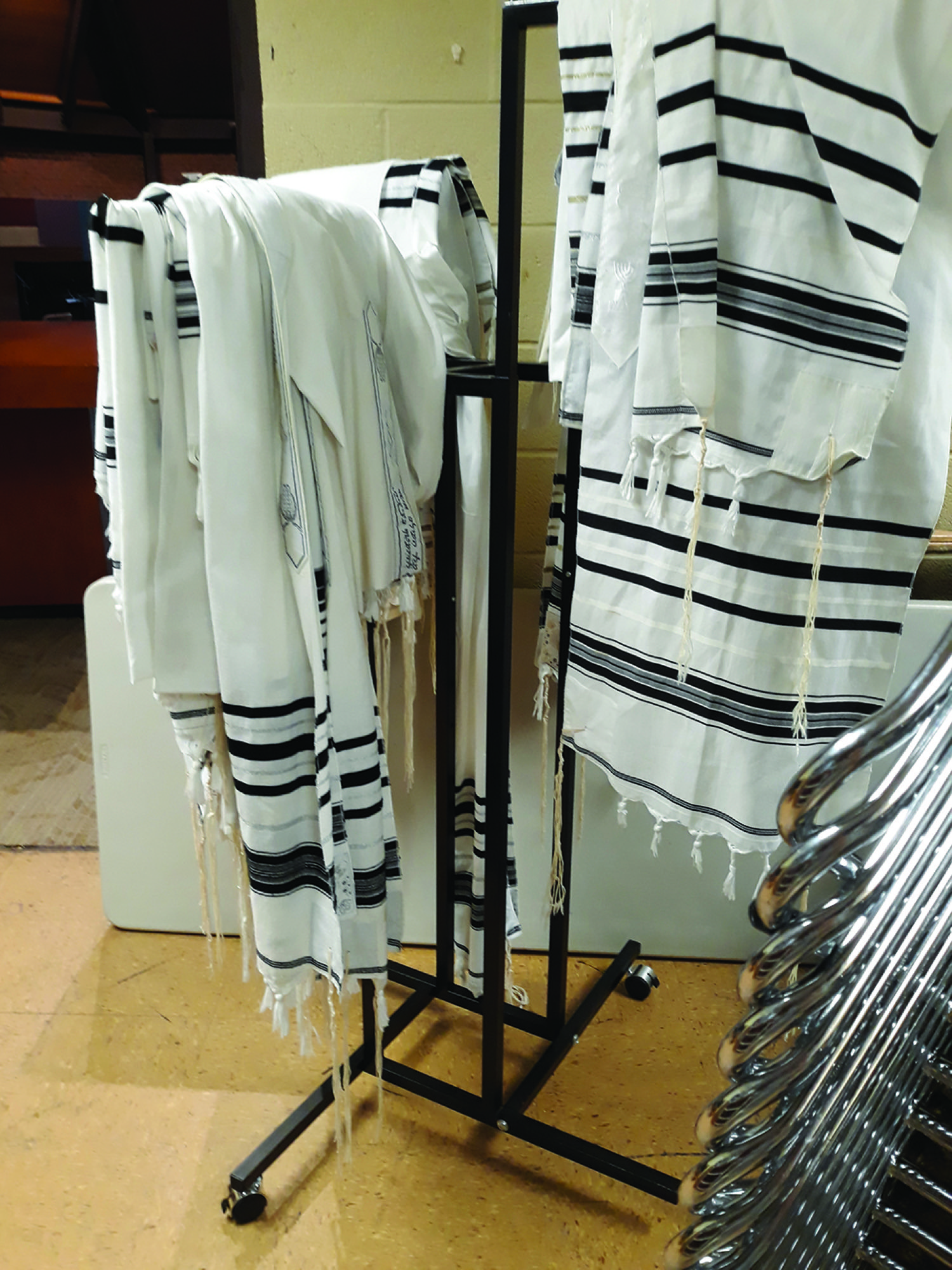
Tallises belonging to the Columbia Jewish Congregation hang in a storage area at The Meeting House, 2019. CJC remained there—and has been joined by newer Jewish congregations.
Photo by Deborah Weiner