Organizing the Community
The beginning of Howard County’s Jewish community can be traced to the Columbia planning process, when the small, preexisting Jewish population found itself having to make decisions for the future of Jewish life—before the new town’s first residents even moved in. The Protestants who were designing Columbia’s interfaith initiative sought Jewish participation, and since their early plans included one very problematic feature, local Jews quickly organized a response. By creating Howard County’s first incorporated Jewish organization, they laid a strong foundation not only for addressing the relationship between Jews and the broader society, but also for building a full-fledged Jewish community with all the attributes needed for a vibrant Jewish life.

Newsletter, Jewish Council of Howard County, October 1970.
Courtesy of Jewish Federation of Howard County
The Jewish Council
Although the Jewish Council of Howard County was established in March 1967 to represent Jews in the planning of Columbia, its participants immediately realized it could do much more than that. “Because the Council is the only organized Jewish group in the County, it feels its responsibility to provide certain educational and social functions for the Howard County Jewish Community,” stated a Jewish Council fact sheet that October, around the time Columbia’s first Jewish residents began to move in.
Through the Council and its committees, new Columbians and older residents joined together to organize Jewish holiday celebrations, biweekly religious services, a Hebrew school, and other activities. The Council’s first Chanukah festival was held as early as 1967 and continued for many years. In 1968 the religious activities committee arranged for members to attend high holiday services with the Laurel congregation, which had recently organized in neighboring Prince George’s County. That would be the last time Jews would have to leave Howard County to observe the high holidays; in 1969 the Council sponsored a momentous high holiday service of its own.

Cheshire Inn ad, 1970. The Council organized a Passover community seder in spring 1968 and held another in 1969. Two Ellicott City restaurants, the Cheshire Inn and Mason’s Heritage House, hosted the events.
Courtesy of Columbia MD Archives
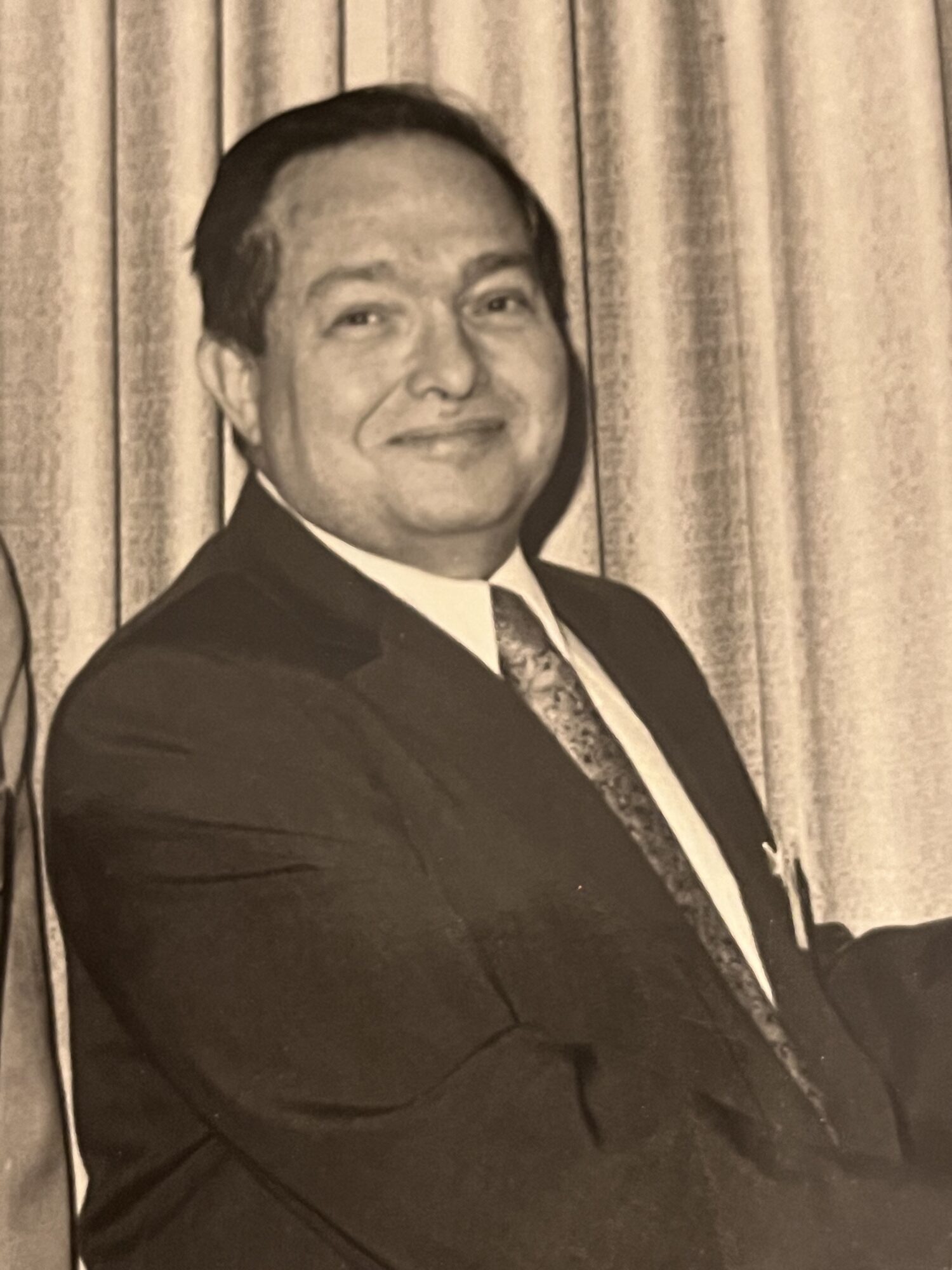
Jack Pessin (shown here c. 1970) became the first Jewish Council president in 1967.
Courtesy of Sue Pessin Schnair
The Council not only sponsored various Jewish cultural and religious activities, it also promoted other initiatives organized by members of the Jewish community. Its goal was to turn its religious and cultural programming over to new communal institutions while remaining the Jewish voice in Columbia and Howard County affairs. In 1970, Sigi Rowe, its second president, noted that it was time to “start the Council on its way to being an umbrella organization.” By then, the community not only had a full calendar of events and a growing religious school, but also was well on its way to establishing three quite different congregations.
Help from Baltimore: Originally, Columbia’s interfaith planners had asked Baltimore’s Associated Jewish Charities to represent the Jewish point of view since no local Jewish group yet existed. Associated leaders, reluctant to speak for local Jews, met with Jewish Howard Countians to help launch the Council. In 1971, the Howard County Jewish Community School affiliated with Baltimore’s Board of Jewish Education to take advantage of resources offered by the larger community. The Associated also lent funds to the Council so that it could participate in Columbia’s low-income housing initiative and buy into The Meeting House.


Courtesy of Jewish Museum of Maryland

Israel Independence Day celebration at Slayton House, May 1970.
Courtesy of Jessica Rowe

In his June 1970 letter to community, newly elected Jewish Council president Siegfried Rowe summarized the Council’s accomplishments.
Courtesy of the Jewish Federation of Howard County

Jewish Council newsletter calendar for May-June, 1970.
Courtesy of the Jewish Federation of Howard County
The Community Evolves
Columbia and its Jewish community grew quickly. By 1973 some 600 Jewish families had arrived. Monthly Jewish Council meetings, held at Slayton House, became a bit chaotic. As Sigi Rowe later recalled, “Every month there were new people and they asked the same questions and came up with the same suggestions.” While this could exasperate the Council’s board, the infusion of new people led to a flurry of organization. As the Council had anticipated, three congregations formed in 1970 and the community had begun organizing Jewish social clubs and service groups, with women leading the way. B’nai B’rith Women was in full swing, and Hadassah incorporated that fall. Soon, women would establish chapters of ORT and the NCJW; men founded a B’nai B’rith chapter.
The organizations offered a way for Jews to socialize with each other as well as fulfill the stated goals of each group, whether charitable, cultural, or political. Not surprisingly, their activities reflected the progressive leanings typical of Columbia’s early residents. In Fall 1970, for example, B’nai B’rith Women announced the formation of an “Abortion Discussion Group” in the Jewish Council newsletter (three years before Roe v. Wade). Members heard a talk on “Pollution and its Effects on Consumer Products.” They also held a Games Night and a bake sale, recorded books for the blind, and collected used children’s shoes to give to the needy.
“B’nai B’rith Women was a lot of fun and created a lot of camaraderie. I just wanted to be with Jewish people. Around me lived a diverse group of people, but I also wanted to identify with the Jewish community. And we did a lot of good community activities. We called ourselves The Mitzvah Chapter.”
Columbia and the Jewish community passed out of the “pioneer” stage by the 1980s, as both continued to expand rapidly. In 1986, Howard County boasted the fastest-growing Jewish community in the nation (along with Palm Springs, California). Some 7,000 people lived in 2,500 Jewish households. But the community hadn’t quite lost its intimate feel. For one thing, since all three Jewish congregations held services at Columbia’s second interfaith center, The Meeting House, they mingled on a regular basis. “It was like one big community of Jews,” recalled Pearl Laufer. When the first new congregation, the Lubavitch Center, appeared in 1985, it soon fit into the scene.
“Columbia used to be like a shtetl—if someone sneezed on one side of town, everybody knew about it.”

In the mid-1980s, the Jewish Council and Chabad Rabbi Hillel Baron spearheaded an Adult Education program with participation from all of the community’s rabbis.
Courtesy of Rabbi Hillel Baron
No doubt, though, the community was experiencing growing pains. The Jewish Council struggled to reinvent itself as other organizations took over its original functions. With few people now participating, it faced “an uncertain future,” its president, Jean Friedberg, noted in 1985. Meanwhile, the Jewish Community School, perhaps the community’s most cohesive force, was splitting apart as Beth Shalom withdrew to start its own religious school. To top it off, most newcomers (who now outnumbered the pioneers) were moving to Columbia for its excellent schools, convenient location, and overall stellar reputation. They knew little about its origins and didn’t necessarily share the idealistic values that bonded the original residents. The Council tried to mount a “Welcome Wagon” program to reach out to new arrivals, with only sporadic success.

From a 1986 Jewish Council newsletter.
Courtesy of Jewish Federation of Howard County
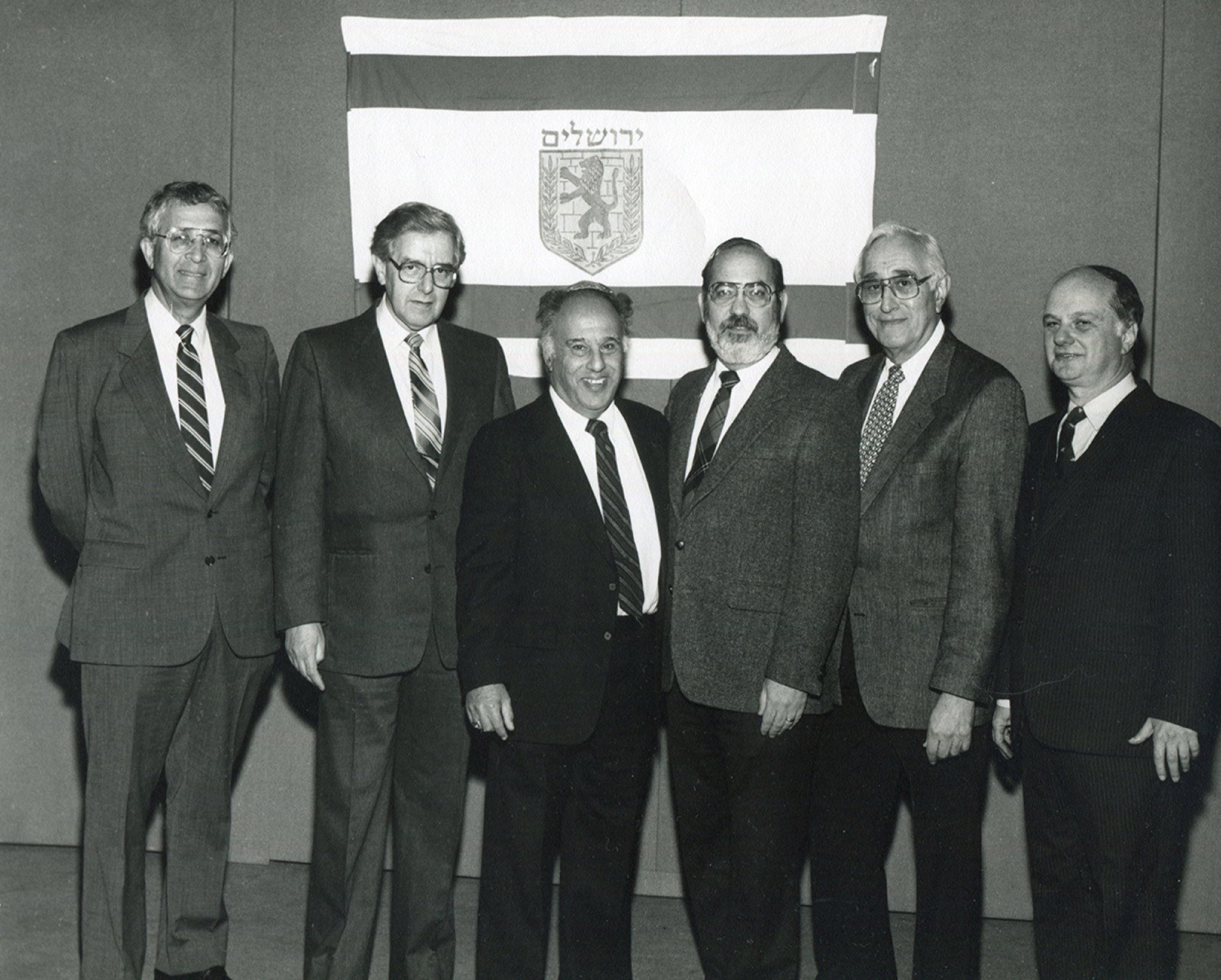
Early Jewish community leaders gathered for this picture at a Jewish community event, c. 1995. Left to right: unidentified, Sigi Rowe, Marty Chaitovitz, Jerry Weinstein, Irv Tranen, and Rabbi Martin Siegel.
Courtesy of Jerry Weinstein
Nevertheless, the community’s demographic makeup—young families predominated—generated optimism for its future. As Beth Shalom’s rabbi Kenneth Cohen pointed out, “Since I’ve been here, I haven’t done a single funeral. But there is a birth every other week.” New projects, new leaders, and new organizations arose to meet evolving needs. Amidst explosive growth and increased diversity, Howard County Jews found ways to promote unity and carry out activities to benefit the entire community. Meanwhile, older organizations managed to prove both durable and flexible, as exemplified by the Jewish Council’s transformation into the Jewish Federation of Howard County in 1992.
By the end of the 20th century, a large and diverse Jewish community had fully emerged—built on the solid foundation laid by the innovative young families of Columbia’s first years.

The Bet Yeladim preschool, shown here in 1998, was founded by moms back in 1975. It grew into a beloved institution that achieved broad participation from an increasingly diverse Jewish community.
Photo by Kyle Bergner for the Baltimore Jewish Times, courtesy of Jewish Museum of Maryland

Jewish Festival, 1998. The first Jewish Festival was organized in 1995 and ran for several years. Since Howard County lacked a central Jewish space, organizers wanted to provide an opportunity for all Jews to gather together.
Photo by Kyle Bergner for the Baltimore Jewish Times, courtesy of Jewish Museum of Maryland