Educating the Kids
Columbia’s early and strong influx of young Jewish families made religious schooling a priority. A group of parent volunteers organized lessons for 35 children in Hebrew language and Jewish culture in 1968. By 1970, almost 100 students were signed up. Early leaders turned to the Baltimore Board of Jewish Education for help in professionalizing Howard County’s first Jewish school.
Can you identify anyone in this photograph? Let us know!

An early Sunday school class, Wilde Lake Interfaith Center, late 1970. (Note the community’s portable ark and Chanukah menorah in the background.)
Courtesy of Columbia MD Archives
The Community School
The Howard County Jewish Community School incorporated in 1971. As its name suggests, its founders recognized the delicate position of a school meant to educate children from a religiously diverse Jewish population. The new, independent organization had a board with balanced representation from each of Howard County’s three young congregations. In the spirit of inclusiveness, school events observed kashrut, and the curriculum covered only those observances common to all streams of Judaism. It was an unusual experiment in cooperation that became a respected and essential communal institution.

Even before incorporation, the school started to charge a tuition fee and began paying its faculty, many of whom were local parents.
Courtesy of Jewish Federation of Howard County

To underscore the intent to provide students with a rigorous Jewish education, the Community School quickly affiliated with the Baltimore Board of Jewish Education, which approved curricula and certified teachers in Baltimore-area Jewish schools.
Courtesy of Jessica Rowe

Harriet Chaitovitz at work, 1980.
Courtesy of Jean Grinspoon
We used to carry the books around in the trunk of our car—the school was our baby.
Harriet Chaitovitz was the midwife of Jewish education in Howard County. She and husband Marty were original members of the Jewish Study Group that formed prior to the founding of Columbia, and Harriet spearheaded efforts to start a group for local teens. A founding member of the parent group that formed the Sunday school in 1968, she served as its de facto administrator prior to incorporation. She taught at the Community School—and later at Beth Shalom’s religious school—as well as at Bet Yeladim preschool.

Tight quarters at the interfaith centers forced school administrators to seek classroom space at places such as at Bryant Woods elementary school. Teachers had to set up their classrooms anew each time their classes met.
Courtesy of Jewish Federation of Howard County
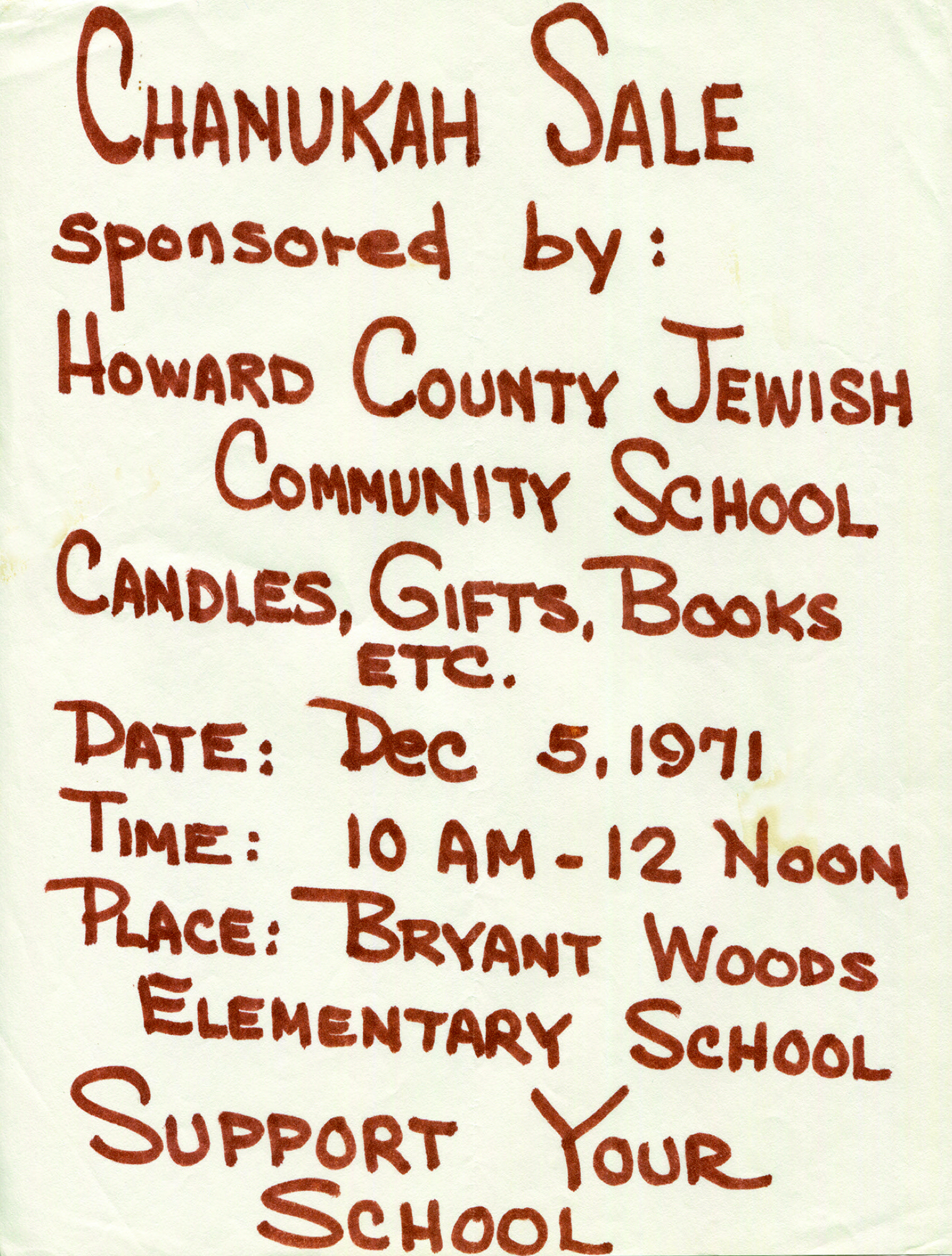
Flyer for a Community School fundraiser. Parents could shop for Chanukah while their children were in Sunday school.
Courtesy of Jewish Federation of Howard County


The Jewish Council held “Spring Fling” dances at Columbia Mall in 1973 and 1974 to benefit the Community School. “There was a band at each end of the mall, drinks and dancing. So many people came out–not just the Jewish community–because we were young and we were partiers,” said Jeff Friedhoffer. Each time, the event raised $3,000 (roughly equivalent in 2023 to $21,000).
Courtesy of Jeff Friedhoffer

Community School report card, 1986. Fifth-grade students took a full course of Jewish studies: history, bible, Jewish law and observances, and Hebrew language.
Courtesy of Janet Epstein (Filtzer) Brady
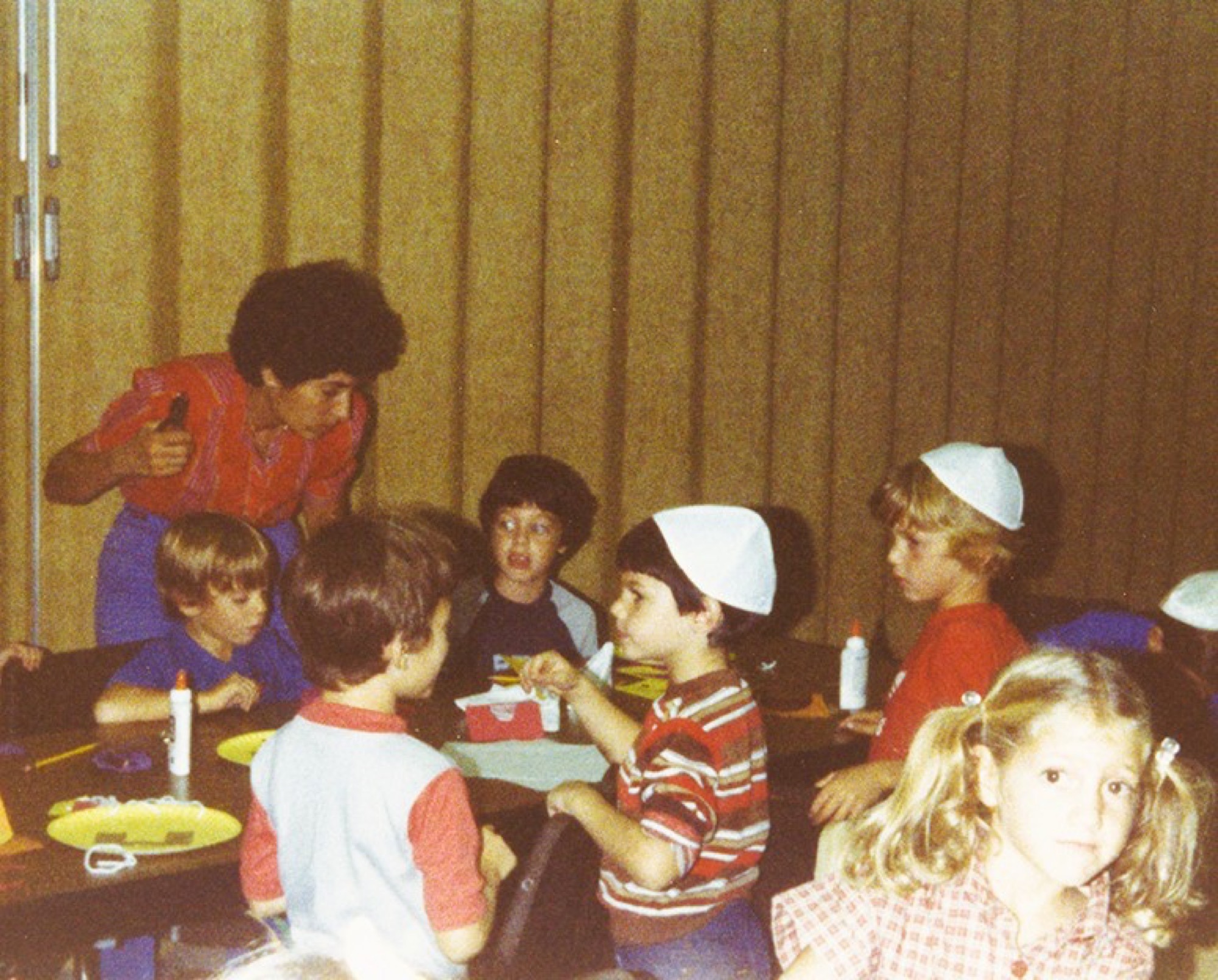
Hattie Katkow teaches Community School pupils at the Meeting House, c. 1980.
Courtesy of Jewish Museum of Maryland
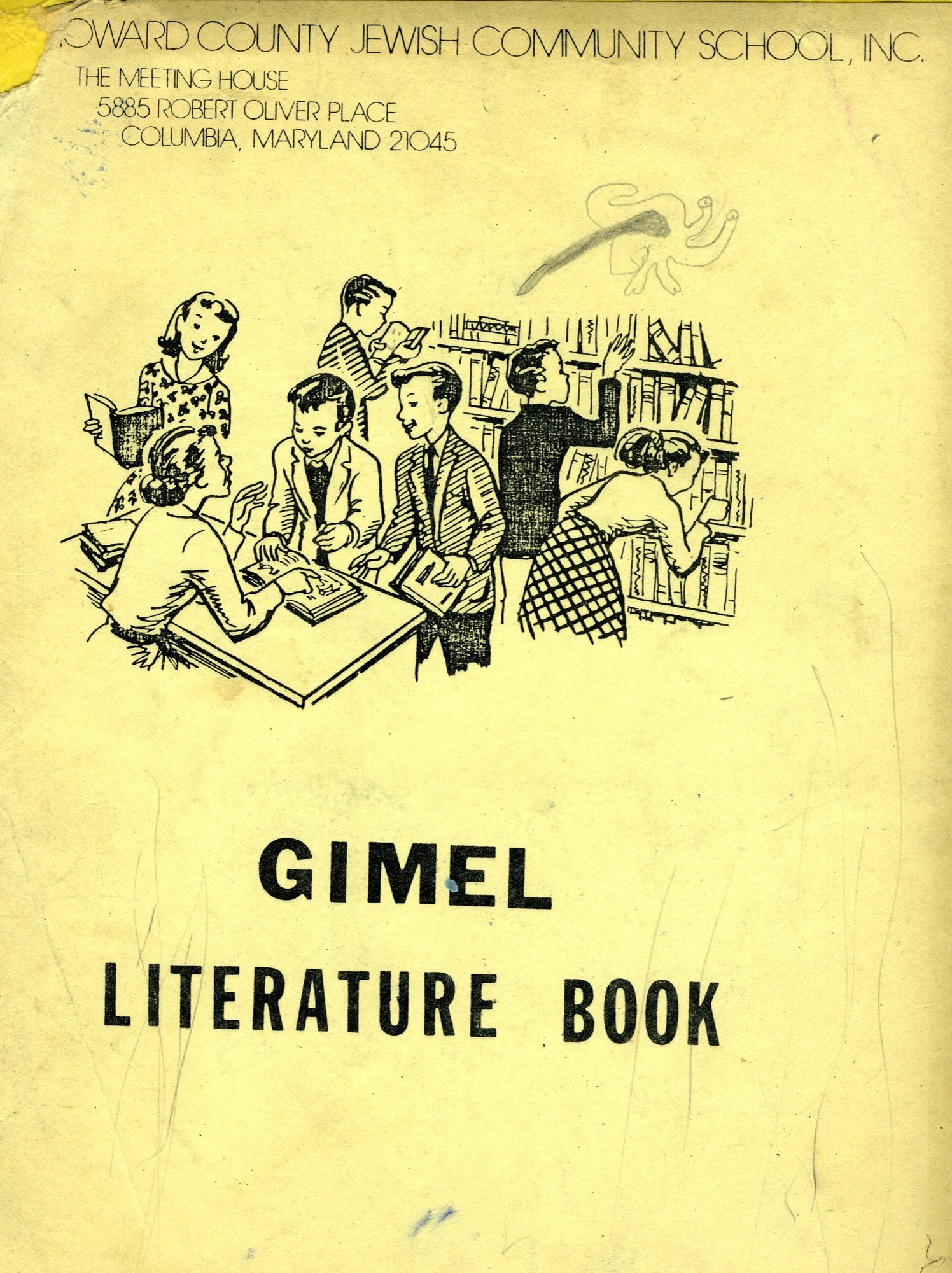
Workbook used by Community School students, c. 1983
Courtesy of Jewish Museum of Maryland
The school always walked a tightrope—it was hard to be all things to all people.
What happened to the Howard County Jewish Community School?
The Community School grew exponentially in its first decade. By the mid-1980s, with some 7,000 Jews living in the county, the school boasted around 500 students from across the Jewish spectrum. But from the start, its mandate to serve all of Howard County’s Jewish children ran up against the evolving needs of a diverse population. The school was challenged as early as 1973 with the founding of the Jewish Family School [see sidebar]. Later, the Community School faced repeated challenges until it could no longer serve as the primary unifying institution for Howard County’s Jewish community.
In 1973, small group of parents who found the Community School too conventional created another school, known as the Jewish Family School because it encouraged the participation of parents as both teachers and learners. Its adventurous curriculum included themes such as “agriculture and social justice” and classes that tried to evoke the atmosphere of a European yeshiva. Jewish history was mined for contemporary relevance. As parent Dottie Goldmeir explained, “in Hanukkah, we think the major lesson is the right to be different.”
The Jewish Council, which had invested much time and effort into launching the Community School, looked askance at this new organization, but granted it membership in the Council and a small amount of funding. The Family School lasted into the early 1990s.
Bet Yeladim
Bet Yeladim, the Jewish preschool, opened in 1975 after Etarae Weinstein’s son came home from nursery school with Easter jelly beans just as she had finished cleaning for Pesach. “I thought, he can’t bring that into the house, it’s traif!,” she said. “I decided I had to do something.” She contacted other moms, and a group of five women organized the school: Etarae, Jean Grinspoon, Gloria Jacobs, Nancy Oppenheim, and Carol Parness.
Bet Yeladim took off from the start, partly because the need was great, but also because it was well-organized and well-credentialed, meeting state requirements and attracting talented teachers. Nearly 50 years later, it is a highly respected community institution in Howard County: “My husband called it ‘the Harvard of preschools’,” says retired director Jean Grinspoon. “If you live in Columbia, you’ve heard of Bet Yeladim.” Despite maintaining a Jewish curriculum, the school has attracted both Jewish and non-Jewish families for decades.
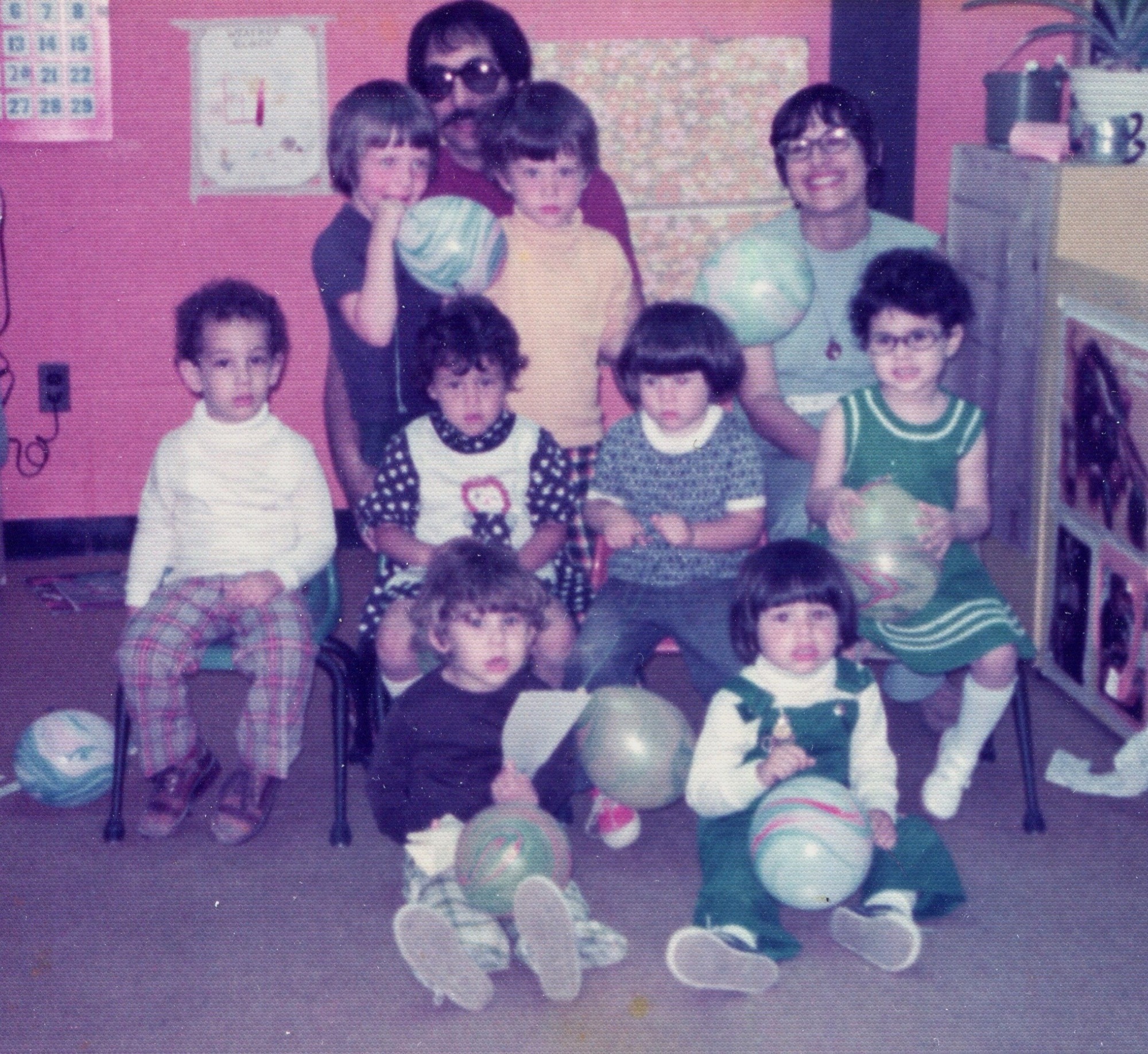
The first Bet Yeladim class of three-year-olds at Wilde Lake Interfaith Center, 1975. The nomadic school moved seven times in its first decade. At top right is Harriet Chaitovitz, next to an unidentified man.
Courtesy of Jean Grinspoon
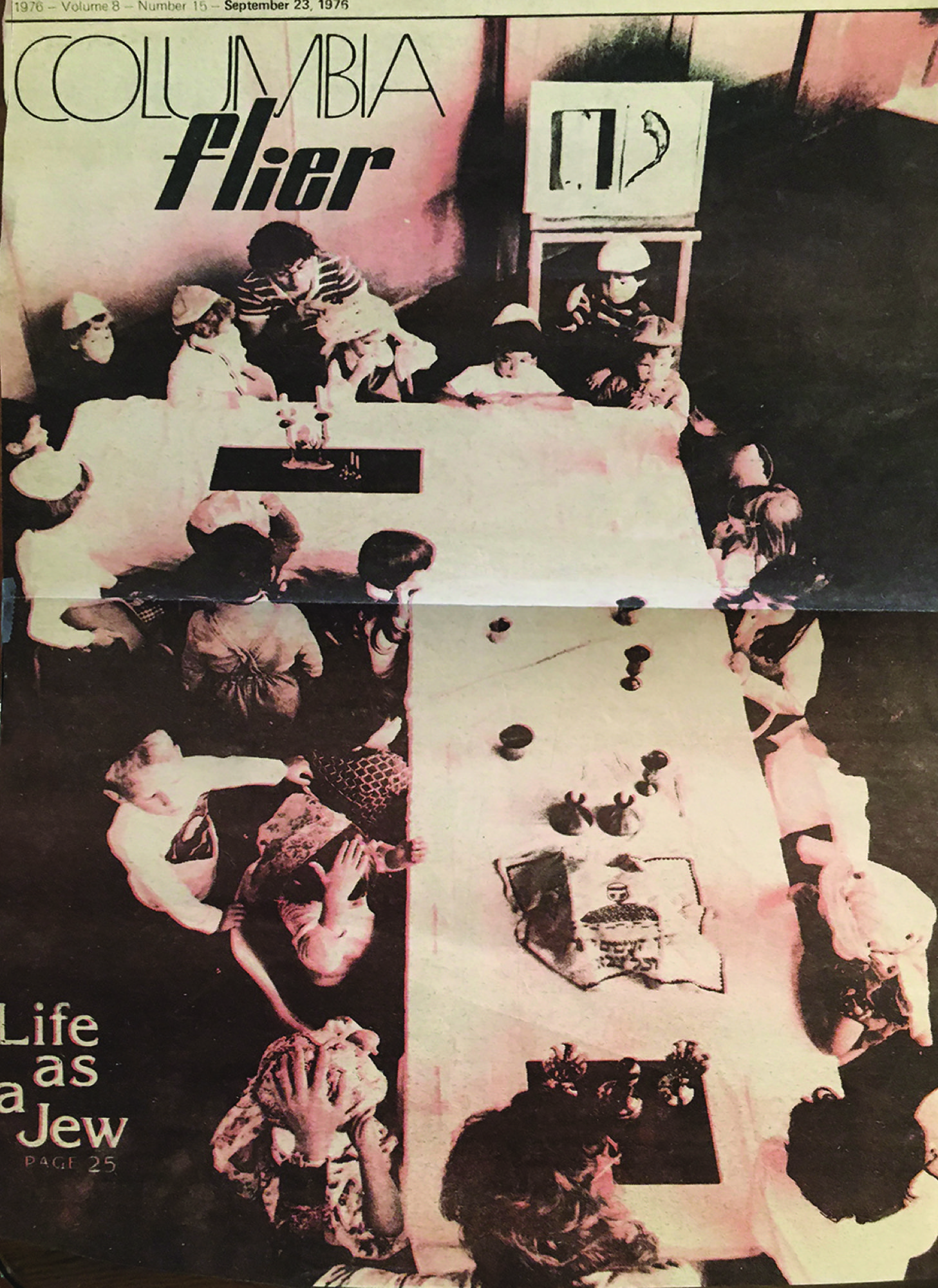
Bet Yeladim preschoolers’ Shabbat celebration made the cover of the Columbia Flier in 1976.
Photo by Paul Abel for the Columbia Flier, courtesy of Janet Epstein (Filtzer) Brady
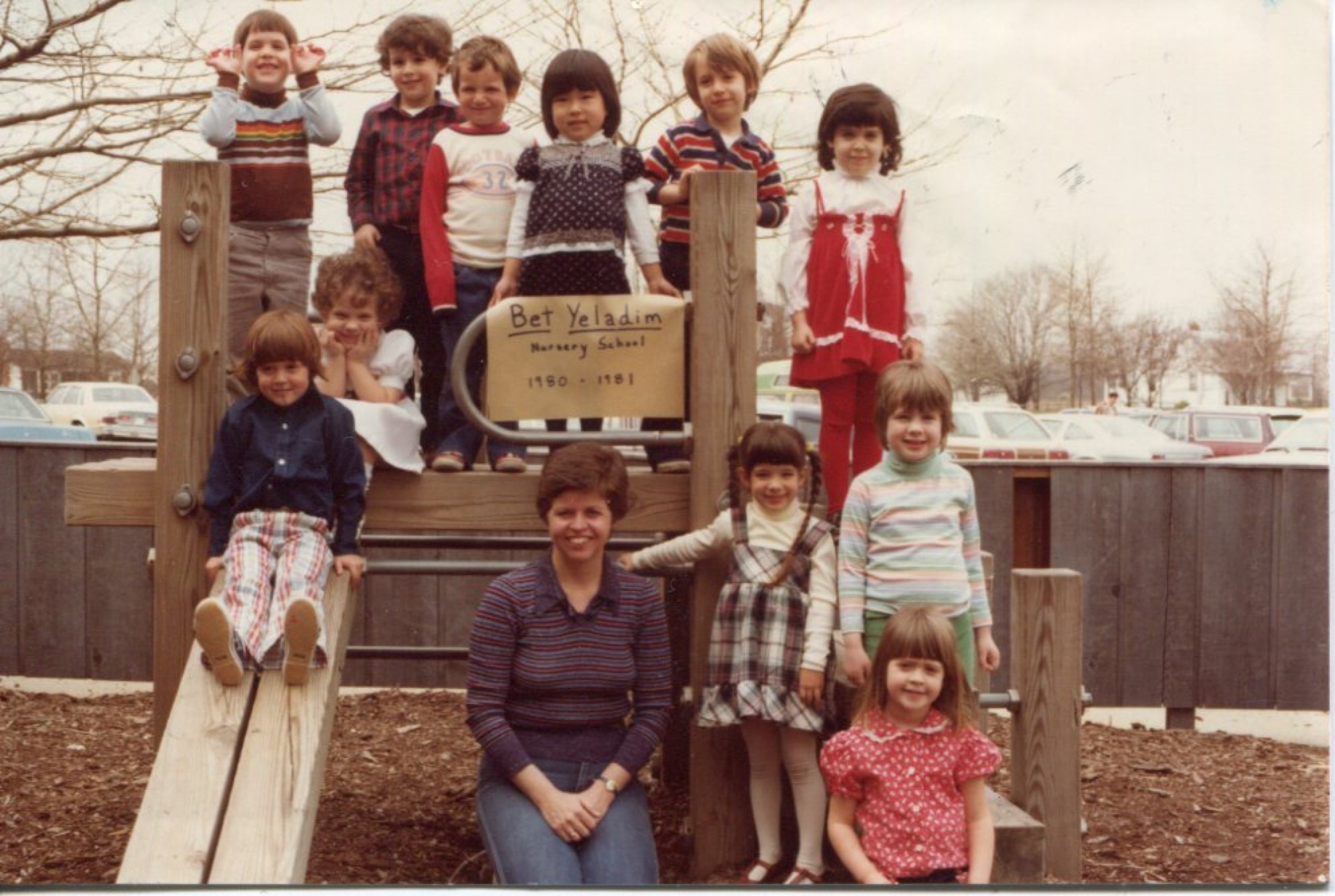
Jean Grinspoon, pictured here with her first class of four-year olds, was a founder of Bet Yeladim and filled in as a substitute teacher early on. A certified early childhood educator, she began teaching full time in 1980 as the school expanded. She became Bet Yeladim’s director in 1984 and served for 29 years.
Courtesy of Jean Grinspoon
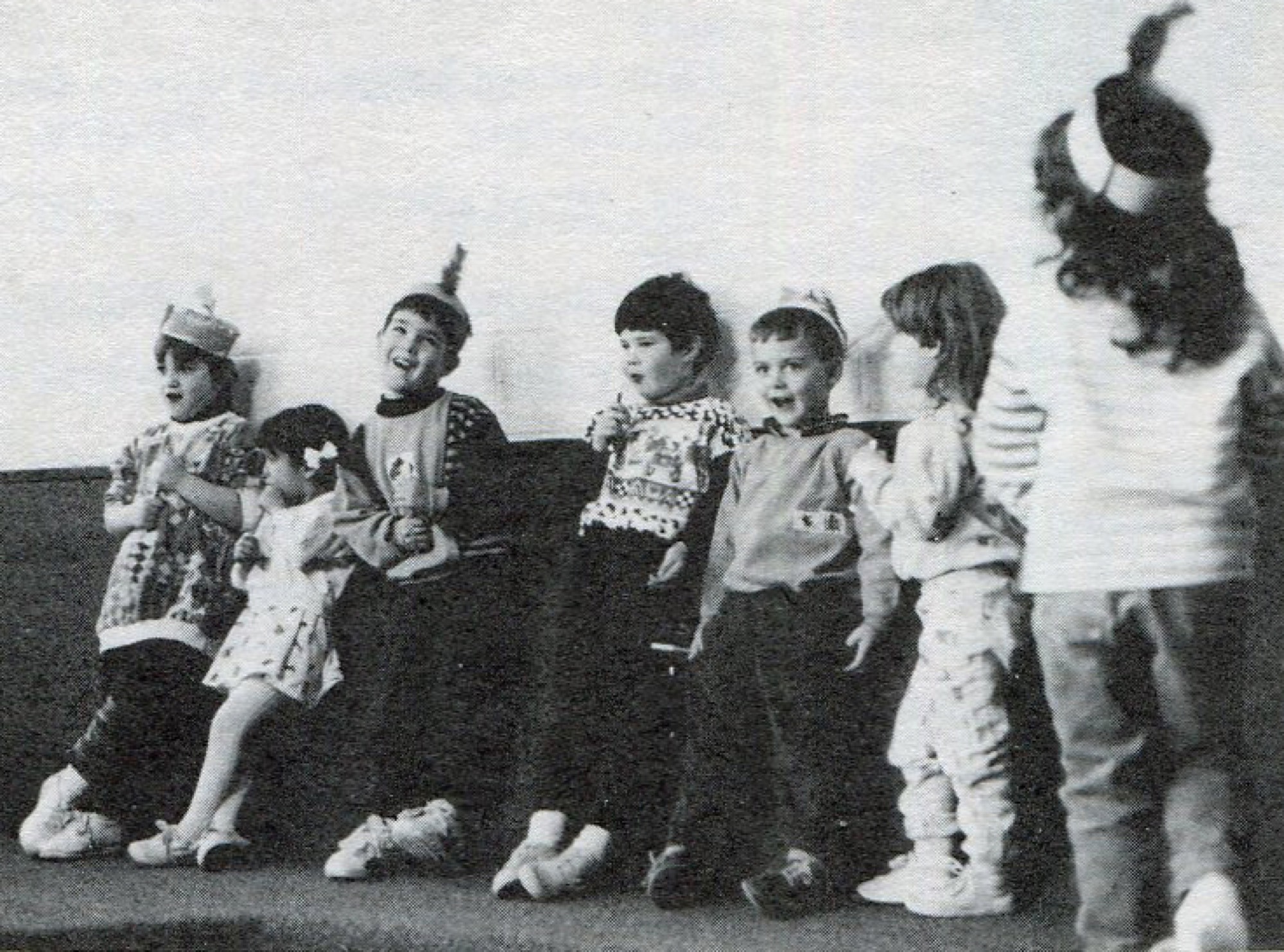
Thanksgiving at Bet Yeladim, 1989. Bet Yeladim teachers do not program around Halloween or Valentines Day because of those holidays’ Christian roots. They celebrate Thanksgiving and other American secular holidays, along with Jewish holidays.
Courtesy of Jewish Federation of Howard County
Starting with morning classes for three- and four-year-olds, over the years Bet Yeladim added afternoon classes, classes for two-year-olds, and a full-day program that started in 1986. In 1994, the school opened an all-day kindergarten that was highly in demand until 2008, when Maryland’s public kindergartens became full-day. Bet Yeladim pivoted, closing the kindergarten and adding a daycare program for infants and toddlers.
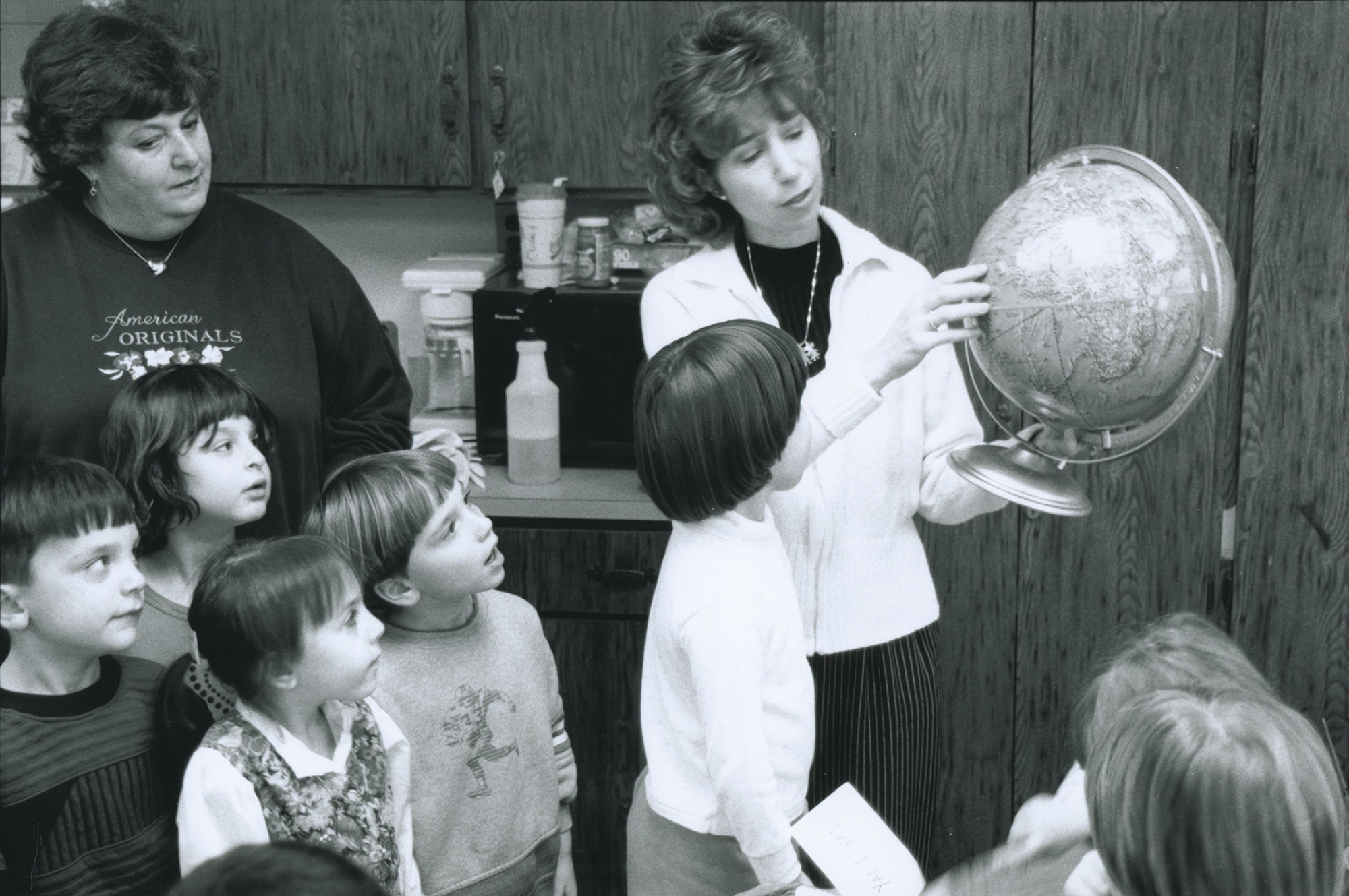
Bet Yeladim teachers Elaine Hercenberg (right) and Maddy Windheim give kindergarteners a geography lesson, 1998.
Photo by Kyle Bergner for the Baltimore Jewish Times, courtesy of Jewish Museum of Maryland
Education in congregational life
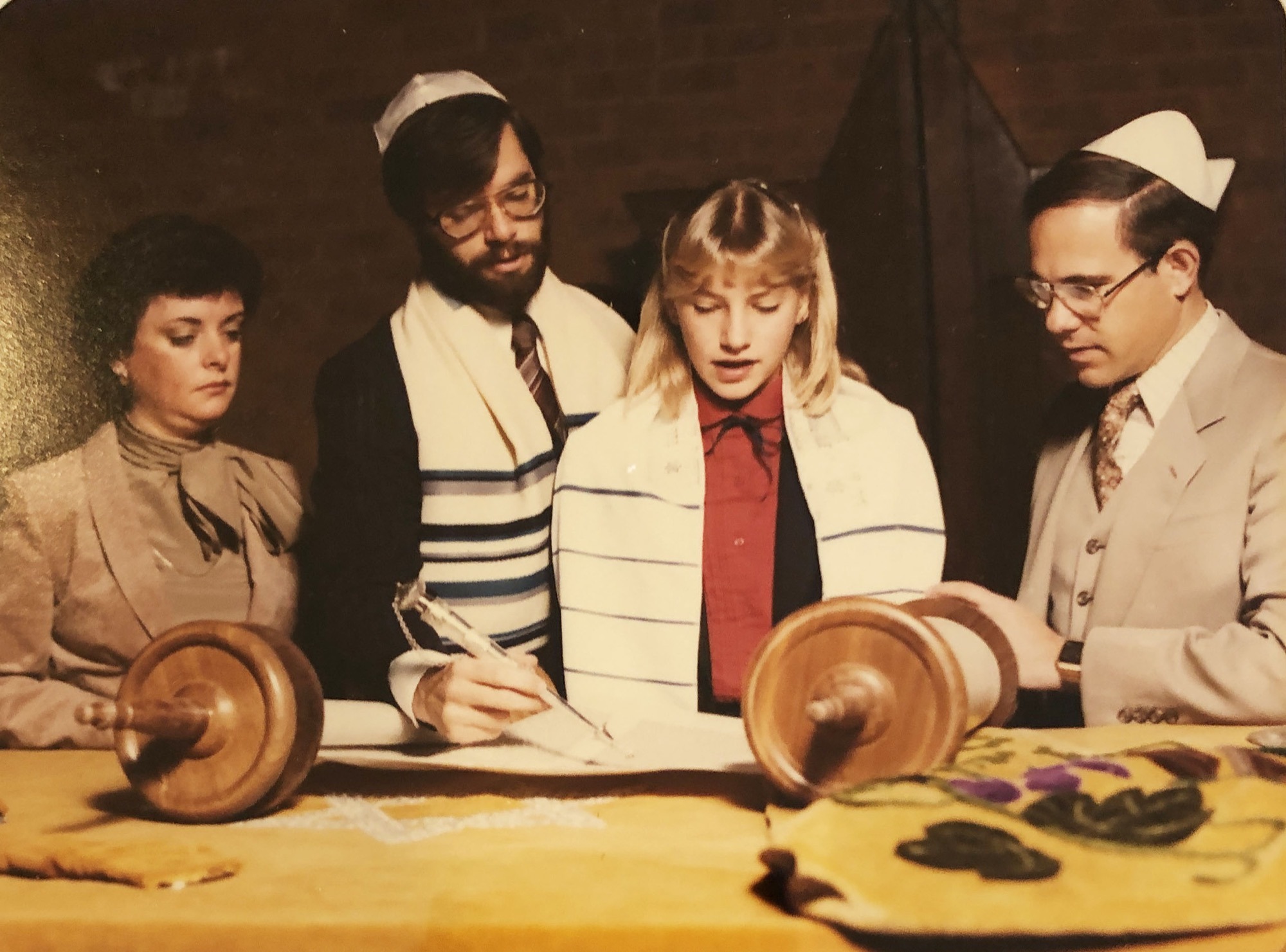
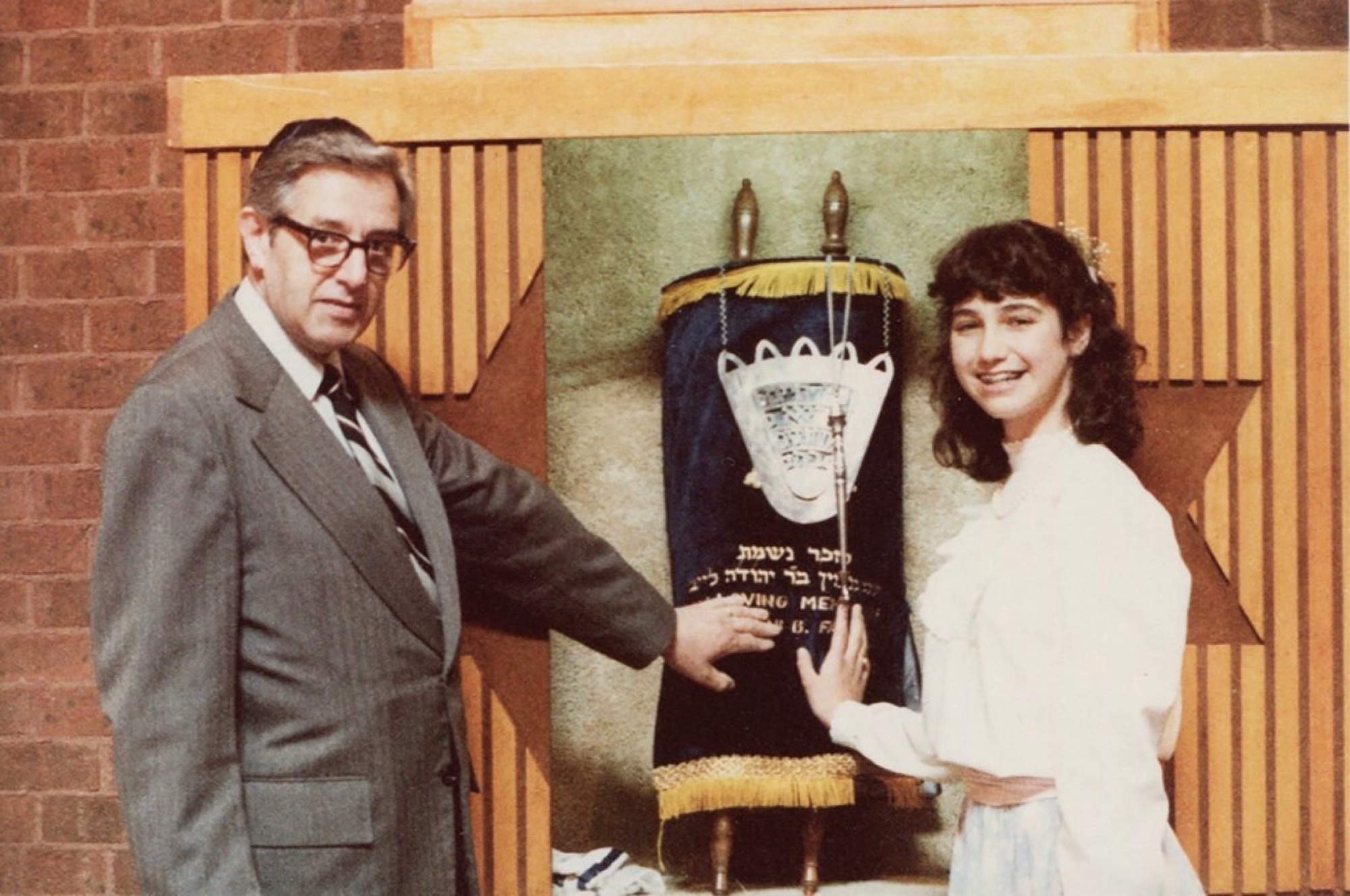
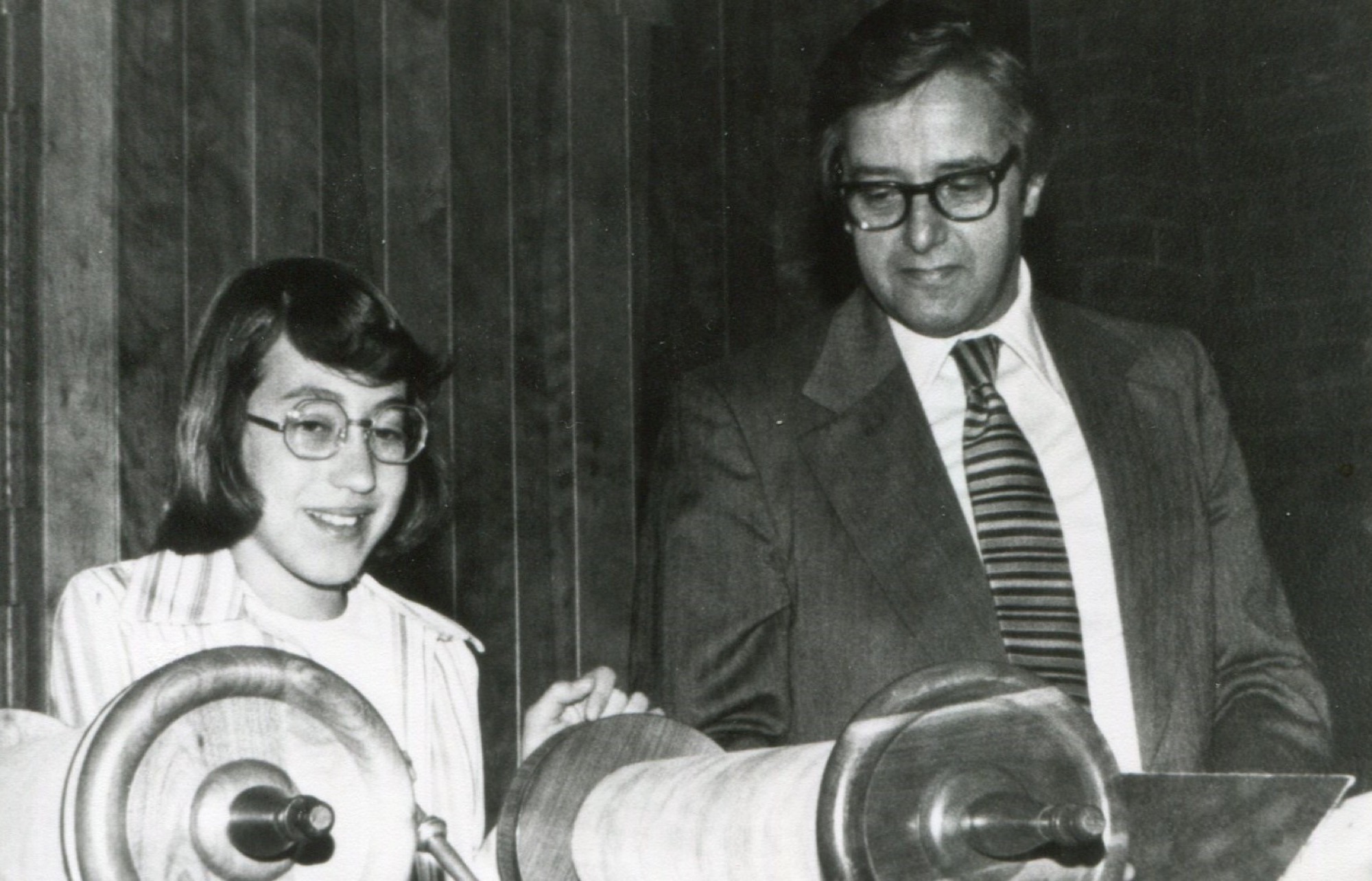
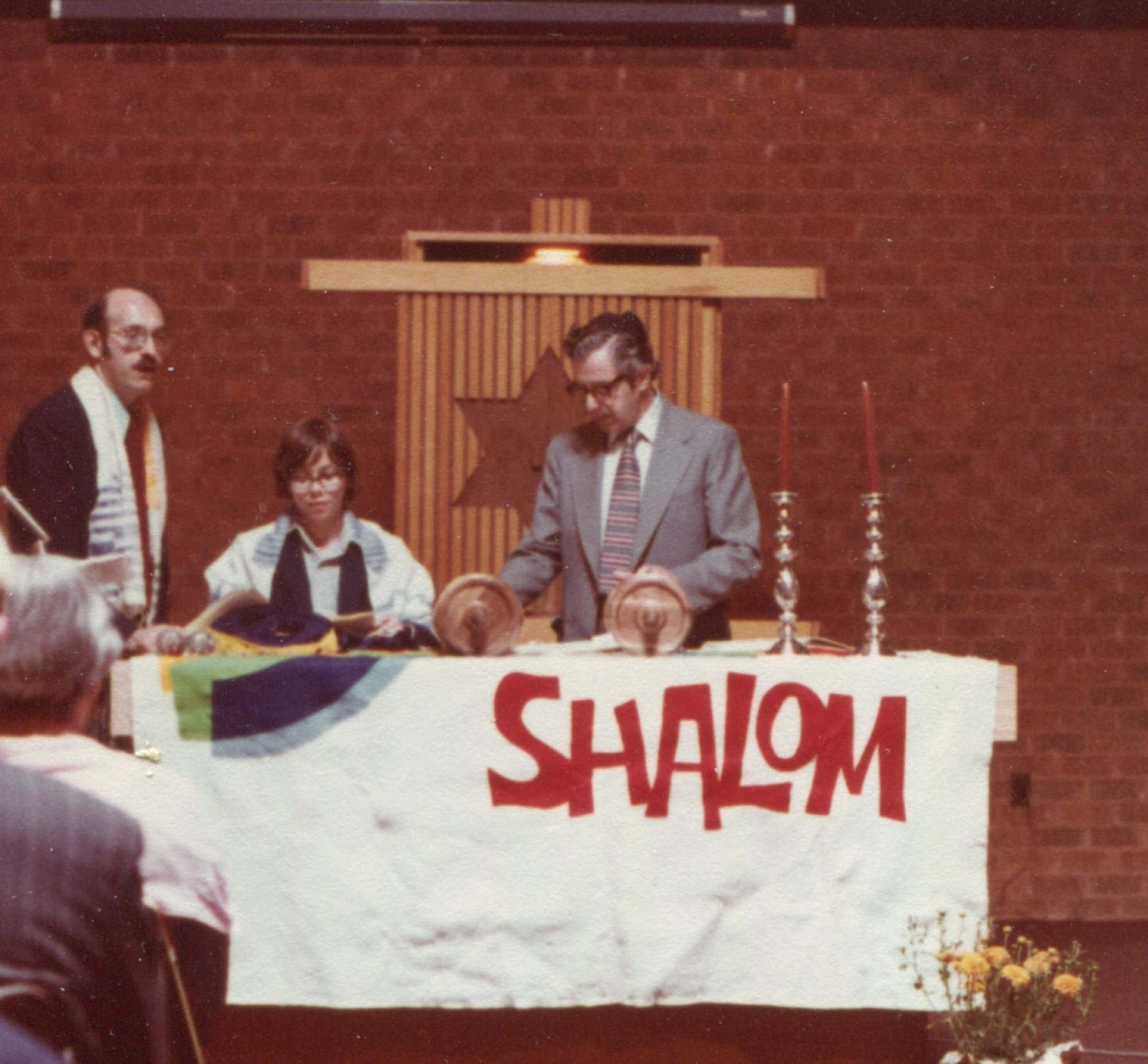
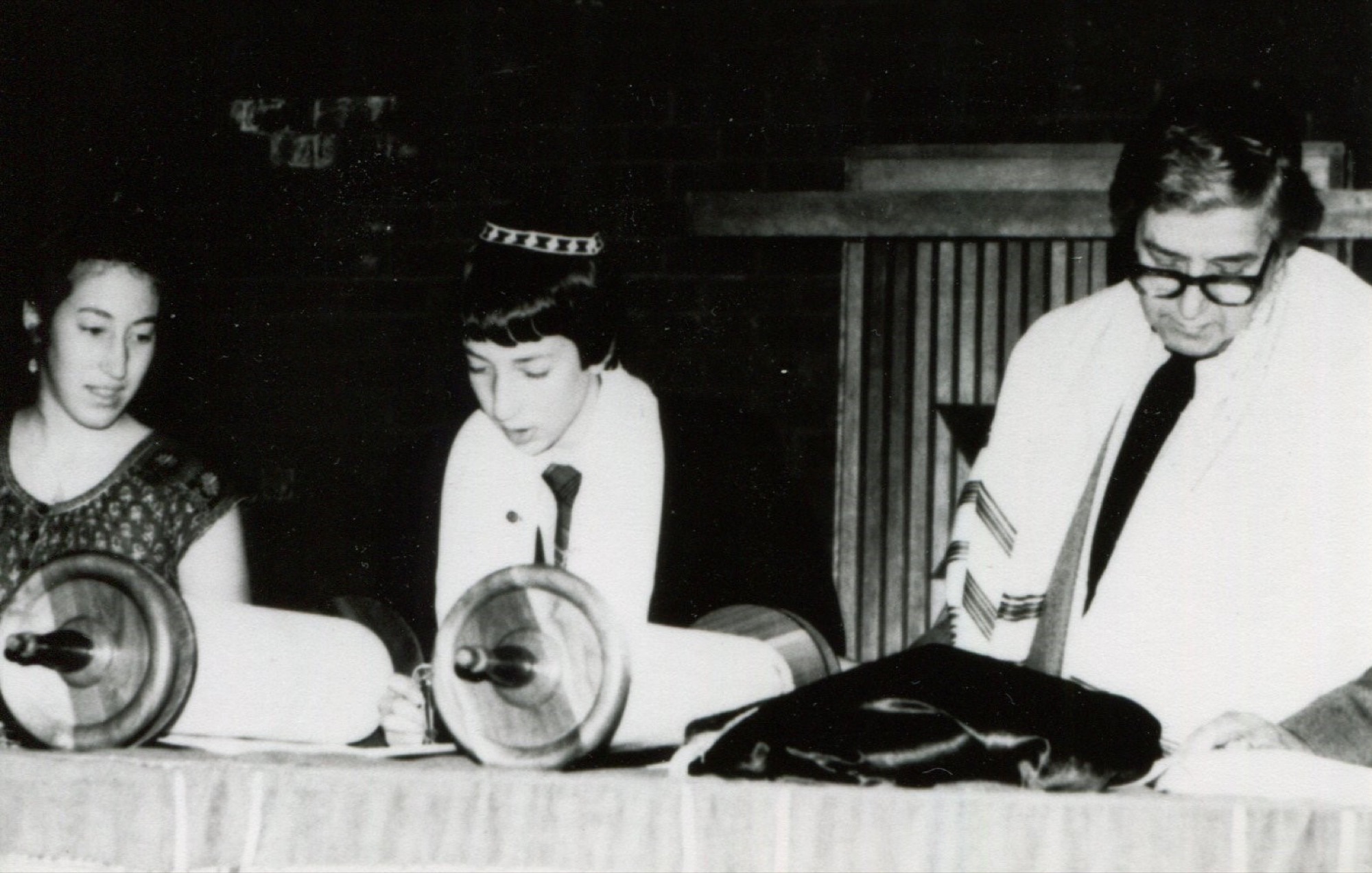
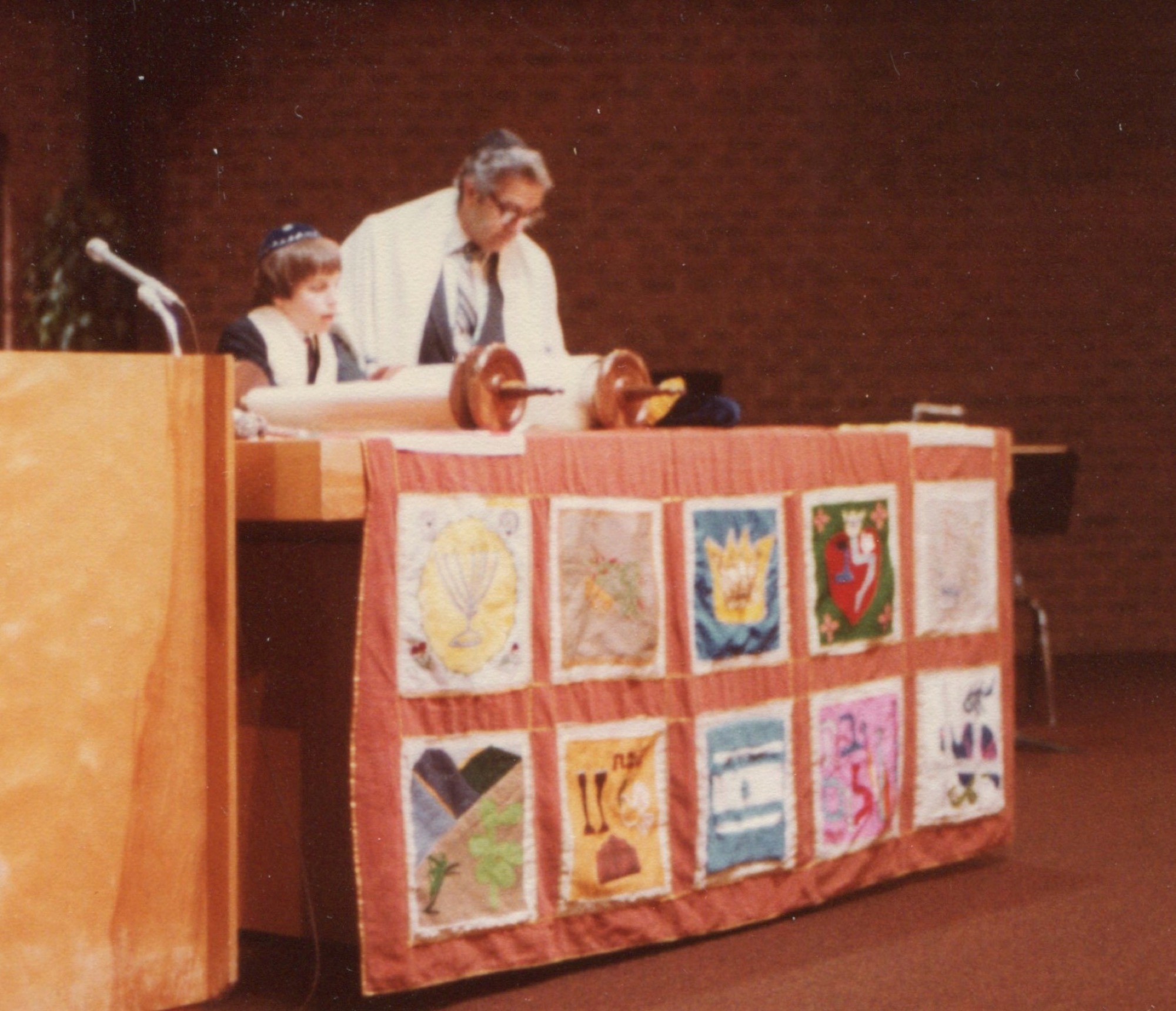
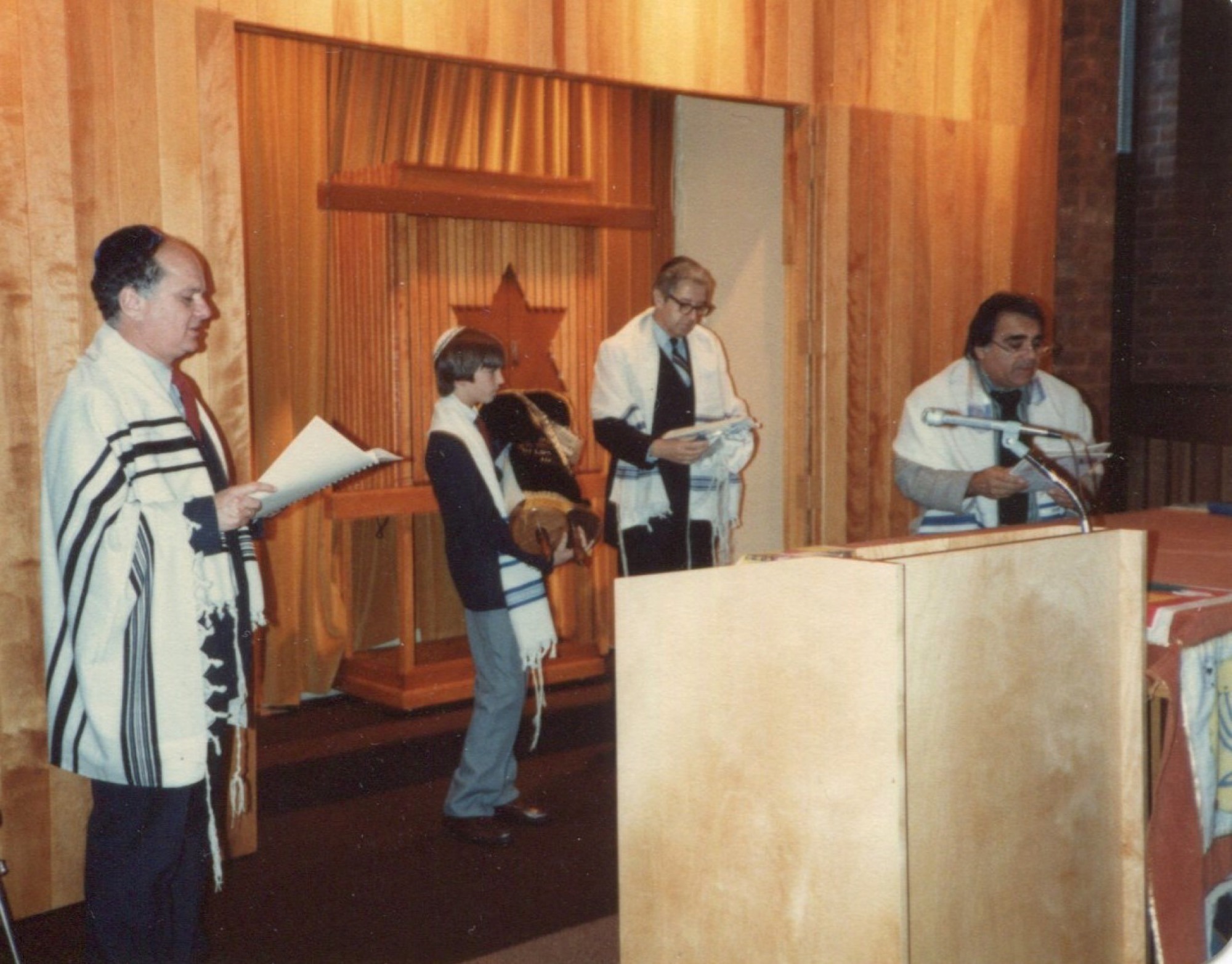
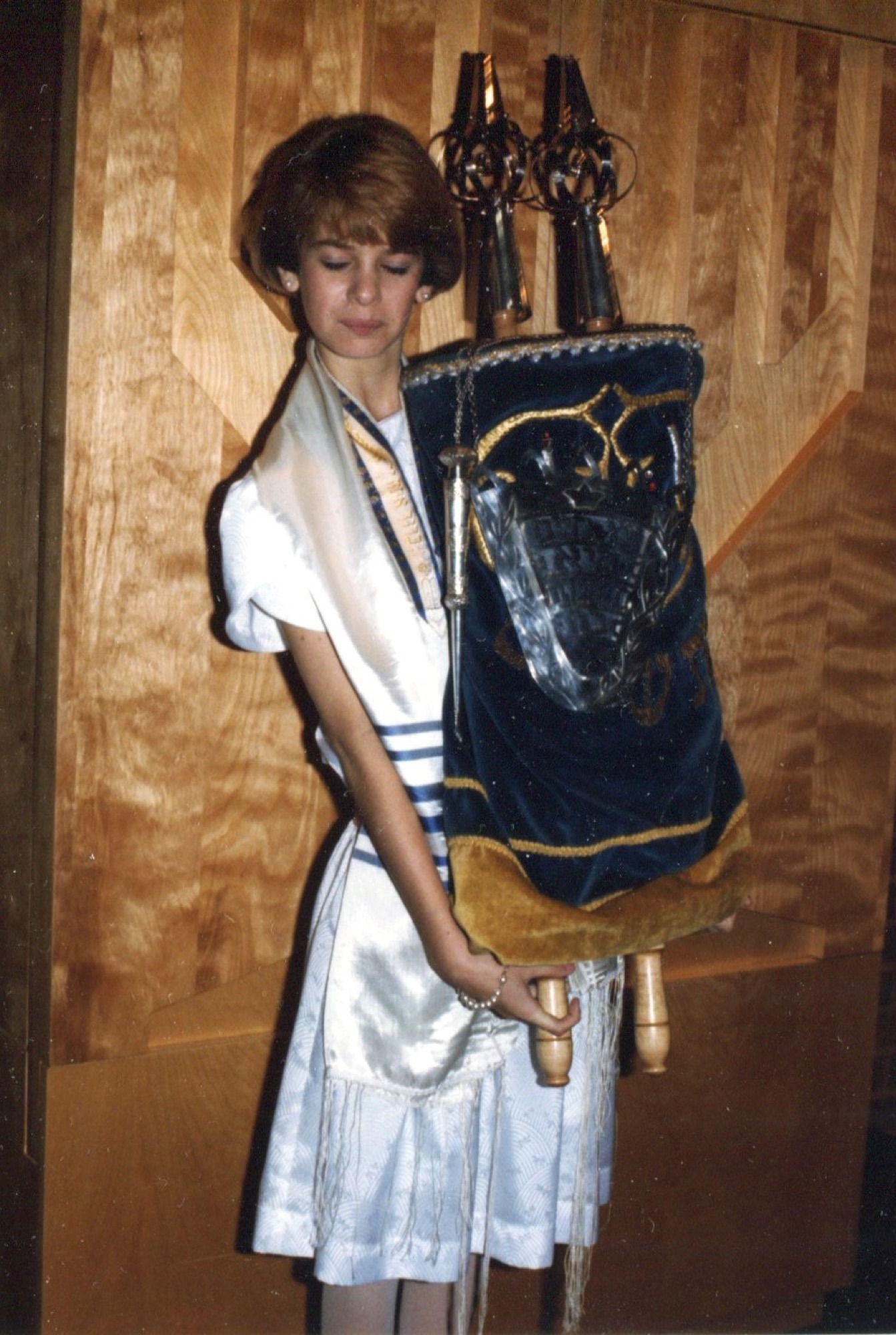
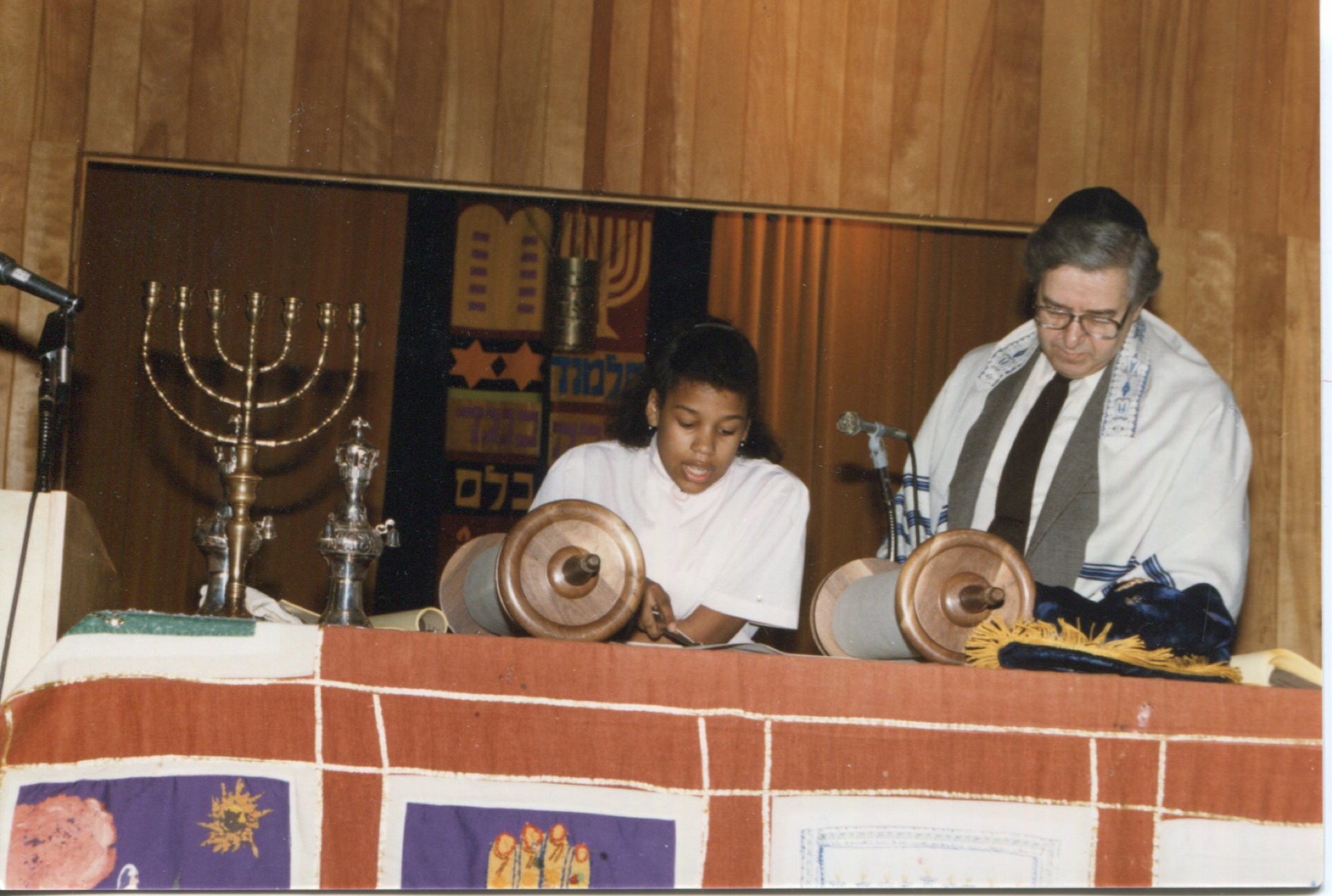
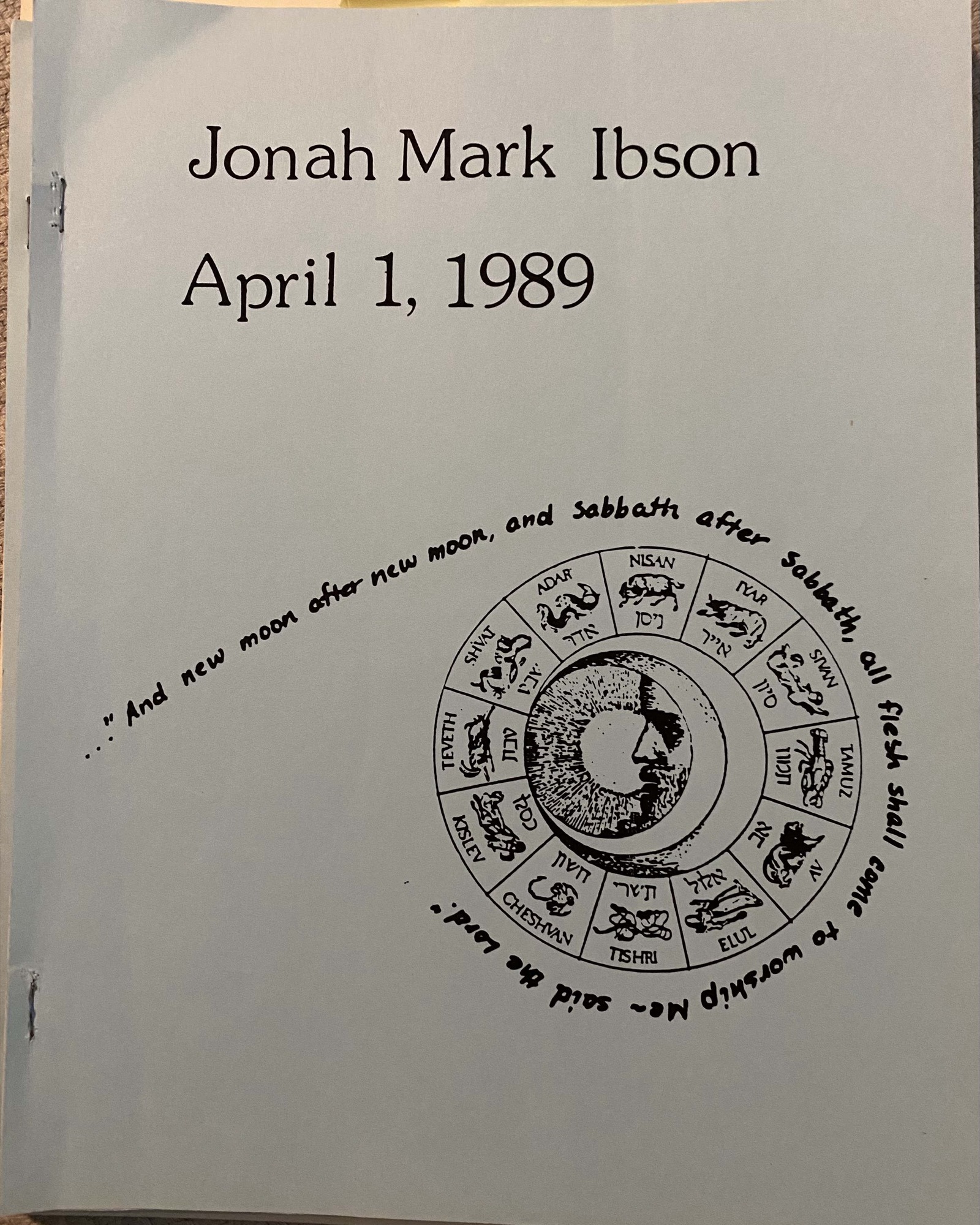
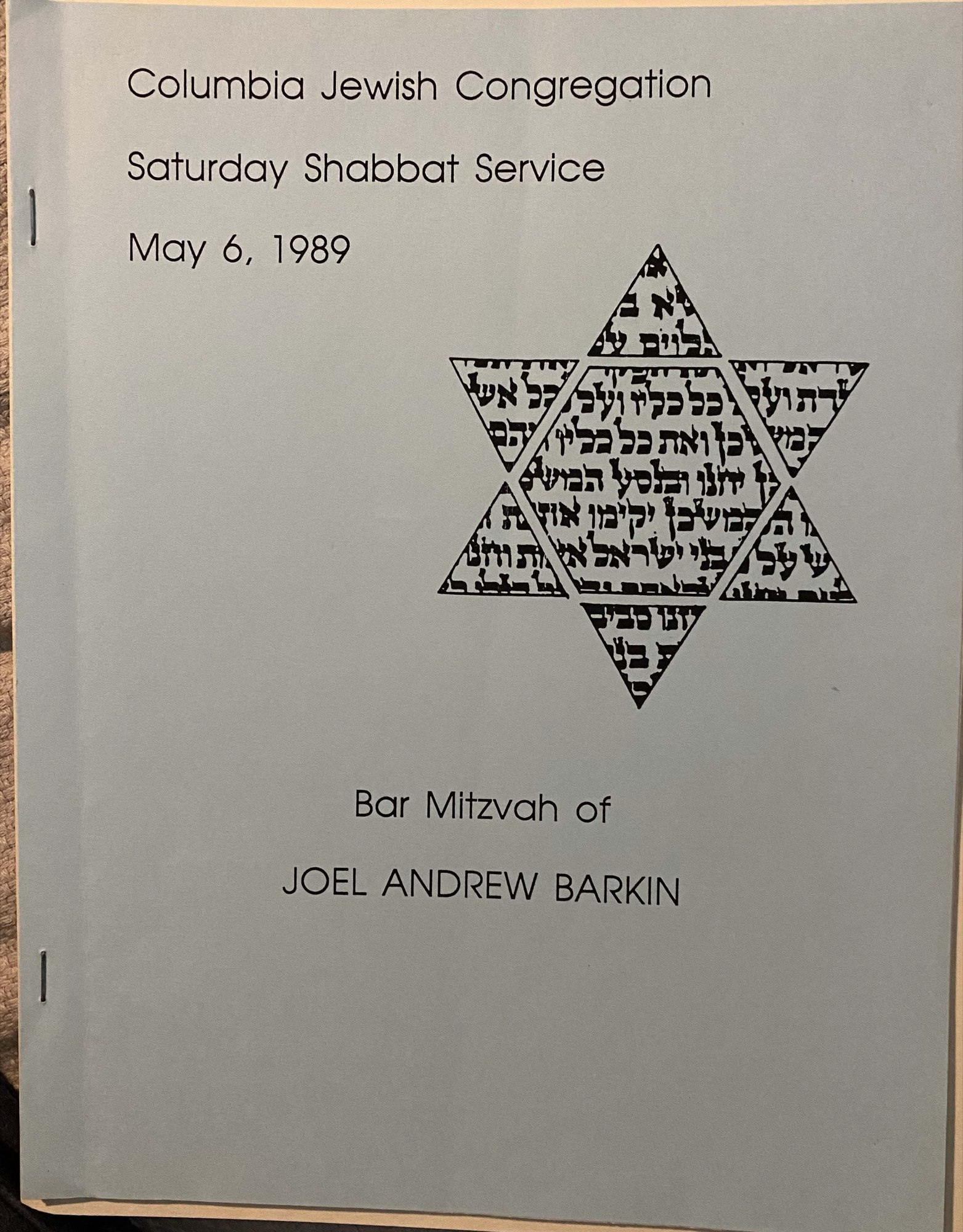
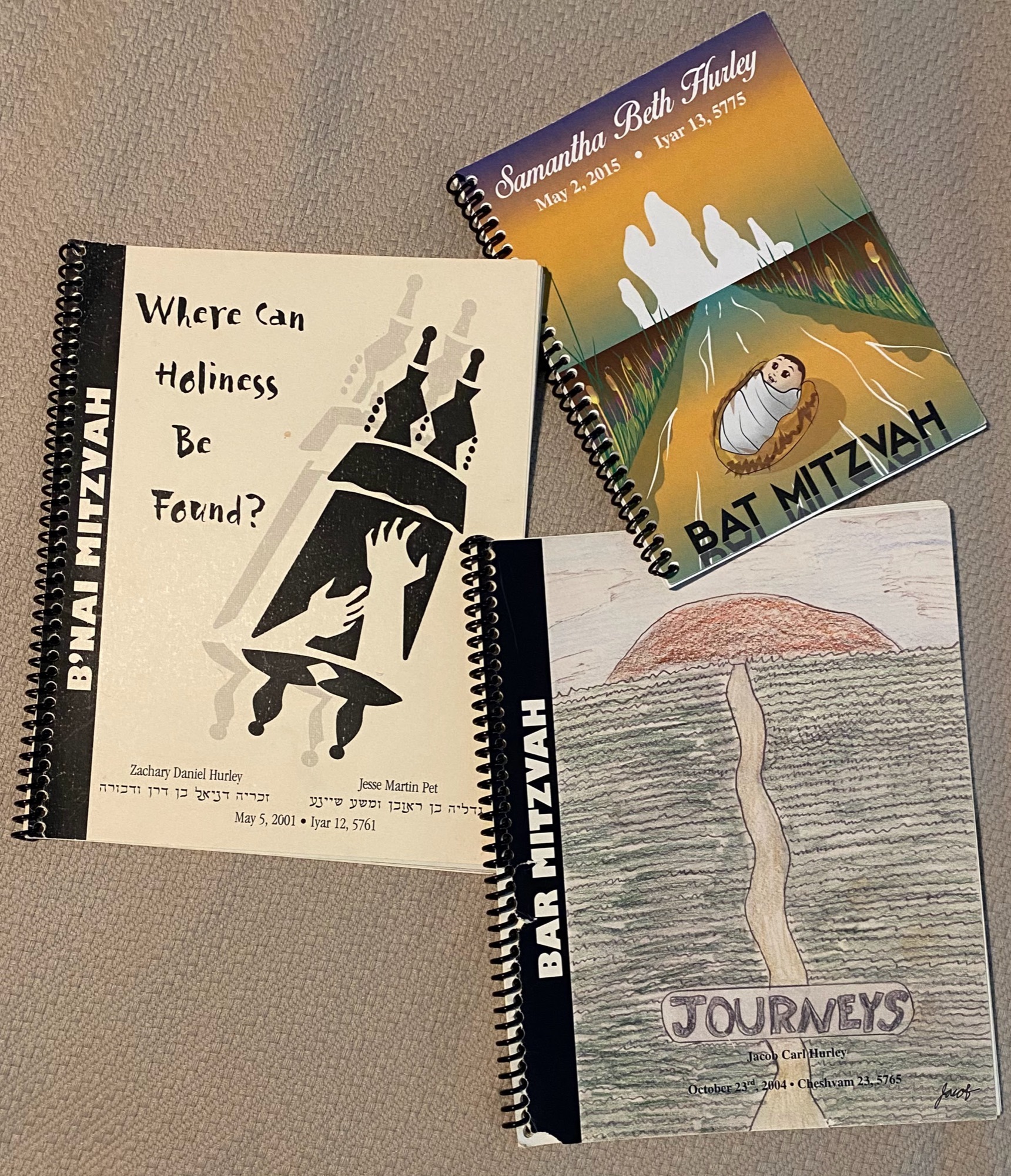
Howard County’s congregations have always played a key role in educating Jewish children about their religion and heritage. From the beginning, bar and bat mitzvah training was the province of the congregations. Model seders, children’s services, and youth groups also have provided opportunities for Jewish learning and identity formation.

Temple Isaiah children lead a model seder, 1977.
Photo by Jeff Friedhoffer, courtesy of Temple Isaiah

Rabbi Steven Fuchs addresses the children of Temple Isaiah, 1986.
Photo by Paul Abel, courtesy of Temple Isaiah

Teens meet for snacks, fun, and event planning at a Beth Shalom USY meeting, 1993.
Courtesy of Beth Shalom Congregation
Congregational Religious Schools
Beth Shalom started Howard County’s first congregational religious school in 1985, feeling the need to tailor a curriculum to fit the observances and teachings of the Conservative movement with which it was affiliated. The new school joined with a consortium of Conservative religious schools in Montgomery County. In 1993, Beth Shalom was able to bring the school in-house when it moved into Howard County’s first synagogue building. Temple Isaiah founded its own religious school in 1992 while remaining in the shared space of the Meeting House.
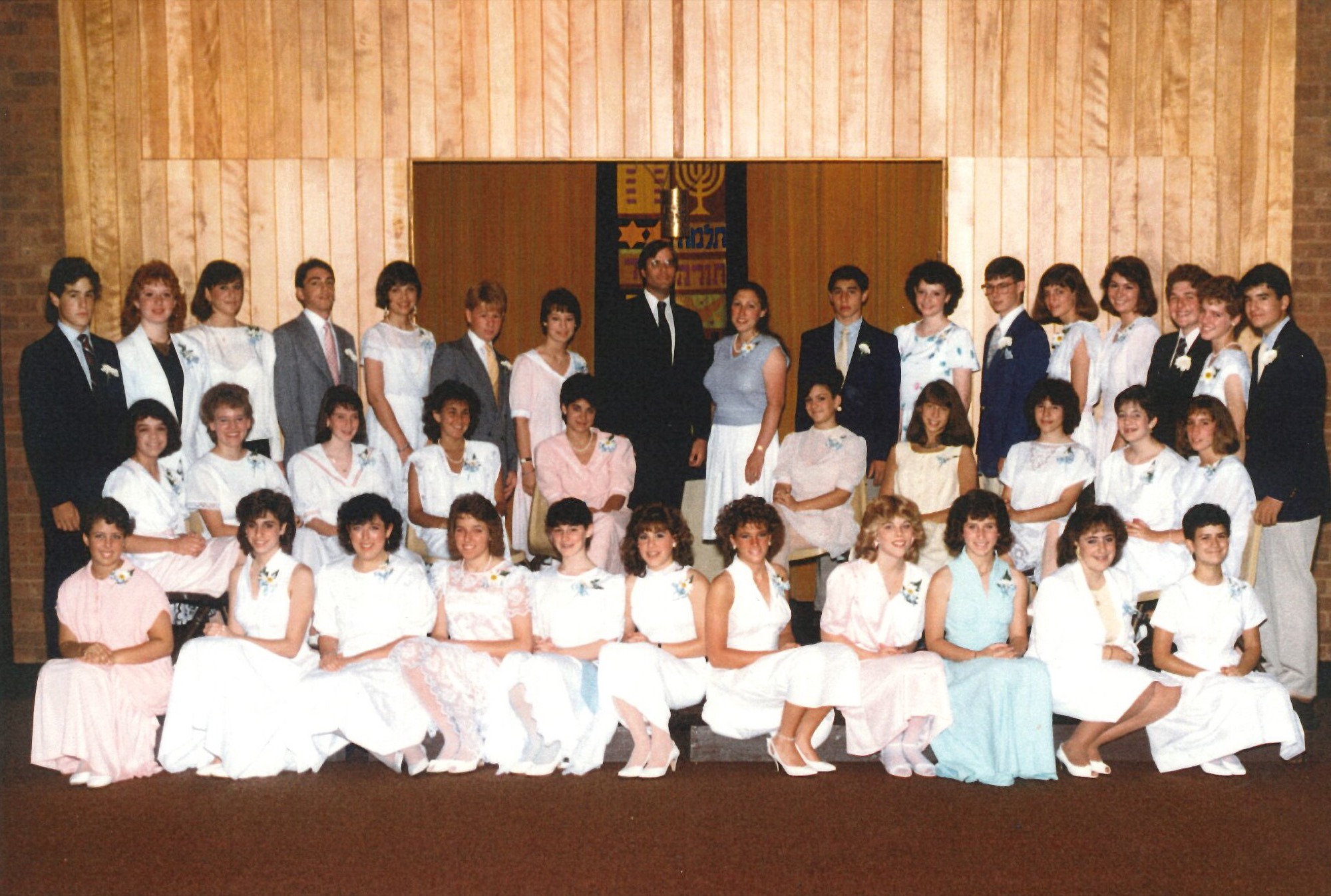
Confirmation class with Rabbis Stephen Fuchs and Amy Scheinerman (back row, center), c. 1985. Rabbi Fuchs recalls that Temple Isaiah set clear expectations that b’nai mitzvah students would continue their Jewish education through the tenth grade and confirmation. “It is a source of pride to me that nearly 100 percent did so,” he says.
Courtesy of Temple Isaiah
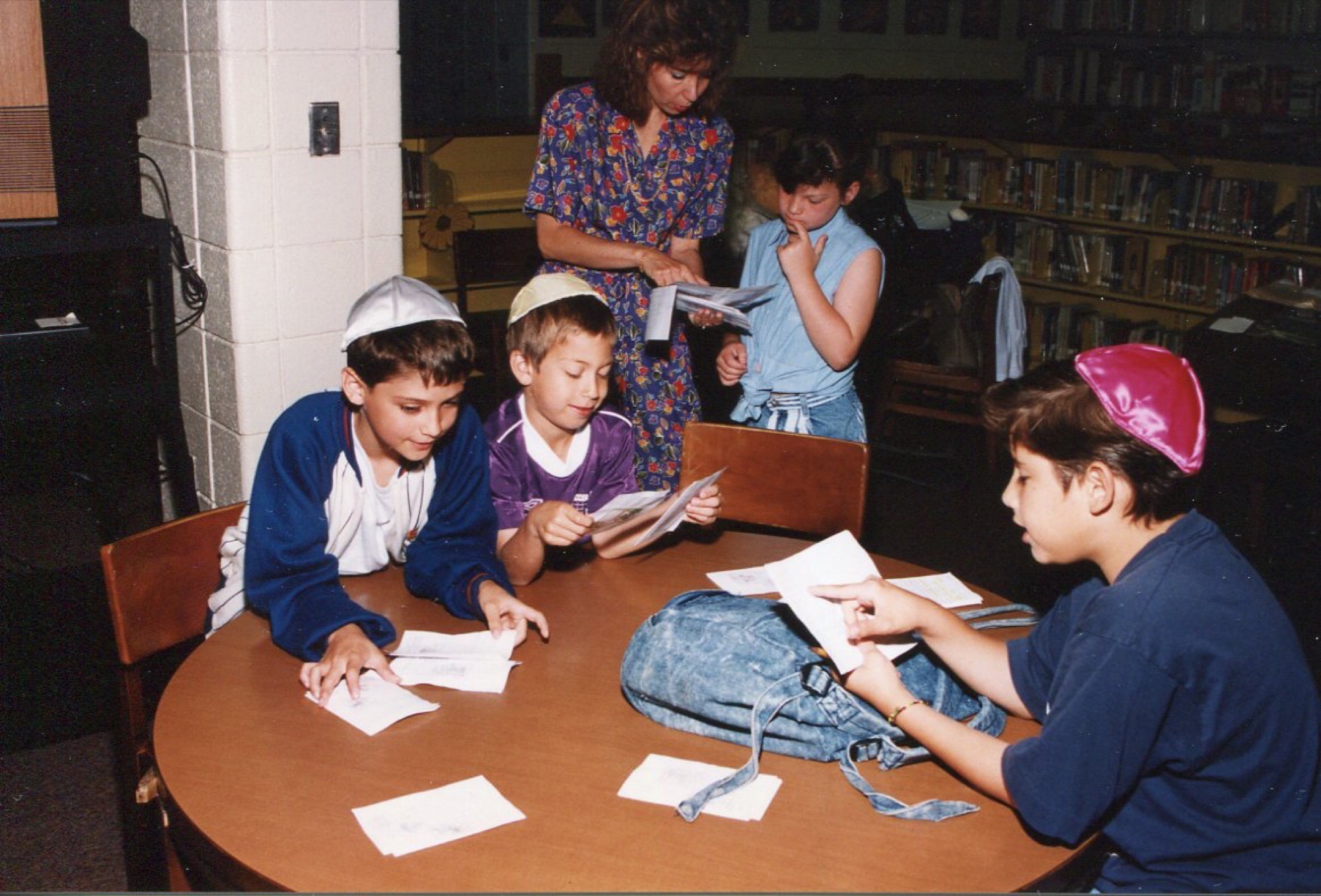
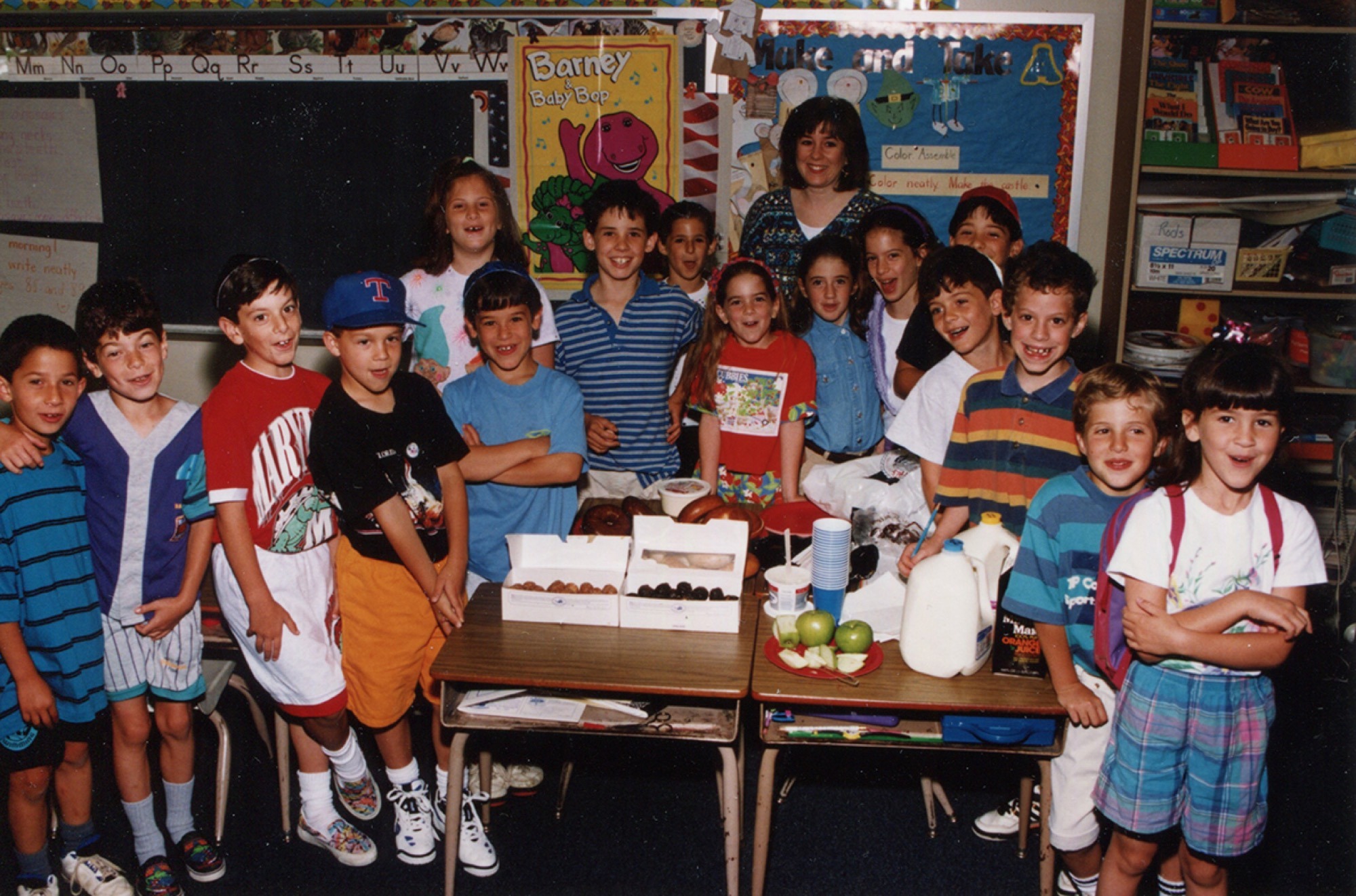
Beth Shalom Hebrew School classes in 1993.
Courtesy of Beth Shalom
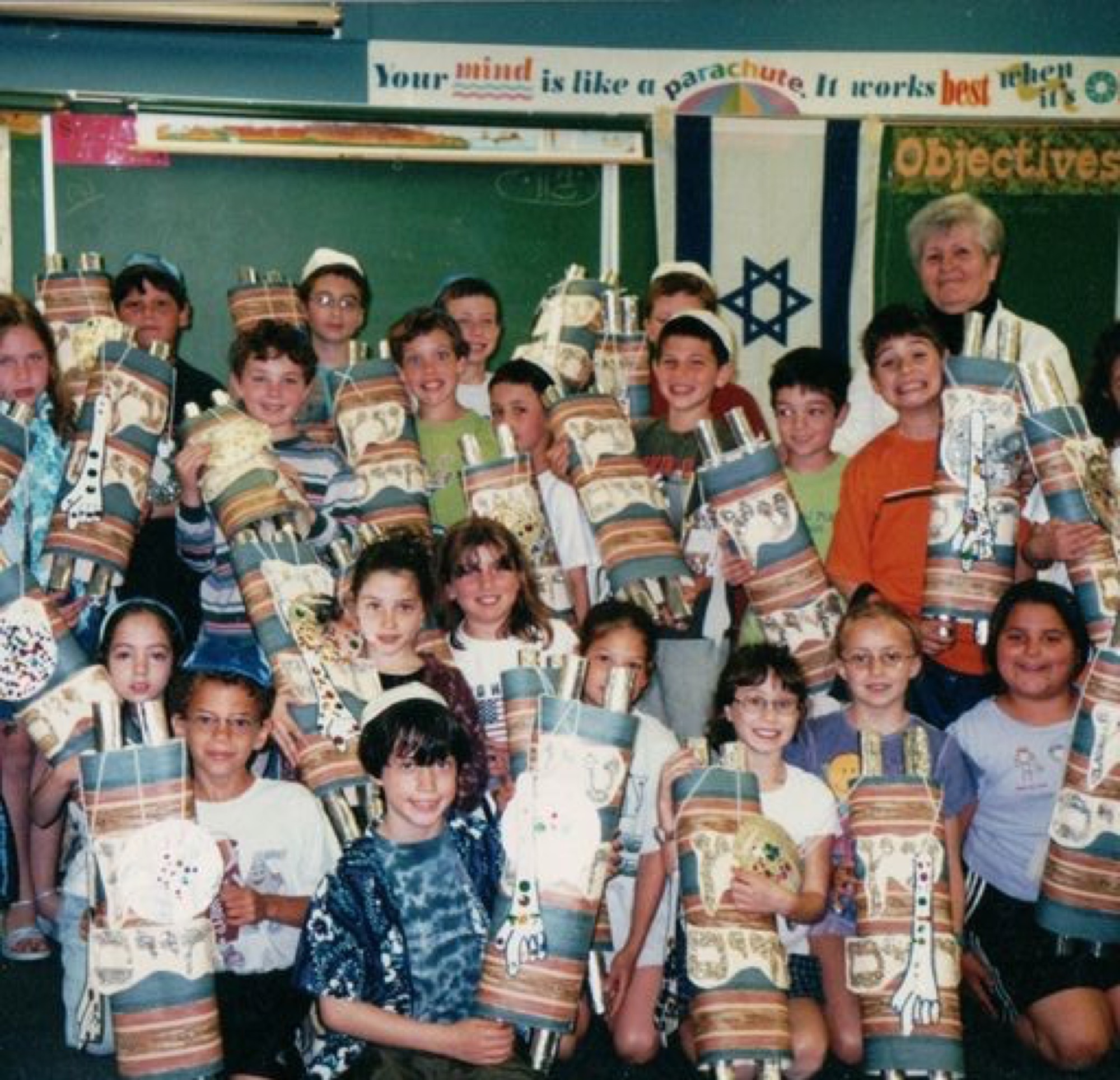
Temple Isaiah third graders proudly show off “Torah scrolls” made with soda bottles, 1993. The model Torah was the signature project of teacher Dalia Feldman, who taught for the Community School and TI for over 30 years.
Courtesy of Temple Isaiah
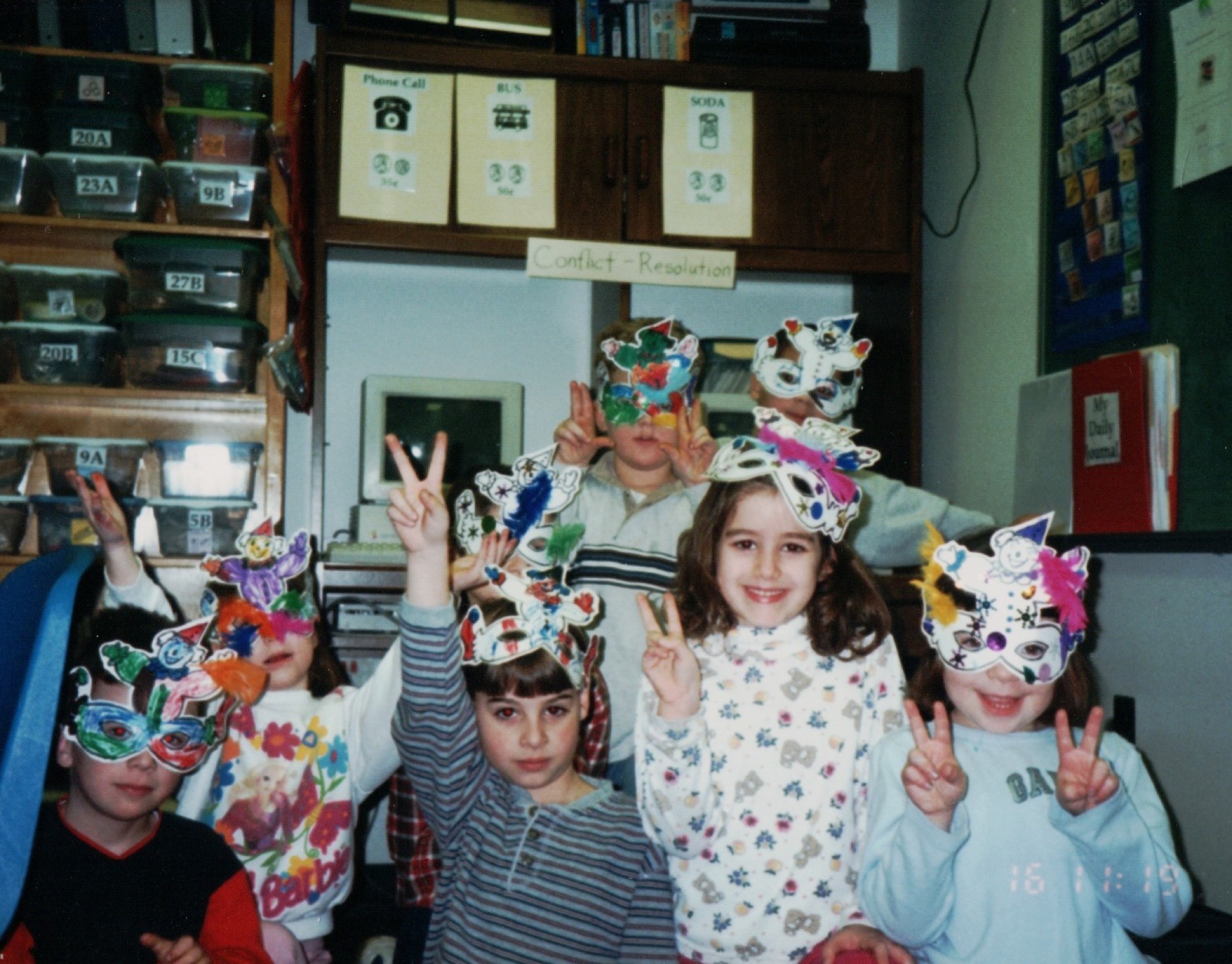
Having fun in their Purim masks, Temple Isaiah students mug for the camera.
Courtesy of Temple Isaiah