Jim Rouse’s Vision
James W. Rouse seemed an unlikely promoter of countercultural 1960s ideals such as harmony, self-growth, and respect for nature: as a Baltimore Magazine article put it, he was “a disheveled, plaid-sports-coat-wearing, middle-aged guy from the Eastern Shore.” A successful businessman, he made his mark as a pioneering developer of shopping malls in the 1950s.

Jim Rouse serves birthday cake at a celebration for Columbia’s first birthday, 1968.
Photo by Donald Reichle, courtesy of Columbia MD Archives, Photograph Collection
Far from a typical real estate developer, the deeply religious Easton, MD, native was greatly influenced by Christian social gospel and believed that cities should be places where all people could thrive regardless of race, religion, or income. Committed to solving urban problems, he especially railed against “mindless sprawl,” the American postwar dynamic where neglected central cities were surrounded by hastily constructed, impersonal suburbs built with little planning or attention to human needs.
In the early 1960s, Rouse set about putting his beliefs into action as the developer of the new city of Columbia. It would be a place where people of diverse backgrounds could live together: “a garden for growing people” who were “creative, tolerant, and caring.” And he wanted to show that it could be done profitably.
Rouse’s Four Guiding Principles for Columbia
Build a complete city.
Respect the land.
Provide for the growth of people.
Make a profit.
“Our cities grow by sheer chance. Bits and pieces are splattered across the landscape. By this irrational process, non-communities are born—formless places without order, beauty or reason, places with no visible respect for people or the land.”
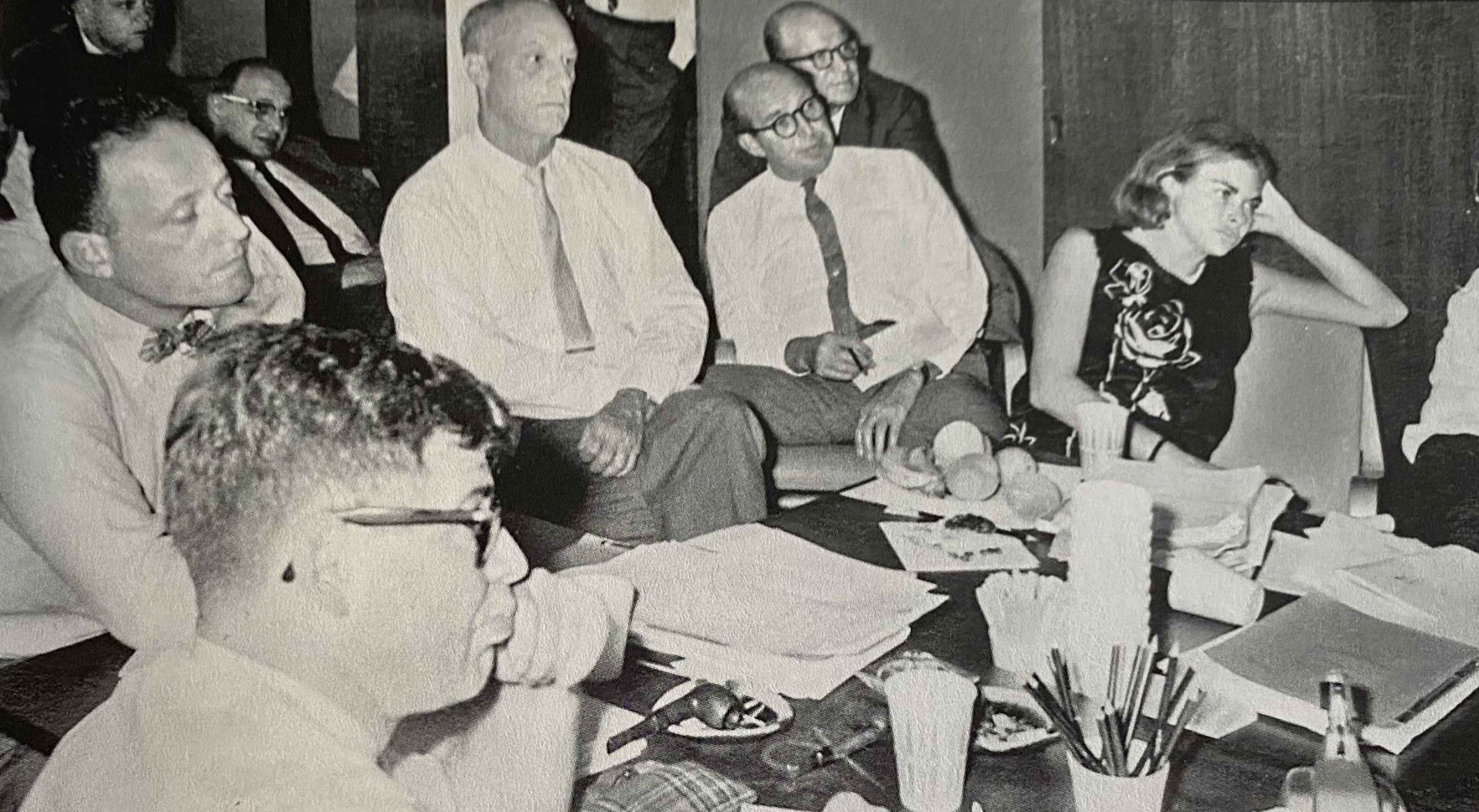
A firm believer in planning, Rouse organized a 14-person Work Group to advise the Columbia development team. To create a city that had its residents’ needs uppermost, the Work Group included not only urban planners and architects, but also experts in everything from health care to juvenile delinquency. At table, clockwise from lower left: influential sociologist Herbert Gans, Don Michael, Bob Crawford, Jim Rouse, Antonia Chayes.
Courtesy of Columbia MD Archives
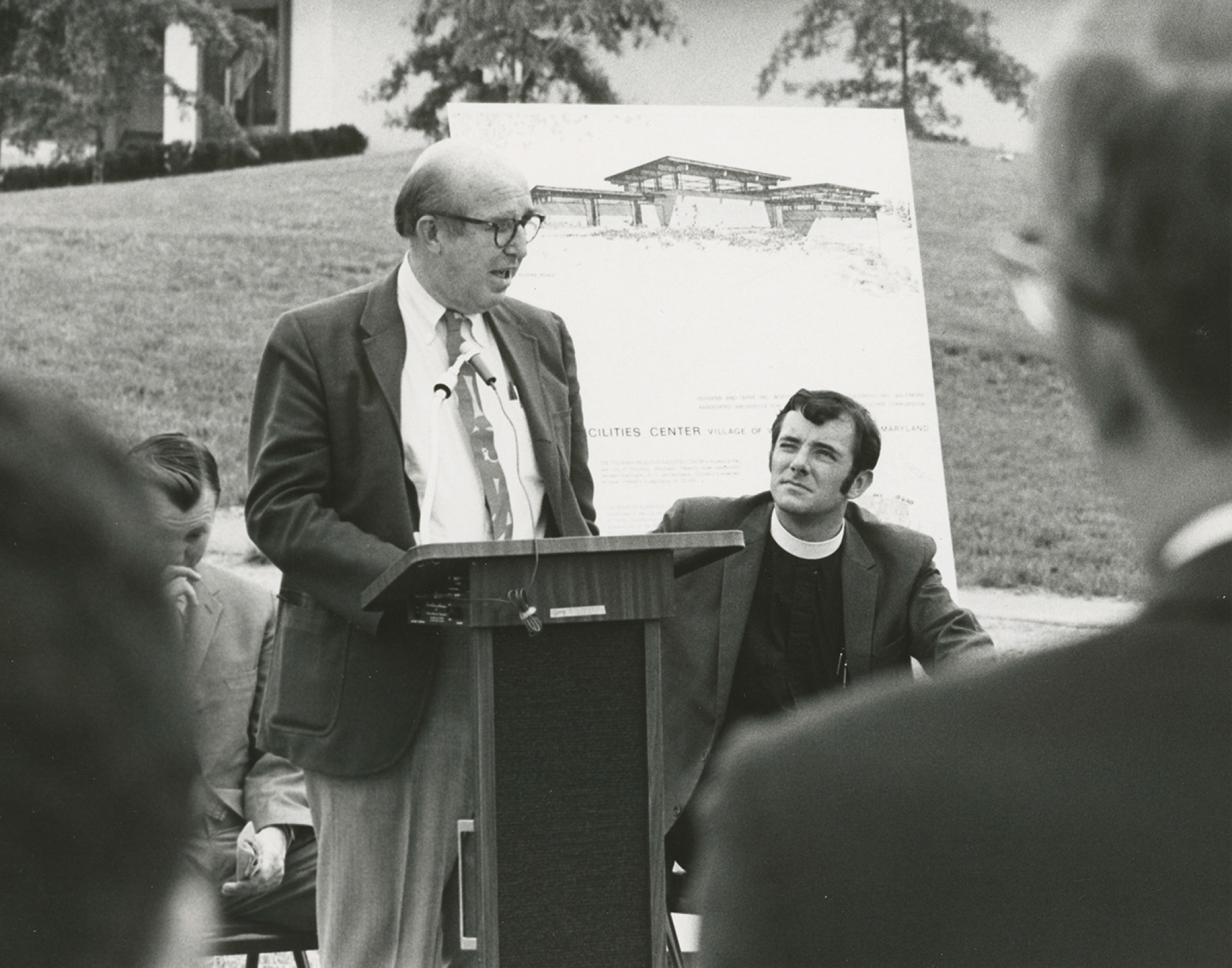
Rouse speaking at the groundbreaking for the Wilde Lake Interfaith Center, 1969. His belief in interfaith cooperation informed one of Columbia’s most unique features: the interfaith center, where different religious groups would share worship space. The interfaith concept also reflected his nature as an astute businessman—he thought that each religious group getting its own plot of land was a waste of space.
Photo by Morton Tadder, courtesy of Columbia MD Archives, Photograph Collection
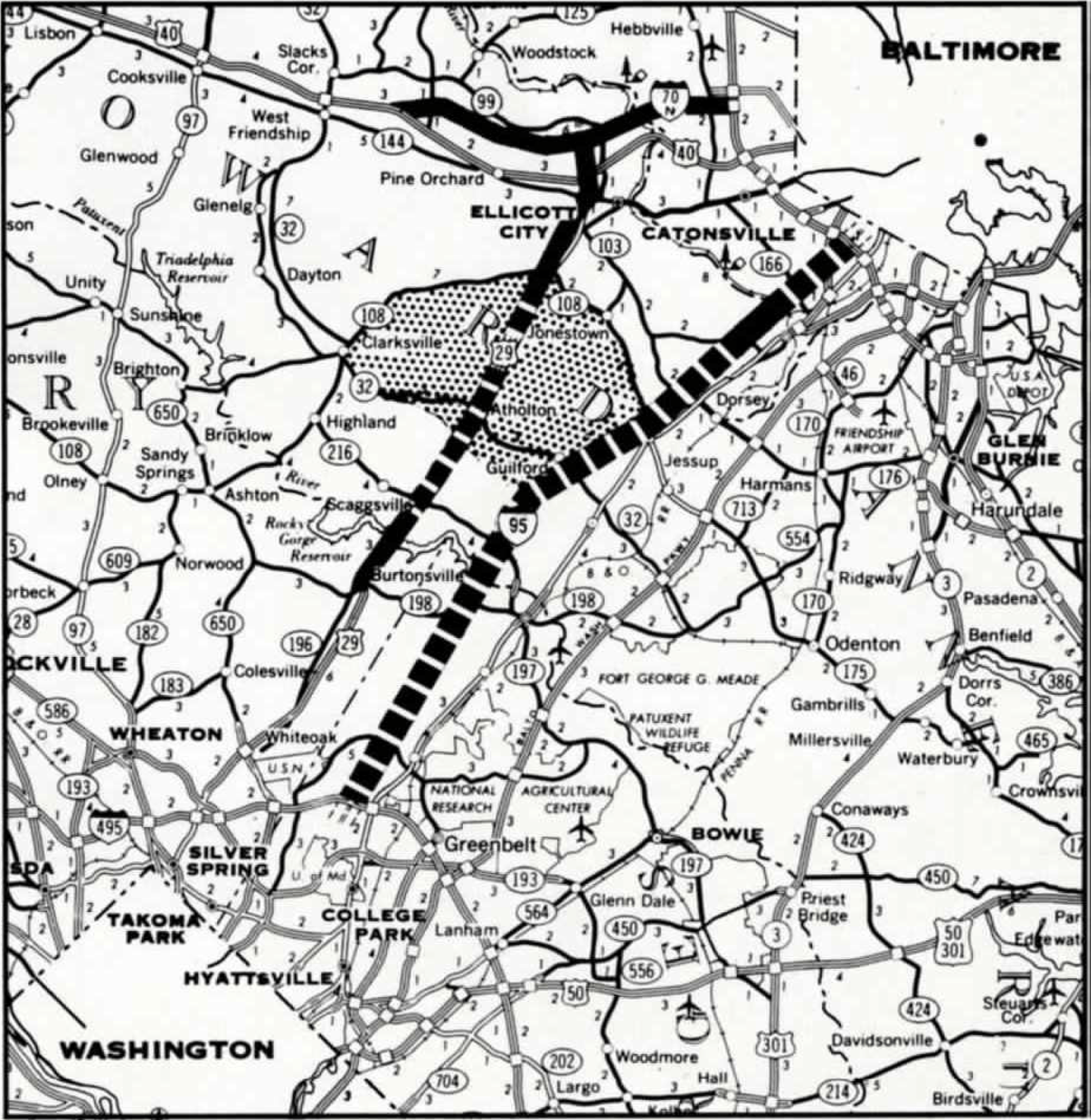
Rouse’s original concept called for acquiring enough land “directly in the path of inevitable development” to accommodate “an eventual population of more than 100,000 people.” Since the Rouse Company was based in Baltimore and research predicted the Baltimore-Washington corridor would soon be the fastest-growing region on the East Coast, the choice of location was easy (though acquiring such an enormous expanse was not). This 1966 map shows the planned roads already under construction along the future site of Columbia.
Courtesy of Columbia MD Archives
“We must hold fast to the realization that our cities are for people, and unless they work well for people, they are not working well at all.”